Showing posts with label elephants. Show all posts

Monday, August 13, 2018

Happy World Elephant Day!

Yesterday was World Elephant Day, so I'm re-running the Great Big Elephant Quiz.  Enjoy!
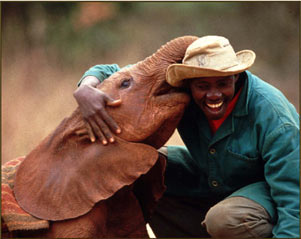
This week’s endangered species is the African Elephant (Loxodonta cylclotis) (photo from David Sheldrick Wildlife Trust). Found in sub-Saharan Africa, these elephants are listed as “vulnerable” by the IUCN, due to human/elephant conflicts and poaching for their ivory tusks.
Most of us have seen elephants, on TV or in zoos (or in the wild, if we’ve been lucky enough), but can you pass the GREAT BIG ELEPHANT QUIZ? See if you can answer the following 10 questions:
  1. T/F Elephants only use their trunks for smelling
  2. T/F Elephants can use their ears to cool their bodies
  3. T/F African elephants are the largest land mammal on Earth
  4. T/F Herds are led by dominant females
  5. T/F Male elephants live in herds
  6. T/F Elephant gestation is one of the longest pregnancies on Earth
  7. T/F Both male and female elephants have tusks
  8. T/F Elephants are carnivores
  9. T/F Elephants have great memories
  10. T/F Elephants are big sleepers
Answers (from Wildlife Heroes, by Scardina and Flocken; National Geographic website; and Love, Life, and Elephants by Dame Daphne Sheldrick)
  1. False – elephants also use their trunks for breathing, drinking, and picking up small objects. The trunk contains about 100,000 different muscles!
  2. True – thanks to radiation of heat through their ears
  3. True! Asian elephants are a little smaller
  4. True – elephant herds are made up of family groups of females, led by one dominant female
  5. False – once they hit maturity, these big guys are loners
  6. True – yes greenmomsters, your pregnancy may have seemed long, but it’s nothing compared to the 22 month gestation of an elephant. Oh, and you thought your 9 lbs baby was big? Try 200 lbs!
  7. True!
  8. False, thank goodness – elephants survive on grasses, roots, and bark. Up to 300 lbs per day!
  9. True – not just a myth! For a fascinating book on elephants, their memories, and one woman’s love story and lifetime of trying to save orphaned elephants, check out Love, Life, and Elephants by Dame Daphne Sheldrick
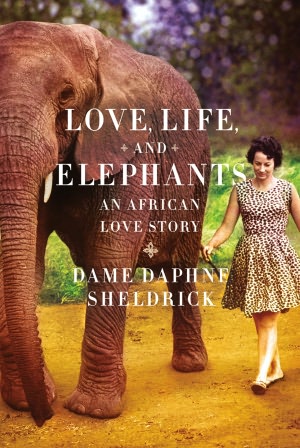
  10. False – elephants don’t really sleep for long periods of time
Need more reasons to care about elephant conservation? From Wildlife Heroes, “Elephants shape the environments in which they live by opening up forests, controlling brush and tree growth, and digging for water and minerals, which benefits other animals. Their copious amounts of dung also help fertilize the landscape and disperse seeds.”

How’s a greenmomster to help?

Monday, April 16, 2018

Mammal Monday -- Elephants!

I've written many posts about elephants:
So let's add one more elephant post to the mix.  Here's a fun list of 10 Extraordinary Facts about Elephant Trunks from TreeHugger -- enjoy!

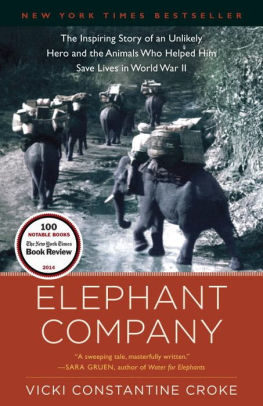
Still not enough elephant news for a Mammal Monday?  Then you've got to check out this fascinating book about elephants and an epic escape in World War II:  Elephant Company by Vicki Constantine Croke.


Elephant Company: The Inspiring Story of an Unlikely Hero and the Animals Who Helped Him Save Lives in World War II

Tuesday, February 23, 2016

Love, Life, and Elephants!

My son just donated to an elephant sanctuary where elephants from zoos, circuses, etc, are cared for as they age.  His donation reminded me that it's probably time for another post about elephant conservation. The work to protect elephants from poachers and the ivory trade is as active as ever. Greenmomster has hosted several posts about elephant conservation and how you can participate (your help is always needed!).  Here's a great video about Dame Daphne Sheldrick and her elephant conservation program -- if you're interested in learning more, be sure to read her book, Love, Life, and Elephants and check out the David Sheldrick Wildlife Trust.


Wednesday, August 12, 2015

Happy World Elephant Day!

To celebrate World Elephant Day, here’s a repost with lots of links for you to enjoy and learn about elephants. 

Be sure to “like” Greenmomster on Facebook!

Adopt an Orphaned Elephant

(photo from David Sheldrick Wildlife Trust)

Who doesn’t love elephants?  At greenmomster, we’ve had several posts about elephants:

We’ve also listed many ways you can help in elephant conservation, including:

Now there are two new ways to learn more about the issue of elephant poaching and ways you can help in elephant conservation:

  1. The Diane Rehm radio show just had an informative hour on elephant conservation.  
  2. CBS Sunday morning just presented a great program on the fight against elephant poaching in Africa.

Take some time; read and watch.  Then decide how you’re going to help out.

Wednesday, March 18, 2015

12369


What’s 12369?  That’s the phone number you’re supposed to call to report environmental noncompliance in China.  I learned it by watching “Under the Dome,” a Chinese documentary about China’s air pollution and energy industry.  It’s a little tough to keep up with the subtitles, but it’s worth watching this 1 hour and 45 minute film.  The Chinese government blocked the film on the internet in China, but lucky you! here it is:

impressionist pandaSo why spend almost two hours learning about pollution in China?  Because China is the most populous nation in the world with a huge and growing economy.  The country’s main source of power is coal.  Not only is China a player in global warming and other air pollution issues, the country also has a large impact on wildlife issues, like elephant poaching.

Just like every other country in the world, they’re trying to balance economic growth and environmental health.  Just like every other country in the world, politics, money, human nature, and even corruption influence how these two goals are achieved.  Since China is so big, we really should be paying attention.  The Washington Post recently ran an article by Simon Denyer that provided a nice summary of the issue.  A little bedtime reading for the greenmomsters . 

Wednesday, December 24, 2014

Merry Christmas Greenmomsters!

Here’s wishing you a very merry Christmas and a happy last day of Hannukah!  Let’s take a quick look at some of the happy environmental news we encountered this year!

  • November brought us World Toilet Day!
  • And finally, there’s news on coal ash disposal.  On Dec. 19, 2014, the U.S. EPA released its final rule on disposal of coal ash from electric utilities.  The ash will be regulated under subtitle D of RCRA.  It will not be regulated as a hazardous waste, as it would have been under subtitle C.  Although the new rule isn't what many environmental groups had hoped for in their stockings, it’s a step in the right direction. 
Merry Christmas Greenmomsters!

Monday, September 8, 2014

Basketball and Elephants

In previous posts here and on Facebook, we’ve talked about U.S. federal and New Jersey state efforts to protect elephants, the illegal elephant poaching trade, and elephant emotions. We’ve even shared a quiz to test your elephant IQ! Now there’s even “bigger” news on the elephant protection front.  A recent article in the Washington Post described how Yao Ming, former Houston Rockets star, has teamed up with WildAid to try to decrease the Chinese demand for elephant ivory.  The basketball star has had success in the past trying to decrease the demand for shark fins in his country; hopefully he can have the same influence when it comes to elephants. 

Monday, March 10, 2014

Precious Pachyderms

Who doesn’t love elephants?  At greenmomster, we’ve had several posts about elephants:

We’ve also listed many ways you can help in elephant conservation, including:

Now there are two new ways to learn more about the issue of elephant poaching and ways you can help in elephant conservation:

  1. The Diane Rehm radio show just had an informative hour on elephant conservation.  
  2. CBS Sunday morning just presented a great program on the fight against elephant poaching in Africa.


Take some time; read and watch.  Then decide how you’re going to help out.

Monday, October 28, 2013

A Frightfully Good Time!

DSC_0001My family and I had some great luck this weekend and won tickets to the National Zoo’s Boo at the Zoo!  We had a terrific time collecting candy, checking out people’s very creative costumes DSC_0029, enjoying the spooky decorations (the butterfly ecologist in me loved this one!)DSC_0027, and visiting some of the animals DSC_0025.  We especially enjoyed the Reptile Discovery CenterDSC_0023 We visited our favorite Panamanian golden frogs and learned about the Appalachian hellbenders from the Salamander AmbassadorsDSC_0024I really enjoyed learning about these fascinating creatures that are right in our backyard.  Did you know:

  • of the 550 salamander species found worldwide, about 1/3 of them call North America home
  • Appalachia is home to 77 species of salamander
  • salamanders start their lives fully aquatic with gills, and move to land for their adult lives
  • 0ne of the main threats to salamander survival is climate change – they need cool, wet places to live. 

Want to help with salamander conservation?  Check out this webpage

Many thanks to FONZ and the National Zoo staff and volunteers for a fun evening of Halloween trick or treating!

Source:  Smithsonian National Zoological Park.  N.d.  Be An Ambassador for Salamanders.  Accessed 10/27/2013 at http://nationalzoo.si.edu/ActivitiesAndEvents/Celebrations/ambassadors.cfm.

Tuesday, March 26, 2013

Is this how we treat family?

In past posts, we’ve discussed illegal trafficking of various endangered species, including the illegal trade in elephant parts, reptiles (in book list), pangolins, and butterflies (in book list).  This week, I wanted to call your attention to a recent UN report on our closest cousins, “Stolen Apes: The Illicit TradeStolen Apes in Chimpanzees, Gorillas, Bonobos and Orangutans,” (here’s a link to the pdf) produced by the UN Environment Programme (UNEP) through the Great Apes Survival Partnership (GRASP).  This report estimates that over 22,000 great apes have been lost from the wild since 2005, and that 64% of those animals were chimpanzees.  Unlike our usual culprits when it comes to threats to endangered species, we’re not looking at habitat loss, deforestation, mining, hunting for bushmeat, or pollution.  The enemy now seems to be a very well-organized network of illegal trafficking in live animals or animal parts, yet only 27 arrests were made in Asia and Africa from 2005 to 2011, and only 1/4 of those arrests were prosecuted.  Recommendations from the report include:

  • increasing protection of habitat areas
  • increased training for police officers and customs agents, as well as trans-national criminal intelligence units
  • use of national and international multi-media campaigns that discourage ownership of ownership, trade, and use of great apes, and make legal penalties clear
  • ending the use of great apes in entertainment, like movies and commercials


Sources:

Stiles, D., Redmond, I., Cress, D., Nellemann, C., Formo, R.K. (eds). 2013. Stolen Apes – The Illicit Trade in Chimpanzees, Gorillas, Bonobos and Orangutans. A Rapid Response Assessment. United Nations Environment Programme, GRID-Arendal. www.grida.no

UN News Centre.  2013.  “Illicit Trade in Great Apes Increasingly Linked to Organized Crime, UN Report Finds.”  Accessed 2/26/2013.  http://www.un.org/apps/news/story.asp?NewsID=44271&Cr=wildlife&Cr1=#.UVIdhBeHt8E

“Like” greenmomster on Facebook

Thursday, October 18, 2012

Do elephants have feelings?


To answer that question, watch this video of a rescue of a baby elephant from a well:  http://video.today.msnbc.msn.com/today/49467583#49467583.  Elephants are fascinating, complex creatures that are currently threatened by ivory poaching.  To learn more about elephants, be sure to read greenmomster's "endangered species of the week" post about elephants, or visit the link (at left) to find out how you can support elephant conservation.
.

Sunday, September 23, 2012

God Loves Elephants

A few weeks ago, our endangered species of the week was the African Elephant.  As a follow-up to that post, I’d like to point you in the direction of the latest issue of National Geographic magazine.  In the October 2012 issue of National Geographic, Bryan Christy (with photos from Brent Stirton) has written a fascinating and depressing article about the international market for ivory.  He helps us to see the link between religion (both Buddhist and Christian) and the killing of endangered elephants for their ivory.  Over two years, he travelled to the Philippines, Thailand, and China to unearth an international smuggling problem where people demonstrate their devotion to God by slaughtering one of His most fascinating and complex creatures for their body parts.  Definitely a must read for anyone interested in elephant protection and preservation. 

A few interesting facts from the article:

  • Poachers have been known to kill 50 to 300 elephants at once.
  • Of the elephants that died in the region in 2011, 84% of the deaths in western Africa were due to poaching.  In central Africa, poaching accounted for 90% of elephant deaths in 2011; in eastern Africa, the figure was 59% in the same time period.  A region’s elephant population is most likely in decline if this fraction is greater than 50%.
  • In 1989, President George H.W. Bush led the U.S. to a unilateral ban of ivory imports.  If you see ivory, don’t buy it.
  • It’s not just elephants who are dying – in the first half of 2012, 6 park rangers in Kenya died while protecting elephants; 23 poachers also died in the same time period.

Want to support elephants?  Never buy ivory or ivory products.  Check out the Save the Elephants button in the left column of this post.

If you’re interested in other types of international wildlife smuggling, check out these two books: 


Source:  Christy, B.  2012.  Ivory Worship in National Geographic Magazine.  October 2012.  pp. 28-61.

Tuesday, August 28, 2012

Take the GREAT BIG ELEPHANT QUIZ!

This week’s endangered species is the African Elephant (Loxodonta cylclotis) (photo from David Sheldrick Wildlife Trust).  Found in sub-Saharan Africa, these elephants are listed as “vulnerable” by the IUCN, due to human/elephant conflicts and poaching for their ivory tusks.  Adopt an Orphaned ElephantMost of us have seen elephants, on TV or in zoos (or in the wild, if we’ve been lucky enough), but can you pass the GREAT BIG ELEPHANT QUIZ?  See if you can answer the following 10 questions:

  1. T/F  Elephants only use their trunks for smelling
  2. T/F  Elephants can use their ears to cool their bodies
  3. T/F  African elephants are the largest land mammal on Earth
  4. T/F  Herds are led by dominant females
  5. T/F  Male elephants live in herds
  6. T/F  Elephant gestation is one of the longest pregnancies on Earth
  7. T/F  Both male and female elephants have tusks
  8. T/F  Elephants are carnivores
  9. T/F  Elephants have great memories
  10. T/F  Elephants are big sleepers

Answers (from Wildlife Heroes, by Scardina and Flocken; National Geographic website; and Love, Life, and Elephants by Dame Daphne Sheldrick)

  1. False – elephants also use their trunks for breathing, drinking, and picking up small objects.  The trunk contains about 100,000 different muscles!
  2. True – thanks to radiation of heat through their ears
  3. True!  Asian elephants are a little smaller
  4. True – elephant herds are made up of family groups of females, led by one dominant female
  5. False – once they hit maturity, these big guys are loners
  6. True – yes greenmomsters, your pregnancy may have seemed long, but it’s nothing compared to the 22 month gestation of an elephant.  Oh, and you thought your 9 lbs baby was big?  Try 200 lbs!
  7. True!
  8. False, thank goodness – elephants survive on grasses, roots, and bark.  Up to 300 lbs per day!
  9. True – not just a myth!  For a fascinating book on elephants, their memories, and one woman’s love story and lifetime of trying to save orphaned elephants, check out Love, Life, and Elephants by Dame Daphne Sheldrick  Love, Life, and Elephants: An African Love Story
  10. False – elephants don’t really sleep for long periods of time

Need more reasons to care about elephant conservation?  From Wildlife Heroes, “Elephants shape the environments in which they live by opening up forests, controlling brush and tree growth, and digging for water and minerals, which benefits other animals.  Their copious amounts of dung also help fertilize the landscape and disperse seeds.”

How’s a greenmomster to help?