Showing posts with label frogs. Show all posts

Monday, September 29, 2014

Got Talent?

Be sure to “LIke” greenmomster on Facebook!

I just finished watching this fascinating video about a “frog photographer” (a guy who photographs frogs, not a talented little froggy). 

The Frog Photographer - BBC Earth from Thaddeus D. Matula on Vimeo.

This video got me thinking about all of the great ways we can use our various talents to help the conservation effort.  I’m an avid amateur photographer, and I found out that our local state park really needed someone who was willing to take pictures.  It’s a win-win!  They get publicity and education shots, and I get to improve my photography. 

What types of talents could you lend to the conservation effort?  Are you a good teacher?  Parks, schools, and conservation organizations are always looking for help in educating the public.  Great with social media or computers?  Organizations are always looking for folks with these skills.  Got great organization skills?  Organize an event for your town (I know our town of Vienna VA requires skilled organizers for our annual sustainability tour, native plant sale, and green expo).  Got a good, strong back?  Help with invasive plant removal or a local stream cleanup.

Every little bit helps!  How have you used your talents to help the environment?

Sunday, January 12, 2014

Beauty’s in the eye of the beholder

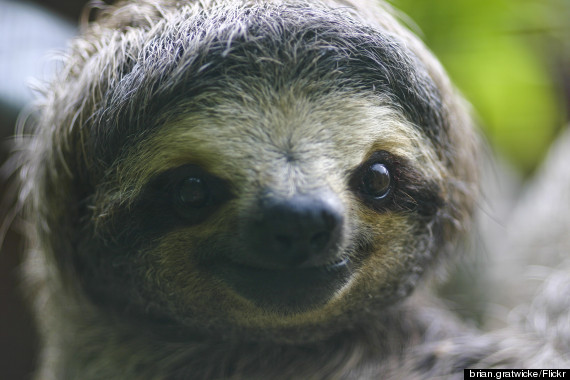
three toed sloth panama

In endangered species conservation, as in many aspects of life, the good looking individuals have a leg up on the competition.  We often choose to protect the attractive species, while ignoring the species that aren’t as eye-catching.  As Dante Alighieri once said, “Beauty awakens the soul to act”.  But in conservation, we need to look for beauty in non-traditional packages. 

A recent article in the Huffington Post, “11 Animals We May Allow To Go Extinct Because They’re Not Cute and Fuzzy” shines light on a serious issue – the public’s focus on only those species that we find physically beautiful. We know, from our previous science class posts, that each species has an important role to play in the ecosystem – the species fills a “niche”.  Many species needing conservation aren’t exactly the Sports Illustrated swimsuit models of nature.  Species such as the Lord Howe Island Stick Insect, the Golden Poison Dart Frog, the short-tailed albatross, and the pygmy three-toed sloth all play important roles in their ecosystems and require species conservation efforts.  Niches should be our basis for preservation (and volunteering and donating), rather than the animals’ cuteness – be sure to check out the article to learn more about the species. 

But that pygmy three-toed sloth is pretty cute (photo credit:  Huffington Post)….

Monday, October 28, 2013

A Frightfully Good Time!

DSC_0001My family and I had some great luck this weekend and won tickets to the National Zoo’s Boo at the Zoo!  We had a terrific time collecting candy, checking out people’s very creative costumes DSC_0029, enjoying the spooky decorations (the butterfly ecologist in me loved this one!)DSC_0027, and visiting some of the animals DSC_0025.  We especially enjoyed the Reptile Discovery CenterDSC_0023 We visited our favorite Panamanian golden frogs and learned about the Appalachian hellbenders from the Salamander AmbassadorsDSC_0024I really enjoyed learning about these fascinating creatures that are right in our backyard.  Did you know:

  • of the 550 salamander species found worldwide, about 1/3 of them call North America home
  • Appalachia is home to 77 species of salamander
  • salamanders start their lives fully aquatic with gills, and move to land for their adult lives
  • 0ne of the main threats to salamander survival is climate change – they need cool, wet places to live. 

Want to help with salamander conservation?  Check out this webpage

Many thanks to FONZ and the National Zoo staff and volunteers for a fun evening of Halloween trick or treating!

Source:  Smithsonian National Zoological Park.  N.d.  Be An Ambassador for Salamanders.  Accessed 10/27/2013 at http://nationalzoo.si.edu/ActivitiesAndEvents/Celebrations/ambassadors.cfm.

Wednesday, May 29, 2013

Amphibians–they’re wet, cool, and in need of our help

Current estimates state that 1/3 of all amphibian species worldwide are threatened with extinction.  Now, a recent study released by the USGS in the scientific journal PLOS One reported that U.S. amphibian species are declining at a surprising rate.  Scientists analyzed 9 years of data from 34 sites and 48 eyes on youspecies to determine that amphibian populations are declining at an average rate of 3.7% per year from 2002 to 2011.  At that rate, scientists estimate that we could see amphibians disappearing from half of their current habitats within 20 years.   Here’s a surprise – declines are occurring even on lands that are specifically set aside for conservation, such as national parks.   Scientists hypothesize that the causes of these declines could include land use change, global climate change, disease, or contaminants. 

So what’s a greenmomster to do?  In previous posts, we’ve discussed the Japanese giant salamanderfrog life cycles and threats, the Panamanian Golden Frog, and a new frog species found in NYC.   But let’s take another look at ways we can protect frogs in our own backyards: 

  • Locally, be sure to protect frog habitat; the areas where frogs live are often sensitive areas that affect the quality of water.  Is there a new road or housing project being put into your neighborhood?  Have the builders checked for the presence of frogs and other amphibians.
  • Join Frogwatch USA and help with citizen science to keep track of local frogs. 
  • Got a lawn?  Check out the FWS Homeowner’s Guide to Protecting Frogs – it’s a great guide for reducing use of pesticides and herbicides that can harm frogs. 
  • Consider buying organically grown produce to reduce contamination by pesticides, herbicides, and fertilizers.
  • Globally, support organizations involved in frog protection – Amphibian Rescue and Conservation Project (for frogs in Panama), Amphibian Ark, or you can even adopt a frog at the World Wildlife Fund.

Conservation efforts of this size cost money, but this is a problem we can help address.  Did you know that, according to the National Retail Federation, the average American spent $80 on Halloween, totaling nearly $8 billion in 2012?  And that in 2010 American consumers were estimated to have spent over $20 billion on video games?  Why not resolve to spend a little less on entertainment, and a little more on our kids’ future environment?


Sources: 

Adams MJ, Miller DAW, Muths E, Corn PS, Grant EHC, et al. (2013) Trends in Amphibian Occupancy in the United States. PLoS ONE 8(5): e64347. doi:10.1371/journal.pone.0064347

USGS Newsroom.  5/22/2013.  “USGS Study Confirms U.S. Amphibian Populations Declining at Precipitous Rates”  Accessed 5/29/2013, http://www.usgs.gov/newsroom/article.asp?ID=3597

Saturday, January 5, 2013

New Years Resolution for 2013–green for frogs!

We’ve talked about frogs in previous posts, and frogs are once again our endangered species of the week.   Many frog species are critically endangered throughout the world (up to 40% of species).  Since frogs are keystone species in many of their ecosystems this fact is newsworthy – atwo frogs 2 keystone species is a species that has a disproportionate impact on its ecosystem, relative to its biomass; like a keystone in an archway, if the keystone species is removed, the arch, or ecosystem, could collapse.  A recent front-page Washington Post article provides a valuable update on frog conservation.   

So what’s a greenmomster to do? 

Conservation efforts of this size cost money, but this is a problem we can help address.  Did you know that, according to the National Retail Federation, the average American spent $80 on Halloween, totaling nearly $8 billion in 2012?  And that in 2010 American consumers were estimated to have spent over $20 billion on video games?  Why not resolve to spend a little less on entertainment, and a little more on our kids’ future environment in 2013?

Here’s a great interview with a Smithsonian scientist who’s on the front lines of frog conservation:


Sources:

Investopedia.  2012.  “How Much Americans Spend on Halloween.”  October 24, 2012.  Accessed online 12/31/12.  http://www.investopedia.com/financial-edge/1012/how-much-americans-spend-on-halloween.aspx#axzz2GfYCB8KX

Venturebeat. 2010.  “Americans spend $25.3B each year on video games.”  May 9, 2010.  Accessed online 12/31/12.  http://venturebeat.com/2010/05/09/americans-spend-25-3b-each-year-on-video-games/#PF6qGkDgzSptJQ0r.99

Monday, June 4, 2012

Endangered Species of the Week–Frogs Leap Back into the Spotlight

Back in February, we talked about frogs for the Leap Day post.  As stated in that post, “One-third of all frog species are in danger of extinction due to a fungus commonly called the chytrid fungus (Batrachochytrium dendrobatidis).  Habitat loss is an even biggerPanamaian Golden Frog problem for frogs and other amphibians.  Often, frogs are viewed as the “canary in a coalmine” when it comes to the health of various ecosystems.  When we start losing frogs, scientists recommend that we really start paying attention.”  One of the most endangered frogs is the Panamanian Golden Frog (Atelopus zeteki) (photo credit Smithsonian CBC), which has been extinct in the wild since 2007.  Now there’s a little ray of hope shining from the Smithsonian’s Amphibian Conservation Center at the National Zoo.   As the zoo reported last week, scientists may have developed a probiotic that could protect them from the chytrid fungus.  To learn more about this new, positive development in amphibian conservation, check out this report from the Today Show.

What can you do to help in frog conservation?  Consider these ideas:

Sunday, May 13, 2012

Happy Mothers’ Day!

edisto18To help you celebrate this special day, here are a few of my favorite pictures of Mother Nature!   edisto6


edisto19
monarch caterpillarthirsty roseeyes on you

Thursday, March 15, 2012

New Frog Species in the Big Apple!

photo from New York Times
An update to my leap-day post on frogs -- a new frog species has been identified in New York City!  It's a species of leopard frog, and has a relatively limited range in New Jersey and New York.  I'll add it to my list of things to do when visiting NYC -- see Statue of Liberty, go ice skating, eat good italian food, check out the new frog!

Wednesday, February 29, 2012

Happy Leap Day!

eyes on youDSC_0074It’s Leap Day, which of course makes me think of one of my favorite animals – frogs!  With over 80 species of frogs and toads in North America and over 4,000 species worldwide (from the TN government website and Peterson Field Guide for Reptiles and Amphibians), this is a big group of animals.  Frogs are amphibians, which means that they have moist, glandular skin and their toes don’t have claws.  Here are some more fun facts about frogs and toads:
  • Frogs lay their eggs in water; they begin their lives with an aquatic tadpole stage with gills and metamorphose into adults with lungs.
  • Frogs don’t have ribcages, so they breath by a “swallowing” action that forces air into the lungs of adult frogs; oxygen can also be absorbed through the frog’s thin, moist skin.
  • Hundreds of millions of years ago, amphibians were the first vertebrates to live on land (National Zoo).
  • More than 75% of the world’s frogs and toads live in tropical rainforests (National Zoo), but they can also be found in the Arctic Circle and in deserts (Rick Emmer).
  • Frogs and toads are ectotherms, which means that they don’t make their own heat to keep warm.  Their body temperature fluctuates with the environment in which they’re found.
  • Frogs hibernate in the winter – if they’re aquatic frogs, they hibernate near the surface of the water or near water in mud; if they’re terrestrial frogs they can bury themselves in mud, find cracks in logs, or just hide in leaf litter (Rick Emmer).
  • Frogs (as well as other amphibians and reptiles) don’t freeze to death in the winter, because they have anti-freeze (or molecules called cryoprotectants) in their cells!  Specific chemicals prevent the critical cells from freezing, so that the frog can revive as temperatures increase in spring.
  • In my neck of the woods (the mid-Atlantic U.S.), the first frog we’ll hear calling is the spring peeper (Pseudacris crucifer).  These little guys can come out when it’s still pretty chilly – I’ve been out on spring peeper walks wearing a heavy winter jacket!
  • You can identify frogs and toads by their vocalizations, just like birds!
two frogs

Unfortunately, many frogs are in danger of extinction worldwide.  One-third of all frog species are in danger of extinction due to a fungus commonly called the chytrid fungus (Batrachochytrium dendrobatidis).  Habitat loss is an even bigger problem for frogs and other amphibians.  Often, frogs are viewed as the “canary in a coalmine” when it comes to the health of various ecosystems.  When we start losing frogs, scientists recommend that we really start paying attention.

So what’s a greenmomster to do?  Locally, be sure to protect frog habitat; the areas where frogs live are often sensitive areas that affect the quality of water.  Is there a new road or housing project being put into your neighborhood?  Have the builders checked for the presence of frogs and other amphibians?  Get busy – maybe this is your chance to “speak for the trees!”  You can also join Frogwatch USA and help with citizen science to keep track of local frogs.  Got a lawn?  Check out the FWS Homeowner’s Guide to Protecting Frogs – it’s a great guide for reducing use of pesticides and herbicides that can harm frogs.  Globally, consider supporting organizations involved in frog protection – Amphibian Rescue and Conservation Project (for frogs in Panama), Amphibian Ark, or you can even adopt a frog at the World Wildlife Fund.  So many options to help – luckily we’ve got an extra day this year to work on it!