Showing posts with label zebras. Show all posts

Sunday, October 21, 2018

Mammal Monday -- zebras!

It's Mammal Monday and time to celebrate the zebra!  One species of endangered zebra is the  Grevy’s Zebra (Equus grevyi)! (image is from www.arkive.org) The Grevy’s zebra is one of three species of zebra and is found primarily in Kenya (95% of the population), but also in small areas ofEthiopia. According to the National Zoo, Grevy’s zebras can grow to about 990 pounds, with males being about 10% larger than females. They graze primarily on tough grasses found on the African savannah, and can live up to 20 years in captivity. The adults mate in August, September, and October and gestation lasts a whopping 13 months!

Estimated to have declined in population by up to 50% in the past two decades, Grevy’s zebras are on the IUCN’s list of threatened species primarily due to habitat destruction, human disturbance, and competition with grazing domestic animals. According to the authors of Wildlife Heroes (Scardina & Flocken, 2012), the social system of these zebras makes them particularly susceptible to threats: “Grevy’s zebras have a totally different social system than the more numerous plains zebra, which served them well in their ecological niche until resources and numbers began to decline. Breeding males remain on their territories year-round – sometimes even in times of severe drought. Females and nonterrritorial (bachelor) males will migrate to more habitable pastures. As fewer than three thousand Grevy’s zebra’s remain over thousands of square kilometers in northern Kenya and Ethiopia, the strongest, most territorial males are often left with a territory no females traverse. On top of habitat loss, water shortages, hunting pressures and human disturbance, this certainly makes a successful breeding season more difficult, so the downward population spiral continues.”

But Kenya and Ethiopia aren't the only areas where conservation professionals are working to protect zebras.  In Tanzania's southern highlands, 24 zebras were recently released (species and sub-species information was not available) into an area that lost it's zebra population 50 years ago.  


A few reasons why we should care about zebra populations:
1) Zebras, wildebeest, and antelope participate in a complex migration each year. Zebras eat the toughest grasses first, which stimulates new, more tender growth for the next wave of migratory herbivores.
2) Zebras are prey species to carnivores such as lions and hyenas. Grevy’s zebras, in particular, expand the range of these carnivores by inhabiting areas that other zebras do not (Scardina & Flocken, 2012)
3) Saving zebras helps to protect other species that depend on this complex landscape.
Want to help protect the Grevy’s zebra? Adopt a Grevy’s zebra at the Cincinnati zoo or support the Grevy’s Zebra Trust, which works to employ members of the local community in zebra monitoring programs.



Monday, May 2, 2016

Mammal Monday -- Grevy's Zebra!

It's Mammal Monday and time to celebrate the Grevy’s Zebra (Equus grevyi)!  (image is from www.arkive.org)   The Grevy’s zebra is one of three species of zebra and is found primarily in Kenya (95% of the population), but also in small areas ofEthiopia.  According to the National Zoo, Grevy’s zebras can grow to about 990 pounds, with males being about 10% larger than females.  They graze primarily on tough grasses found on the African savannah, and can live up to 20 years in captivity.  The adults mate in August, September, and October and gestation lasts a whopping 13 months!

Estimated to have declined in population by up to 50% in the past two decades, Grevy’s zebras are on the IUCN’s list of threatened species primarily due to habitat destruction, human disturbance, and competition with grazing domestic animals.  According to the authors of Wildlife Heroes (Scardina & Flocken, 2012), the social system of these zebras makes them particularly susceptible to threats:  “Grevy’s zebras have a totally different social system than the more numerous plains zebra, which served them well in their ecological niche until resources and numbers began to decline.  Breeding males remain on their territories year-round – sometimes even in times of severe drought.  Females and nonterrritorial (bachelor) males will migrate to more habitable pastures.  As fewer than three thousand Grevy’s zebra’s remain over thousands of square kilometers in northern Kenya and Ethiopia, the strongest, most territorial males are often left with a territory no females traverse.  On top of habitat loss, water shortages, hunting pressures and human disturbance, this certainly makes a successful breeding season more difficult, so the downward population spiral continues.”

A few reasons why we should care about zebra populations:
1)  Zebras, wildebeest, and antelope participate in a complex migration each year.  Zebras eat the toughest grasses first, which stimulates new, more tender growth for the next wave of migratory herbivores. *
2)  Zebras are prey species to carnivores such as lions and hyenas.  Grevy’s zebras, in particular, expand the range of these carnivores by inhabiting areas that other zebras do not (Scardina & Flocken, 2012)
3)  Saving zebras helps to protect other species that depend on this complex landscape.
Want to help protect the Grevy’s zebra?  Adopt a Grevy’s zebra at the Cincinnati zoo or support the Grevy’s Zebra Trust, which works to employ members of the local community in zebra monitoring programs. 


Wednesday, December 24, 2014

Merry Christmas Greenmomsters!

Here’s wishing you a very merry Christmas and a happy last day of Hannukah!  Let’s take a quick look at some of the happy environmental news we encountered this year!

  • November brought us World Toilet Day!
  • And finally, there’s news on coal ash disposal.  On Dec. 19, 2014, the U.S. EPA released its final rule on disposal of coal ash from electric utilities.  The ash will be regulated under subtitle D of RCRA.  It will not be regulated as a hazardous waste, as it would have been under subtitle C.  Although the new rule isn't what many environmental groups had hoped for in their stockings, it’s a step in the right direction. 
Merry Christmas Greenmomsters!

Wednesday, January 22, 2014

Good News for Grevy’s!

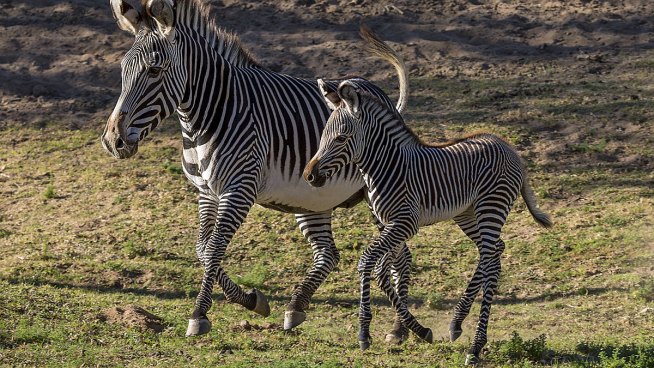
New Foal for Endangered ZebrasIn previous posts, greenmomster has written about the beautiful and endangered Grevy’s zebra.  Well, now there’s great news out of the San Diego Safari Park – a new foal was born on January 5 (photo credit:  Ken Bohn, Jan. 14, 2014 at the San Diego Zoo Safari Park), adding to the 140 Grevy’s zebras born in this very successful breeding program.  With only about 2,250 Grevy’s in the wild, every birth is good news.  Remember, you can help by adopting a Grevy’s zebra at the Cincinnati zoo or support the Grevy’s Zebra Trust, which works to employ members of the local community in zebra monitoring programs.

Be sure to “Like” greenmomster on Facebook for all the latest endangered species updates!

Source:  Stickney, R. 1/15/2014.  “New Foal for Endangered Zebras at San Diego Safari Park”  NBC Universal Media.  Accessed 1/16/2014 at http://www.nbcsandiego.com/entertainment/the-scene/Baby-Grevy-Zebra-San-Diego-Zoo-Safari-Park-Endangered-Species-240298141.html

Sunday, June 10, 2012

What’s black and white and red all over?

That would be our endangered species of the week (who’s embarrassed by all the attention) – the Grevy’s Zebra (Equus grevyi)! – image is from www.arkive.org   The Grevy’s zebra is one of three species of zebra and is found primarily in Kenya (95% of the population), but also in small areas of Ethiopia.  According to the National Zoo, Grevy’s zebras can grow to about 990 pounds, with males being about 10% larger than females.  They graze primarily on tough grasses found on the African savannah, and can live up to 20 years in captivity.  The adults mate in August, September, and October and gestation lasts a whopping 13 months!

Estimated to have declined in population by up to 50% in the past two decades, Grevy’s zebras are on the IUCN’s list of threatened species primarily due to habitat destruction, human disturbance, and competition with grazing domestic animals.  According to the authors of Wildlife Heroes (Scardina & Flocken, 2012), the social system of these zebras makes them particularly susceptible to threats:  “Grevy’s zebras have a totally different social system than the more numerous plains zebra, which served them well in their ecological niche until resources and numbers began to decline.  Breeding males remain on their territories year-round – sometimes even in times of severe drought.  Females and nonterrritorial (bachelor) males will migrate to more habitable pastures.  As fewer than three thousand Grevy’s zebra’s remain over thousands of square kilometers in northern Kenya and Ethiopia, the strongest, most territorial males are often left with a territory no females traverse.  On top of habitat loss, water shortages, hunting pressures and human disturbance, this certainly makes a successful breeding season more difficult, so the downward population spiral continues.”

A few reasons why we should care about zebra populations:

1)  Zebras, wildebeest, and antelope participate in a complex migration each year.  Zebras eat the toughest grasses first, which stimulates new, more tender growth for the next wave of migratory herbivores. *

2)  Zebras are prey species to carnivores such as lions and hyenas.  Grevy’s zebras, in particular, expand the range of these carnivores by inhabiting areas that other zebras do not (Scardina & Flocken, 2012)

3)  Saving zebras helps to protect other species that depend on this complex landscape.

Want to help protect the Grevy’s zebra?  Adopt a Grevy’s zebra at the Cincinnati zoo or support the Grevy’s Zebra Trust, which works to employ members of the local community in zebra monitoring programs. 

Grevy’s zebras are part of a breeding program and there’s good news – just last month, a baby Grevy’s zebra was born at the Cincinnati Zoo.  Check out the new baby!

*  source = McNaughton, S.J. 1979.  “Grassland-Herbivore Dynamics” in Serengeti, Dynamics of an Ecosystem, edited by A.R.E. Sinclair and M. Norton-Griffiths.  University of Chicago Press, Chicago. 389 pp.