Showing posts with label bees. Show all posts

Monday, July 18, 2016

A honey of an art exhibit!

(photo credit:  George Miller)

Scientists often have difficulty explaining scientific concepts to the public.  It's challenging to know one's audience and effectively communicate complex scientific concepts.  This communication is such a challenge, that  Stony Brook College has developed the Alan Alda Center for Communicating Science to help scientists "communicate more directly and personally."

Using art to talk about science is a very effective way to reach people who might not necessarily be interested in science.  I was fortunate to observe this type of communication at a local art opening at the Torpedo Factory Art Center in Alexandria VA this past weekend.  Among many other fascinating pieces, Lisa Schumaier presented her creation, "Habitation of Bees." Ms. Schumaier is a skilled communicator, using her art to share ideas with local audiences.  I first met Ms. Schumaier when my son attended one of her art camps, and witnessed her skill at communicating with students, young and old.

In her latest work, Ms. Schumaier continues to effectively communicate environmental ideas to the public.  The artist's explanation stated that the work "explores bees, highlights their individuality, ingenuity and importance to our world.  The use of entirely recycled materials for the installation hints at our own part in the destruction of the environment that sustains us all."

As a former beekeeper, I found this display beautiful and fascinating.  The tiny bees were each created out of Christmas lights and their hive was made of thousands of pieces of rolled paper carefully glued into place to resemble a beehive or the tunnels of solitary bees.


(photo credit:  George Miller)

(photo credit:  George Miller)

Near this display was a table reminding attendees about the role that bees play in pollination.

(photo credit:  Desiree Di Mauro)

The tiny bees are for sale with the proceeds supporting The Navajo Bee Project.  This program reintroduces beekeeping into the Navajo pastoral economy, where a hive that brings in between $600-$800 worth of income from honey and wax can be a great benefit to this community with an unemployment rate of up to 42%. 

This art exhibit is especially effective, because it uses different methods for communicating to different audiences.  Whether you're a visual arts lover, a foodie, or a philanthopist, there's something here for you.  But here's the take-home lesson, as Ms. Schumaier explained it -- we need to love our bees and pollinators!

(photo credit:  Desiree Di Mauro)


Wednesday, December 24, 2014

Merry Christmas Greenmomsters!

Here’s wishing you a very merry Christmas and a happy last day of Hannukah!  Let’s take a quick look at some of the happy environmental news we encountered this year!

  • November brought us World Toilet Day!
  • And finally, there’s news on coal ash disposal.  On Dec. 19, 2014, the U.S. EPA released its final rule on disposal of coal ash from electric utilities.  The ash will be regulated under subtitle D of RCRA.  It will not be regulated as a hazardous waste, as it would have been under subtitle C.  Although the new rule isn't what many environmental groups had hoped for in their stockings, it’s a step in the right direction. 
Merry Christmas Greenmomsters!

Thursday, August 7, 2014

TBT–Latest Buzz on Counting Bees

bee on liatrisIf you’re noticing lots of bumblebees in your garden, but don’t know which species they are, this is the TBT for you!  Join the Xerces Society and count those bees!

If you’re anything like me, you enjoy the buzz in your garden when the weather warms up and the bumblebees are all over the lavender and joe-pye weed in your garden.  The fall and winter just feel cold and lonely in the garden without that familiar buzz.  Well chins up, greenmomsters!  There’s a project that you can look forward to in 2014!  Join the Xerces Society in their citizen science project – Bumblebee Watch!  As things warm up next spring, you’ll be able to help scientists determine the number of species and the number of individual bees in North America!  You can get all the info and sign up at the Xerces Society website.

Want to keep up on other citizen science projects and green news?  Be sure to “Like” greenmomster on Facebook!

Monday, August 4, 2014

A Sting in the Tale

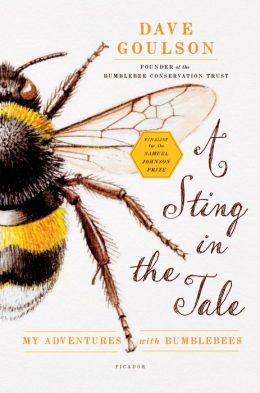
A Sting in the Tale: My Adventures with BumblebeesPollinators are everywhere these days – in our gardens and in the news.  Several national chains, like Wal-Mart, Home Depot, and Lowes have pledged to sell or label plants that are “bee-friendly” and do not contain neonicotinoids (OK, it’s not 100%, but it’s a step in the right direction).  Even the White House issued a Fact Sheet on the economic challenges posed by declining pollinator populations; they established a Pollinator Health Task Force (headed by EPA and USDA) which will develop a National Pollinator Health Strategy – maybe we’ll finally catch up with Europe on pesticide policy! 

But you’re a greenmomster, and I’m guessing you want more pollinator news!  Well, if you can’t see yourself at the beach with some boring romance novel, have I got the book for you – A Sting in the Tale by Dave Goulson, founder of the Bumblebee Conservation Trust in the UK.  Here’s a very entertaining non-fiction book about bumblebees.  And who doesn’t love bumblebees, in all their furry, clumsy, loudly buzzing glory?  I get a kick out of bumblebees, because they’re gentle and seem to defy the laws of physics when they fly.  Dr. Goulson has spent his career as a researcher in England and France studying these creatures, and his book provides an entertaining look at the various types of bumblebees he encounters.  He does an expert job at very simply explaining ecological concepts, like the Allee affect and genetic bottlenecking.  And I learned fascinating insights into the use of bumblebees for pollination, much the way honeybees are used worldwide.  Dr. Goulson also includes many funny stories about his learning curve as a child and his adventures on a farm in France.

If you're looking for something a little more enriching than the usual summertime read, but still want to relax with a book, I highly recommend A Sting in the Tale.  Happy reading!

Thursday, June 5, 2014

TBT–Happy National Pollinators Week!

Since June 16 – 23, 2014 is National Pollinators Week, this week’s Throwback Thursday re-post is all about pollinators.

As we all learned in elementary school, plants are fertilized through pollination.  Pollmonarch caterpillarination either occurs via wind or various types of animal vectors, like butterflies, bees, flies, and even bats.   Pollinators are important to the natural ecosystem, as well as to our tables and our economy.  According to the Natural Resources Defense Council, bees pollinate more than $15 billion per year in U.S. crops, including apples, almonds, berries, cantaloupes, and cucumbers.  They also estimate that honeybees produce over $150 million in honey each year.  A recent United Nations Report  stated that, of the 100 plant species that provide 90% of the world’s food, over 70 are pollinated by bees!

LasertagSo how can the greenmomsters celebrate National Pollinators Week?

  • Plant a butterfly or pollinator garden (they’re friendly areas for kids with squirt guns too)!  It’s easy and relatively low maintenance.  We have butterfly gardens all around our yard, and as you can see from the photo at left, they don’t get in the way of other backyard uses, including laser tag parties!  For more info on planting a butterfly garden see the U.S. Fish and Wildlife Service’s instructions.  Maybe visit a local FWS pollinator garden, just to see what it will look like in your yard.
  • Avoid or limit pesticide use.  Remember, most pesticides kill lots of insects (even the beneficial ones), not just the ones that are bugging you.
  • Work to change your community to more sustainable energy sources.  Climate change can have severe impacts on pollinators, since it affects both the pollinators and the plants with which they’ve evolved.
  • Join the Xerces Society, an international non-profit working to protect pollinators and other invertebrate species.

Monday, December 16, 2013

The latest buzz on counting bees

bee on liatrisIf you’re anything like me, you enjoy the buzz in your garden when the weather warms up and the bumblebees are all over the lavender and joe-pye weed in your garden.  The fall and winter just feel cold and lonely in the garden without that familiar buzz.  Well chins up, greenmomsters!  There’s a project that you can look forward to in 2014!  Join the Xerces Society in their citizen science project – Bumblebee Watch!  As things warm up next spring, you’ll be able to help scientists determine the number of species and the number of individual bees in North America!  You can get all the info and sign up at the Xerces Society website.

Want to keep up on other citizen science projects and green news?  Be sure to “Like” greenmomster on Facebook!

Saturday, December 7, 2013

I’m dreaming of a green Christmas!

2012Christmas22For all things green, be sure to "Like" greenmomster on Facebook!

Once again we’re dreaming of a white Christmas (and we might get it on the East Coast tomorrow!), but what about a green Christmas?  Last year, greenmomster started posting some ideas for making your Christmas celebrations a little more eco-friendly.  Here are some old and new ideas for greening up the holiday!

noahbday11)  The wrapping!  Making Christmas gifts festive and fun to unwrap is part of the fun of giving the gifts.  Even the Grinch knew that taking the wrappings might put a damper on things as he left Who-ville:  “he packed up his sled, packed it up with their presents!  The ribbons!  The wrappings! The tags! And the tinsel!  The trimmings!  The trappings!” (XMAS FUN 2012).  But then again, according to Earth911, “wrapping paper and shopping bags alone account for about 4 million tons of trash annually in the U.S.”  None of us wants to be a Grinch, so how can we green up the wrappings?
  • If you want to wrap gifts in wrapping paper, why not try recycled paper?  And follow your mom and grandma’s lead – reuse that wrapping paper!
  • You can always wrap gifts in tissue paper (I use the tissue paper that’s stuck into dry cleaned clothes), fabric, or even the comics.
  • Reuseable gift bags can be used year after year (I have some bags that have been through at least 5 Christmases).
DSC_00012)  The tree!  OK, it’s the age-old debate – should we use a fresh tree?  artificial?  tree in a pot to be planted later?  A few thoughts, then you make your own decision:
  • Artificial trees – Here’s a fun fact from Earth911, “a U.S.-based toilet bowl brush manufacturer, the Addis Brush Company, created an artificial tree from brush bristles in the 1930s, acting as the prototype for modern artificial trees.”  I’ll remember that tidbit, as I relax next to my beautiful fake tree that I enjoy year after year.  Here’s the big con to artificial trees – most are made of non-recyclable, non-biodegradable metal and PVC.  Thus, when you throw them away, they’ll sit in the landfill for many generations to come.  Since my family keeps their artificial trees for decades (my mother has had her artificial tree for nearly 50 years), I’m not losing sleep over this con.  A more troublesome issue with artificial trees --  most are produced overseas and must be shipped to the U.S. – think fossil fuels and pollution in production and shipping  (Earth911 2012).  If you’ve decided on a fake tree,GoodHousekeeping has some recommendations regarding brands to try. 
  • Real trees – Most experts agree that this is the more eco-friendly option.  Over 30 million Christmas trees are sold in the U.S. each year, and 93% of those trees are recycled into mulch (Earth911 2012).  Additionally, Earth911 (2012) reports that a single farmed tree absorbs more than 1 ton of CO2 in its lifetime!  The cons?  Since Christmas trees are an agricultural product, we can expect application of pesticides, fertilizers, and herbicides, unless they’re grown organically.  Additionally, if you don’t live in an area where conifers grow naturally, add the cost of tree transport into your eco-footprint calculation (Earth911 2012).  If you do get a real tree, just say no to the plastic mesh wrapping.
  • Real LIVE trees – The most eco-friendly option.  Buy a live, potted tree, which you can keep in your house for about 1 – 1 1/2 weeks and then plant outdoors after the holidays.
3) The cards!  I come from a proud line of Christmas card senders and Christmas letter writers.  So how can we green up this annual tradition?
  • Send cards and letters online.  Friends and family can read about your adventures in the past year, and then save, print, or delete!
  • Try one of the eco-friendly card companies, using soy inks and recycled paper.  One of my favorites is Minted!
  • Send cards that support a green organization, such as the cards made by the National Wildlife Association or World Wildlife Fund.
DSC_00744)  The gifts!  There are actually fun green gifts that don’t lead to forced smiles and insincere “thank yous!” 
  • For the animal lovers in your family!  Through many organizations, you can symbolically “adopt” an animal, and receive a plush toy, certificate of adoption, and a poster or photograph.  Young children get a toy and wildlife organizations get badly needed financial support.  Some of the programs I’ve enjoyed in the past include the National Zoo’s “Adopt a Species”, National Wildlife Federation’s Adoption Center,  and World Wildlife Fund’s Species Adoptions. 
  • Do you have a bike?  By giving bikes to not just the kids, but also the adults in the family, you’ll be encouraging the option of green transportation for local trips (plus you might lose a few of those Christmas cookie pounds!)
  • How about a new set of non-teflon coated cookware?  Have you been wanting to upgrade your cooking utensils?  By trading up for pots and pans that AREN’T coated in teflon, you’ll be reducing your family’s exposure to many harmful chemicals.
  • Got an avid gardener in the family, or do you want to become one?  Christmas is the perfect time to set someone up for a successful butterfly or vegetable garden in 2013 – garden tools, seeds, composting equipment, even rainbarrels are gifts that your family can enjoy throughout the year.  Birdfeeders and bird baths are a nice addition to any garden.  If you really want to go all out, how about beekeeping equipment?
  • Lifelong learning!  Gift certificates for classes are a waste-free gift that can be enjoyed throughout the year.  Be it cooking, archery, knitting, photography, or architecture classes – you know they’ll love it! 
  • How about a gift that lets the receiver enjoy the great outdoors?  Camping equipment was my gift at my last birthday!  Not into camping?  Think “roughing it” is a black and white TV?  Then how about binoculars or a field guide for an aspiring bird or butterfly watcher, or a camera for the budding nature photographer?
  • How about non-toxic soaps and shampoos from eco-friendly companies?  Many manufacturers now make these products, but some of my favorites are The Body Shop, Aveda, and the Parsonage.
  • Got someone in your family that enjoys camping or cabins?  Virginia State Parks offer gift certificates that can be used for camping, cabins, parking, and picnic shelter rentals.  Don’t live near VA?  You can always give an annual pass for national parks and federal recreational lands.  Need trip inspiration?  Check out this post on Bryce National Park.
Want more great ideas on how to green your holidays?  Check out EarthEasy’s tips for green gift giving, wrapping, and lighting.
From the greenmomster’s house to yours, we wish you a very merry and GREEN holiday season!2012Christmas37
Sources:
Earth911.  2012.  Facts About Recycling Wrapping Paper.  Accessed 11/29/12. http://earth911.com/recycling/paper/wrapping-paper/facts-about-recycling-wrapping-paper/
EarthEasty.  2012.  How to have a ‘green’ Christmas.  Accessed 11/29/12. http://eartheasy.com/give_sustainchristmas.htm
GoodHousekeeping.  2012.  Getting an Artificial Christmas Tree!  Choose This Type.  You’ll save resources and reduce risk of toxins.  Accessed 11/29/12.  http://www.thedailygreen.com/going-green/tips/artificial-christmas-trees-buy-american
XMAS FUN.  2012.  How the Grinch Stole Christmas by Dr. Seuss.  Accessed 11/29/12. http://xmasfun.com/stories/Grinch/Text.asp


Saturday, April 20, 2013

Spring Buzz

Last fall (due to a little allergic reaction), we had to give away our hive of bees that we’d kept in our yard for the past four years.  It was sad to see the girls go, but beekeeping was a great experience – we learned many interesting facts about these fascinating creatures and got a lot of honey too!  Since we can’t give you a hive update this spring, I figured I’d pass alongDSC_0014 an interesting interview I heard on Science Friday about the  winter bee survey and how bees are doing nationwide.  Each year, extension agents conduct a survey of beehives across the nation to see how they survived the winter.  It turns out, the winter of 2012/2013 was a tough one for honeybees – take a listen to the show. 

Tuesday, June 19, 2012

Happy National Pollinators Week!

June 18 to 24 is National Pollinators Week – time to think about the important role pollinators play in our environment and how we can help protect these valuable species.  As we all learned in elementary school, plants are fertilized through pollination.  Pollmonarch caterpillarination either occurs via wind or various types of animal vectors, like butterflies, bees, flies, and even bats.   Pollinators are important to the natural ecosystem, as well as to our tables and our economy.  According to the Natural Resources Defense Council, bees pollinate more than $15 billion per year in U.S. crops, including apples, almonds, berries, cantaloupes, and cucumbers.  They also estimate that honeybees produce over $150 million in honey each year.  A recent United Nations Report recently stated that, of the 100 plant species that provide 90% of the world’s food, over 70 are pollinated by bees!

LasertagSo how can the greenmomsters celebrate National Pollinators Week?

  • Plant a butterfly or pollinator garden!  It’s easy and relatively low maintenance.  We have butterfly gardens all around our yard, and as you can see from the photo at left, they don’t get in the way of other backyard uses, including laser tag parties!  For more info on planting a butterfly garden see the U.S. Fish and Wildlife Service’s instructions.  Maybe visit a local FWS pollinator garden, just to see what it will look like in your yard.
  • Avoid or limit pesticide use.  Remember, most pesticides kill lots of insects (even the beneficial ones), not just the ones that are bugging you.
  • Work to change your community to more sustainable energy sources.  Climate change can have severe impacts on pollinators, since it affects both the pollinators and the plants with which they’ve evolved.
  • Join the Xerces Society, an international non-profit working to protect pollinators and other invertebrate species.

Saturday, May 19, 2012

Non-native invasives crashing the garden party

sammybutterflyIt’s finally warm, which means I spent the morning in my garden, planting (which I love), weeding (which I don’t love), and listening to country music on the MP3 (which makes the weeding more bearable).  I love planting all the different vegetables – tomatoes, of course, but also zucchini, okra (fried, oh yeah!), snow peas (they went in earlier), radishes, lettuce (hoping it doesn’t bolt too soon), eggplantPhoto of Kudzu cloaking vegetation. (always a challenge), sweet potatoes, and beloved basil!  After the vegetables are planted, my eye wanders to the rest of the garden.  The blueberries, raspberries, and figs will be on our table soon, if the birds don’t get them first.  And I’m always looking for some nice perennials that will bring in the butterflies and feed my honeybees.  I just planted some bee balm, right next to the joe pye weed that’s a favorite of the butterflies.  Planting wild indigo (for the wild indigo duskywing butterfly) was a stroke of genius – it fills my garden with beautiful blue blossoms in the late spring and early summer.  Don’t forget the milkweed, which is necessary for the monarchs (as in the picture to the left).

Unfortunately, there are also unwanted invaders in my garden.  Usually, plants (and animals) that we want in our gardens, or forests, or any other natural area, are native to the area.  They’re species that have evolved in the region; they are well-adapted for life in a particular climate with particular neighbors.  But there are other species, the non-natives, that were somehow brought to an area and allowed to establish themselves.  Sometimes, non-native species are not a problem for the ecosystem.  They stay where they’re planted and don’t outcompete native species for resources.  Examples of common non-native plants are roses, tulips, or Japanese cherry blossoms.

But then there are the non-natives that aren’t so innocuous – they’re referred to as “invasive non-natives”, because they can outcompete native species and have a tendency to turn a landscape that once had much biodiversity into a landscape with just one main species.  Not exactly a healthy outcome for an ecosystem.  Common invasive non-native plants include English ivy, Japanese honeysuckle, periwinkle, garlic mustard, porcelain berry, and kudzu (the photo at the right is kudzu taking over an area, from http://www.fws.gov/invasives/volunteersTrainingModule/nwrsystem/kudzuorigin.html).  As we’re planting our gardens in the spring, the goal should be to minimize introduction of these harmful plants into the ecosystem.  It’s not as easy as it sounds, because many plant nurseries sell these plants!  Be sure to go to the nursery armed with a list of invasive non-natives to avoid for your geographical area.  We also want to try to remove the invasives from our gardens and yards as much as possible – again, not the easiest thing, because you don’t want to cause erosion (by leaving big empty spaces) or remove large swaths of bird habitat.  Take your time, be methodical.

But really, why should we give a flying flit about invasive non-native removal if we just want to plant one or two?  Because invasive non-natives affect ecosystem health, economic health, and human health.  For more information on invasive non-natives in your area, check out http://www.fws.gov/invasives/.   And Happy Planting (natives only please)!

Thursday, March 8, 2012

Beekeeping in the ‘burbs

I am happy, happy, happy today.  It’s a beautiful, unseasonably warm day in the beginning of March.  I just checked our beehive and they made it through the winter!  I found the queen, she’s laying, and some of the workers even had pollen behind their “knees.”  AllDSC_0071 seems to be going well in the hive.  So the question is, to split or not to split?  “Splitting”  a hive means you take some frames from one hive and try to start a new hive with them.  I’m relatively new to beekeeping (this was our hive’s third winter), but the old-timers seem to say that it’s easier to manage two hives, rather than one.  We’ll need to make a decision in the next couple of weeks, so over that time I’ll be spending some time staring blankly through the dining room window at the hive in our backyard, hoping for a lightning bolt or some other sort of sign about what to do.

Our family got into beekeeping a few years ago after attending a 4H fair.  My son, Sammy, announced that he really, really wanted to try beekeeping.  Now, Sammy is a man of many passions.  He loves hockey; he loves legos.  He attends bonsai workshops and loves planting and caring for the little trees.  He’s an avid reader, plays soccer, raises leopard geckos, and plays the bass.  Basically, Sammy has a great deal of “Joie de Vivre.”  So when he told me about the beekeeping, I figured this might be a passing fad.  I told Sammy that he could have a beehive, but he’d have to attend 4H meetings for one year before I would take the adult class and buy everything for the hive.

I learned the ol’ “4H for one year” trick from my mother.  When I was a little girl, I really, really wanted a rabbit.  My mom said fine, I could have a rabbit, but I had to attend 4H in order to get the rabbit.  I was so excited at my first 4H meeting!  Sitting there in the public library meeting room, we heard all about rabbits and rabbit care.  The adult leader handed out a schedule of the year’s activities:  build the hutch, get the rabbit, care for the rabbit, learn about rabbit diseases, show rabbit at the 4H fair, SLAUGHTER THE RABBIT!  That was my first and last 4H meeting, and I never did get my rabbit. 

Well, 4H has changed a lot in the past 40 years.  It’s a lot of fun and the kids really learn about their animals.  My kids are in the local 4H bee club and the dog training club.  The adult leaders generously give of their time and the kids really enjoy themselves.  Needless to say, although it may be part of some of the more agricultural clubs, we haven’t had to slaughter anything.

So, the ol’ “4H for one year” trick backfired, and I now have a beehive in my backyard.  I have a love/hate relationship with “the girls.”  On early spring days like today, it lifts my spirits to see them break cluster and fly.  In the middle of summer when they’re hungry and I have to feed them every other day (not enough nectar sources here in the ‘burbs), we both have slightly bad attitudes – they want to sting me and I might smoke them a little too vigorously.  When we’re harvesting honey, I’m thankful for their hard work.  Over the summer, I love watching the kids show the honey and candles at the 4H fair.  When we’re making candles at Christmas, I’m glad “the girls” are snug in the hive, riding out another winter.

IMG_0380Our bees made it through the winter!  Now starts another spring and summer bee adventure, and that’s why I’m so happy.