Showing posts with label mammals. Show all posts

Sunday, October 21, 2018

Mammal Monday -- zebras!

It's Mammal Monday and time to celebrate the zebra!  One species of endangered zebra is the  Grevy’s Zebra (Equus grevyi)! (image is from www.arkive.org) The Grevy’s zebra is one of three species of zebra and is found primarily in Kenya (95% of the population), but also in small areas ofEthiopia. According to the National Zoo, Grevy’s zebras can grow to about 990 pounds, with males being about 10% larger than females. They graze primarily on tough grasses found on the African savannah, and can live up to 20 years in captivity. The adults mate in August, September, and October and gestation lasts a whopping 13 months!

Estimated to have declined in population by up to 50% in the past two decades, Grevy’s zebras are on the IUCN’s list of threatened species primarily due to habitat destruction, human disturbance, and competition with grazing domestic animals. According to the authors of Wildlife Heroes (Scardina & Flocken, 2012), the social system of these zebras makes them particularly susceptible to threats: “Grevy’s zebras have a totally different social system than the more numerous plains zebra, which served them well in their ecological niche until resources and numbers began to decline. Breeding males remain on their territories year-round – sometimes even in times of severe drought. Females and nonterrritorial (bachelor) males will migrate to more habitable pastures. As fewer than three thousand Grevy’s zebra’s remain over thousands of square kilometers in northern Kenya and Ethiopia, the strongest, most territorial males are often left with a territory no females traverse. On top of habitat loss, water shortages, hunting pressures and human disturbance, this certainly makes a successful breeding season more difficult, so the downward population spiral continues.”

But Kenya and Ethiopia aren't the only areas where conservation professionals are working to protect zebras.  In Tanzania's southern highlands, 24 zebras were recently released (species and sub-species information was not available) into an area that lost it's zebra population 50 years ago.  


A few reasons why we should care about zebra populations:
1) Zebras, wildebeest, and antelope participate in a complex migration each year. Zebras eat the toughest grasses first, which stimulates new, more tender growth for the next wave of migratory herbivores.
2) Zebras are prey species to carnivores such as lions and hyenas. Grevy’s zebras, in particular, expand the range of these carnivores by inhabiting areas that other zebras do not (Scardina & Flocken, 2012)
3) Saving zebras helps to protect other species that depend on this complex landscape.
Want to help protect the Grevy’s zebra? Adopt a Grevy’s zebra at the Cincinnati zoo or support the Grevy’s Zebra Trust, which works to employ members of the local community in zebra monitoring programs.



Saturday, September 29, 2018

Hedgehog highway

This new little film about how to help hedgehogs thrive in the U.K. reminds us of things we need to do here in North America too -- most notably, providing free access to habitat and not creating barriers such as walls and fences. Conservation managers call these free access areas "wildlife corridors" -- you may have seen them near highways.  I've written about the proposed wall along the U.S./Mexico border is an environmental disaster, but removing wildlife barriers is also something we can tackle in our own backyards.  And those hedgehogs really are cute!


Wednesday, September 26, 2018

Otterly wonderful!

It's Sea Otter Awareness Week, which means we have to celebrate!  I was born in Carmel, California, and the Monterey Bay area is always a favorite of mine. This week's mammal comes from beautiful Monterey Bay -- it's the sea otter! Did you know,

  • sea otters are the only marine mammal that doesn't use blubber to stay warm in the icy waters of the Pacific -- to stay warm, they have incredibly thick fur that traps air
  • sea otters are a keystone species in their habitat -- the role that they play impacts all the other species in the area
  • sea otter populations seem to be spreading (that's good news!) -- there was a recent sighting in southern California
  • sea otter mothers tie their babies into floating seaweed while they go looking for food, but there's always a plan B:

Saturday, September 22, 2018

World Rhino Day!

Today is World Rhino Day 2018!  As with many large African species, black rhinos and white rhinos  are threatened by habitat loss and illegal hunting. To save them, conservationists are working hard to coordinate programs with local communities, decrease demand for rhino horn, and even airlift some individuals to safety.  Why should we care? As the World Wildlife Fund's website states:

"In almost all rhino conservation areas, there are other valuable plants and animals. The protection of rhinos helps protect other species including elephants, buffalo, and small game. Rhinos contribute to economic growth and sustainable development through the tourism industry, which creates job opportunities and provides tangible benefits to local communities living alongside rhinos. Rhinos are one of the "Big 5" animals popular on African safaris and they are a popular tourism draw in places like the Eastern Himalayas."

Do you want to help?
  1. Learn more about rhinos and their conservation
  2. Never buy products containing rhino horn or any other body part
  3. "Adopt" a rhino from WWF or donate to the African Wildlife Foundation to help with conservation efforts

Monday, September 3, 2018

Mammal Monday -- Przewalski's Horse


Greenmomster's been a little spare on the posts lately, because I've taken on a new job -- I'm now a high school science teacher!  But now I'm back in the saddle, so what better mammal for this Monday that the Przewalski's Horse (pronounced “sheh-val-skee”)! This horse is native to plains and grasslands of Mongolia, as well as other parts of Asia and eastern Europe, but I first saw one at the National Zoo’s Smithsonian Conservation Biology Institute in Front Royal, VA. Although these horses are small (about 13 hands high and between 550 and 750 pounds), they’re impressive with tan fur on their bodies and a short, dark mane and tail. They have evolved to survive the harsh winters in Mongolia, but in the 20th century the species had trouble surviving in the face of habitat loss, loss of water sources to domestic animals, and overhunting. The Przewalski’s horse was declared extinct in the wild by the World Conservation Union in 1970.

Thanks to an active captive breeding program, Przewalski’s horses were reintroduced to the wild in 2008. There are currently 1,500 horses in captivity worldwide, and approximately 400 horses in reintroduction sites in Mongolia, Kazahkstan, and China. All of today’s current population of Przewalski’s horses come from 14 ancestors. Thus, the gene pool for this horse is very narrow. Scientists must very carefully coordinate breeding between the captive horses to try to maximize genetic diversity and make the population more able to withstand various stresses, such as disease.

So Przewalski’s horse is beautiful, but why should we care about its survival? Because a species like this one tells us when we’re negatively impacting the ecosystem. Humans are part of the natural world; we depend on natural resources for our survival. But sometimes we take more than our share, and the ecosystem on which we depend begins to suffer. Species like Przewalski’s horse tell us when our agricultural or hunting practices are unsustainable.

And if you needed more reasons to protect the Przewalski’s horse, here are 5 Reasons Przewalski’s Horses are cooler than thoroughbreds:
  • It is the only truly wild horse remaining in the world (it’s never been tamed for riding).
  • I’ve never fallen off a Prezwalski’s horse (I’ve definitely fallen off a thoroughbred)
  • Prezwalski’s horses can make it through winter in Mongolia without a horse blanket.
  • The Mongolian name for these horses is “takhi,” which means “spirit.” That’s way cooler than names like Chicken Lips or Buck Naked.
  • Przewalski’s horses have 2 more chromosomes than domestic horses(66 vs. 64).
  • Oh, and did you know that horse vasectomies can be reversed? Greenmomster’s always here for you with fun facts!

Monday, August 20, 2018

Mammal Monday -- Maned Wolves

I’m a very fortunate person, because I’ve actually had a close encounter with this week’s mammal and endangered species, the Maned Wolf. Maned wolves are beautiful creatures who live in the grassy areas of central south America (parts of Argentina, Bolivia, Brazil, Paraguay, and possibly parts of Peru and Uruguay). These wolves (people often say look like “foxes on stilts”) are omnivores, hunting at night and eating a diet which includes fruits and berries as well as small animals like rodents, reptiles, and insects. Because of this diet, the wolves play an important part in their ecosystems, controlling animal populations lower on the food chain and acting as seed dispersers. One of their primary food sources is the lobeira berry -- this fact caused some difficulty when zookeepers were first trying to raise the wolves in captivity many decades ago. Zookeepers knew that the wolves were omnivores, but didn’t know about the importance of lobeira berries in their diet. Until they worked out this puzzle, the wolves often suffered from dietary problems in captivity.

As mentioned on the ARKive website, these solitary wolves live in home ranges of 25 to 50 square km and only come together during the breeding season. Females reach sexual maturity at one year and can give birth to litters of 1 to 5 pups. The primary threat to these wolves, as is the case with many other endangered species, is habitat loss. Scientists and conservation managers are working hard to protect these wolves from loss of their habitat, as well as negative contact with humans and road kills.

I just read about Rogerio Cunha de Paula, one of the leading biologists working to protect the species. He is working to protect the Serra da Canastra National Park in Brazil from logging, mining, and conversion of habitat from soil plantations (see the book Wildlife Heroes by Julie Scardina and Jeff Flocken for more info). Many other people are also working hard to protect the wolves, and that’s how I got my close encounter. The National Zoo has been involved in maned wolf conservation for over 30 years and is the coordinator of the Species Survival Plan for the maned wolf. As a volunteer with the zoo, I was an “interpreter” about maned wolves for the public. One of the keepers at the maned wolf exhibit, my friend Kim, took extra time with me to teach me how truly special these animals are – she shared her knowledge of the wolves and gave me an unforgettable look at these fascinating creatures! What a treat to see these animals close-up, to hear their specific vocalizations, and yes, even to smell their (very strong) scents during mating season. Based on these encounters, I can say that the world would be a poorer place without the beautiful maned wolf.

Monday, August 13, 2018

Happy World Elephant Day!

Yesterday was World Elephant Day, so I'm re-running the Great Big Elephant Quiz.  Enjoy!
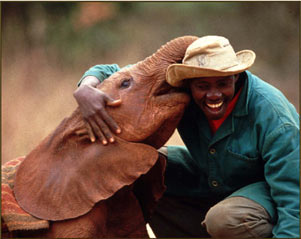
This week’s endangered species is the African Elephant (Loxodonta cylclotis) (photo from David Sheldrick Wildlife Trust). Found in sub-Saharan Africa, these elephants are listed as “vulnerable” by the IUCN, due to human/elephant conflicts and poaching for their ivory tusks.
Most of us have seen elephants, on TV or in zoos (or in the wild, if we’ve been lucky enough), but can you pass the GREAT BIG ELEPHANT QUIZ? See if you can answer the following 10 questions:
  1. T/F Elephants only use their trunks for smelling
  2. T/F Elephants can use their ears to cool their bodies
  3. T/F African elephants are the largest land mammal on Earth
  4. T/F Herds are led by dominant females
  5. T/F Male elephants live in herds
  6. T/F Elephant gestation is one of the longest pregnancies on Earth
  7. T/F Both male and female elephants have tusks
  8. T/F Elephants are carnivores
  9. T/F Elephants have great memories
  10. T/F Elephants are big sleepers
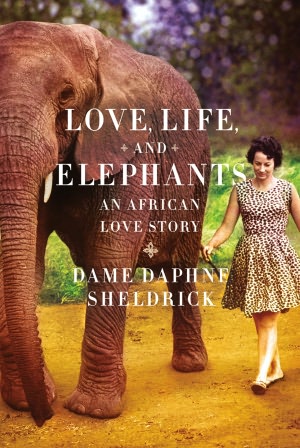
Answers (from Wildlife Heroes, by Scardina and Flocken; National Geographic website; and Love, Life, and Elephants by Dame Daphne Sheldrick)
  1. False – elephants also use their trunks for breathing, drinking, and picking up small objects. The trunk contains about 100,000 different muscles!
  2. True – thanks to radiation of heat through their ears
  3. True! Asian elephants are a little smaller
  4. True – elephant herds are made up of family groups of females, led by one dominant female
  5. False – once they hit maturity, these big guys are loners
  6. True – yes greenmomsters, your pregnancy may have seemed long, but it’s nothing compared to the 22 month gestation of an elephant. Oh, and you thought your 9 lbs baby was big? Try 200 lbs!
  7. True!
  8. False, thank goodness – elephants survive on grasses, roots, and bark. Up to 300 lbs per day!
  9. True – not just a myth! For a fascinating book on elephants, their memories, and one woman’s love story and lifetime of trying to save orphaned elephants, check out Love, Life, and Elephants by Dame Daphne Sheldrick
  10. False – elephants don’t really sleep for long periods of time
Need more reasons to care about elephant conservation? From Wildlife Heroes, “Elephants shape the environments in which they live by opening up forests, controlling brush and tree growth, and digging for water and minerals, which benefits other animals. Their copious amounts of dung also help fertilize the landscape and disperse seeds.”

How’s a greenmomster to help?

Sunday, August 5, 2018

Mammal Monday -- mountain lions

Maybe you saw this video of a family of mountain lions having a drink on a Colorado family's deck:

So let's take a look at mountain lions (Puma concolor), or cougars/pumas, for today's Mammal Monday.  This cat, the largest in North America, has a range spanning from Canada all the way to Argentina. They're usually solitary animals who can defend a territory from 10 to over 300 square miles.  As you can see from the video, they have litters of 2 to 4 offspring that can stay with the female for 1 to 2 years.  Mountain lions are considered threatened under the Endangered Species Act, with the biggest threats to the species being habitat destruction and conflicts with livestock.  Want to learn more?  Check out the National Wildlife Federation's page on the species.

Monday, July 30, 2018

Mammal Monday -- Photo Ark


Our hope is that people will look these creatures in the eyes, and be inspired to care, while there is still time.
I was checking out my instagram feed the other day and saw Joel Sartore's post about Tasmanian devils, which I wrote about back in May.  These endangered mammals were featured on Sartore's page, Photo Ark, and are threatened by a cancer called Devil Facial Tumor Disease (DTFD).  The Save the Tasmanian Devil Program is working to conserve these incredible little carnivores (they actually eat their ENTIRE prey, bones and all).  To help, visit the program's website.

If you love wildlife and haven't seen Photo Ark, you should definitely check it out.  Sartore has spent the last 25 years trying to document every species in human care, to photograph species before they disappear, and to get people to care about these species.  I was lucky enough to see his Photo Ark exhibit at the National Geographic in Washington DC, and you can see the photos in his book. Here's a look at a day at the office for the Photo Ark crew:


Monday, July 23, 2018

Mammal Monday -- rhinos


We've celebrated rhinos before on Mammal Monday, but today I realized we need to take another look.  Last night, CBS Sixty Minutes included a fascinating report about black rhino relocations -- why conservation experts feel it's necessary and why it's so difficult.  Here's a little clip on the background which causes these veterinarians think these relocations are necessary:


But this process isn't easy or risk-free.  Just last week, the Washington Post reported on the death of 8 endangered black rhinos that died after relocation to a sanctuary in Kenya.  Relocations of endangered species are not the best solution, but it's sometimes necessary.  The best solution is what conservationists call the "precautionary principle." Basically, we want to prevent harmful actions before they happen, rather than trying to fix disasters afterward.  While relocations are a valuable last-gasp effort, the ultimate conservation goal is to directly address the threats to rhinos -- habitat loss and poaching.  Want to learn more or help out?  Save the Rhino and World Wildlife Fund are both active in rhino conservation -- check out how you can help!

Monday, July 16, 2018

Mammal Monday -- koalas

In ecology, we talk about "generalist" species and "specialist" species.  A generalist is a species that is able to eat lots of different foods, can bed down in a variety of different places, and is relatively flexible in its lifestyle strategy.  If a generalist were a human (which we are), she'd be a good travel companion.  On the other hand, the specialists usually won't eat many different types of foods and are very choosy about habitat.  As Billy Crystal said in "When Harry Met Sally", they're "high maintenance."


Koalas are most definitely specialist species.  They're a marsupial that is able to eat eucalyptus leaves, which most animals find toxic.  Thanks to their unique genetics, koalas can produce an enzyme that breaks down the toxins in the leaves.  And although there are about 600 different types of eucalyptus, koalas focus on about 120 of these types of trees.    Koalas have many other unique characteristics, such as very limited genetic diversity.  To learn more about koalas and their evolution, check out this Washington Post article about koalas by Joel Achenbach.

Specialist species are often at greater risk of extinction, simply because they can't easily adjust to environmental changes.  So what's being done to protect koalas?  Check out this video and visit the Australian Koala Foundation website where you can learn about koala protection and help out by donating, planting a tree, or adopting a koala.


Monday, July 9, 2018

Mammal Monday -- a change in plans

OK -- I was going to go in a totally different direction for Mammal Monday today, but there was this great video posted over at Osler's Razor today that I just had to share.  In case you've ever wondered about wildlife after a fire (I've posted about wildlife in a hurricane), here's some info on baby bears and fire, plus an odd appearance by Smokey the Bear...

Tuesday, June 26, 2018

World Giraffe Day!


Last Thursday was World Giraffe Day, and since giraffes are my spirit animal (a vegetarian that can kick the crap out of its enemies), I decided to repost a favorite.  Enjoy!

I was recently asked, if you could become any animal other than human, what would you become, and my answer is definitely "a giraffe!" One of my favorite memories from the zoo is feeding giraffes. These huge animals, with their incredibly strong legs and large hooves (as big as dinner plates!), can be so gentle. Feeding giraffes gives you an up-close look at these beautiful creatures – those 18-20 inch prehensile tongues (designed to work around the thorns of Acacia trees) are pretty impressive!

Check out this video to see that prehensile tongue in action! And did you know that giraffes have the same number of cervical vertebrae (neck bones) as humans – 7?
Here are some more fun facts about giraffes, provided by the Giraffe Conservation Foundation:
  • Giraffe gestation is about 15 months! The calves will nurse for 9-12 months, but they can also eat solid food after about 4 months.
  • Giraffes are ruminants, like cows – they can get nutrients from the cellulose in plants.
  • No two giraffes have the same coat pattern – they’re like our fingerprints!
  • Although giraffes can live to 25 years in the wild (longer in captivity), life isn’t a walk in the park for them. 50% of calves don’t survive their first year, due to predation by lions, hyenas, leopards, and wild dogs
  • Giraffes only have to drink every few days.
  • Giraffes have the biggest hearts of any land mammal!
Unfortunately, the current conservation news about giraffes isn’t all rosy. An article in Scientific American reported that populations of giraffes have decreased by 40% in just the last 15 years. This decline hasn’t been publicized in the news as much as the loss of other big mammals (think African elephant). The IUCN Giraffe and Okapi Specialist Group will be pulling together data in the next few years in order to quantify the giraffe’s status and make conservation recommendations. Want to get involved? Check out the Giraffe Conservation Foundation’s website for ways to help.

Sources:
Giraffe Conservation Foundation website. Giraffe – the Facts. 2014. Web. July 1 2015 <http://www.giraffeconservation.org/giraffe_facts.php?pgid=40>
J. Platt. Giraffes under threat: Populations down 40% in just 15 years. Scientific American. November 24, 2014. Web. 1 July 2015. <http://blogs.scientificamerican.com/extinction-countdown/giraffes-under-threat-populations-down-40-percent-in-just-15-years/>

Monday, June 18, 2018

Mammal Monday

It's Monday.  But it's also the first Monday that the kids are out of school.  Thus, not a Monday to be too terribly serious.  So here's your Mammal Monday video (with one reptile thrown in).  Enjoy your easy stroll into summer!


Monday, June 11, 2018

Mammal Monday -- Uinta Ground Squirrel

Let's take a look at the Uinta Ground Squirrel for this mammal Monday.  The research being done on this species demonstrates how climate change has definite winners and losers.  It looks like, thanks to a long hibernation period, these little rodents might benefit from warmer temps. 


Monday, June 4, 2018

Mammal Monday -- Asian Black Bears

As I read through my newspaper this morning, I came across an article about Asian black bears.  The bile from these bears is used in some traditional medical practices, which is bad news for the bears.  What is bile?  Bile is a substance that is produced (in mammals -- humans too) by the liver, stored in the gall bladder, and then released into the small intestine to help to emulsify fats.  This process allows the digestive system to better break down fats into smaller, more easily absorbed molecules. 

Unfortunately, for the Asian black bear, this bile is also desired by humans to treat various medical issues.  This is a big business in China, where (according to the Washington Post article linked above) over 10,000 bears are kept on nearly 70 farms. Overharvesting by humans is one of the five top causes of species extinction and endangerment (habitat loss, pollution, non-native invasive species, and climate change are the other four).  But there's good news!  VietNam and South Korea are both moving to eliminate the harvest of bear bile.  Hopefully, the Chinese government will follow their lead.


Monday, May 14, 2018

Mothers Day Mammal Monday

I've posted about chipmunks before and recently, but this is the perfect Mothers Day Mammal Monday video, so roll 'em!


Monday, May 7, 2018

Mammal Monday -- The Tasmanian Devil

I was lucky enough to see Tasmanian Devils (Sarcophilus harrisii) in a captive breeding facility, and they're fascinating creatures.  Currently endangered and very limited in their range, these little guys are the epitome of carnivores -- no meat-free Friday for them!  Take a look at today's Monday mammal:


Want to help out this species?  Check out the Save the Tasmanian Devil Program!

Monday, April 30, 2018

Mammal Monday -- the North Atlantic Right Whale


When I was the natural resources program manager for the U.S. Coast Guard, one of the projects I enjoyed most was a program to protect the North Atlantic Right Whale.  Population numbers for these whales hit a peak of 482 in 2010 after almost being hunted to extinction earlier in the 20th century (in 1935, scientists estimated that only 60 whales survived).  Current estimates put this whale population at 451 and dropping.  Today's Washington Post included a very informative article on the right whales and the various issues surrounding its conservation -- check it out.

Wednesday, April 25, 2018

More mammal news


Humans are not good news for large animals.  That's the news from a recent paper in the journal Science.  "Body size downgrading of mammals over the late Quaternary" matches up the extinct of various large mammals with the movement of humans throughout history.  It turns out, when humans showed up, large mammals disappeared.  This trend is continuing today with the loss of elephants, rhinos, wolves, whales, etc.  This finding is important, because when we lose "megafauna", it's not just the species that we lose.  Rather, the entire way that an ecosystem functions can be altered.

One example of this ecosystem response to the loss of a large mammal species can be seen in Yellowstone.  After the loss of wolves in this ecosystem, scientists noted that elk became more prevalent, diversity of vegetation changed, and species such as beavers declined significantly.  Since the reintroduction of wolves to Yellowstone, the ecosystem is beginning to change back to its original structure.

Many large species are on the endangered species list.  Since humans have long caused this change in biodiversity, how does the situation differ today?  We now have the ability to study and change our impact, rather than allowing cows to become our largest mammals.