President Trump does not understand the science behind climate change, what climate change is, or the threat that it poses to all of humanity. He proved this point during his recent interview with Lesley Stahl on 60 Minutes (transcript here). That's why we need to vote, vote, and vote some more. Vote for any candidate who is willing to face climate change head-on. Vote against candidates who bury their heads in the sand. Vote.
We're painting the town red here in the DC area, where our Caps are the 2018 Stanley Cup Champions! It's all hockey, all the time at my house, so we'll be watching the parade today!
But is hockey green or sustainable? We all know that you really should have cold weather to play hockey, and a warming planet is not good news for hockey players and fans. That's probably a big part of the reason that hockey players and managers are looking at sustainable options for stadiums, rinks, etc. The solutions aren't perfect, but the league has been moving toward greater sustainability in its NHL Green effort. Greensportsblog has done a great job of reporting on sustainability progress at both the professional and college level with stories on topics such as reusing/recycling hockey sticks, citizen science using backyard hockey rinks, and energy savings at Boston University. Hockey's definitely moving in the right direction.
The phrase, "the children are our future," always sounds like a little bit of a cop-out to me. Whenever adults have a problem that they're unwilling or unable to solve, they toss it off to the next generation with this handy phrase. Well, a new study, Do Millennials See Climate Change as More Than Just a Meme?, states that tossing climate change solutions off to the next generation is a pretty bad plan. By repeating research conducted about 10 years ago, researchers demonstrate these four important findings about millennials' attitudes toward climate change:
"Overall, Millennials demonstrate similar or less engagement on global warming than older generations.
Millennials are less likely to discuss global warming with their friends and family than the older generations (p. 4)
Belief in global warming (p. 8), its importance (p. 5), and perceived efficacy in addressing the problem (p. 12) are no greater among Millennials than any other generation
Liberal Millennials are less likely than liberals of other generations to have thought a lot about global warming before taking the survey (p. 15) and less likely to believe that people in the U.S. are being harmed now by global warming (p. 17)"
(Kuppa, S. (2018). Do Millennials See Climate Change as More Than Just a Meme?. Washington,
DC: Johns Hopkins University, Energy Policy and Climate Program)
I love when we get to the topic of "co-evolution" in my biology class. Hitting that point in the semester means we're going to be leaving organ systems (which can definitely be fascinating -- who doesn't want to know how his or her digestive system or immune system work?) and moving into my favorite topic -- ecology! Co-evolution occurs when two species evolve together, in the same place and at the same time. Their interspecific interactions influence the direction of that evolution. Examples include predator/prey interactions that change the genetic make-up of each species. This video on the evolution of moths and bats is a great example of co-evolution:
Another example of co-evolution is the development of plants and their pollinators. In fact, there was a recent surprise in the world of evolutionary science, when researchers found evidence of an insect proboscis occurring long before the presence of the flowers hypothesized to force the evolution of this type of mouthpart.
So why do we care about co-evolution? Because the interspecific interactions that have evolved over hundreds, thousands, or millions of years are a very finely choreographed dance. When one species gets out of step, the entire ecosystem could be affected. A recent article in Science, reports results that many scientists have expected -- changes in our environment due to climate change will not affect species equally and could very well upset the balance between species that have co-evolved. Some of the species most hardest hit -- insects. The insects that pollinate our food supply. This is yet another reason to get involved in climate change policy at the national, state, and local level.
My family loves spending time at Edisto Beach in SC. The beaches in that area are beautiful and relatively empty -- great places for shell collecting and swimming. And sharks are an important part of the ecosystem. We've caught and released sharks right off the coast -- lemon sharks and sharpnose sharks are common. Now there's news that bull sharks, thanks to warmer waters due to climate change, may be expanding the range of their nursery areas to North Carolina's Outer Banks. No real danger to humans, because the juvenile sharks don't bite humans and they're in areas that aren't really popular for beachcombers. But it's still an interesting impact of climate change. Check out this Washington Post article explaining the change.
Humans are not good news for large animals. That's the news from a recent paper in the journal Science. "Body size downgrading of mammals over the late Quaternary" matches up the extinct of various large mammals with the movement of humans throughout history. It turns out, when humans showed up, large mammals disappeared. This trend is continuing today with the loss of elephants, rhinos, wolves, whales, etc. This finding is important, because when we lose "megafauna", it's not just the species that we lose. Rather, the entire way that an ecosystem functions can be altered.
One example of this ecosystem response to the loss of a large mammal species can be seen in Yellowstone. After the loss of wolves in this ecosystem, scientists noted that elk became more prevalent, diversity of vegetation changed, and species such as beavers declined significantly. Since the reintroduction of wolves to Yellowstone, the ecosystem is beginning to change back to its original structure.
Many large species are on the endangered species list. Since humans have long caused this change in biodiversity, how does the situation differ today? We now have the ability to study and change our impact, rather than allowing cows to become our largest mammals.
It turns out that wildcats and wolverines don't just have basketball in common. They're also both threatened by climate change. Check out this fascinating article at GreenSportsBlog for more details.
It seems I was a bit early with my polar bear post this month, and now I'm a day late wishing you a wonderful International Polar Bear Day (it was yesterday), sponsored by Polar Bears International. No worries! We can celebrate polar bears every day! Step 1: Work to limit climate change through individual, local, and global action. Step 2: Take a moment to enjoy polar bears:
I watched a few political talk shows yesterday, listening as the Republican pundits encouraged us to pay attention to the administration's accomplishments. I agree completely! One of this administration's "accomplishments" is the opening of public lands to oil and gas exploration via "streamlining" of permitting processes, including the reduction of time that the U.S. taxpayers have to comment on finalized leases. Another accomplishment is the opening of the Arctic National Wildlife Refuge to oil and gas drilling to pay for the tax reform. And we should definitely remember the accomplishment of pulling the U.S. out of the Paris Climate accords. For today's Mammal Monday, let's take a look at a repost about a species that will be affected by the current administration's accomplishments -- the polar bear!
These powerful symbols of the arctic weigh between 500 and 1000 lbs (and even up to 1400 lbs!),
Polar bears feed primarily on ringed seals (U.S. FWS 2009).
Polar bears are extremely strong swimmers
Polar bears can live from 25 to 30 years in the wild.
To live in the harsh arctic climate, they have evolved several different adaptations to stay warm – they’ve got a thick layer of blubber and are covered in a thick layer of insulating fur. Although the fur is white (providing camouflage in their white, icy environment), the skin underneath is actually black, allowing it to absorb the sun’s rays. Even the soles of the polar bear’s feet are covered in fur (National Geographic ND).
At around 3-5 years of age, polar bears are ready to reproduce (U.S. FWS 2009). Females dig dens in the arctic ice and give birth during the winter, usually to twins.
Polar bear cubs stay with their mothers for over two years, in order to learn survival skills. All parental care is given by the female; in fact, the females must protect the young from the males who have been known to kill the cubs (National Geographic ND).
The polar bear population is currently estimated at 20,000-25,000 (U.S. FWS 2009).
Polar bears are listed under the Endangered Species Act as threatened (U.S. FWS 2013) and listed on Appendix II of CITES, with primary threats to the population being the loss of sea ice, due to climate change. Several international agreements are in place to try to protect the polar bear and its habitat.
Canada is the only nation with polar bears that currently allows sports hunting of this species (Washington Post 2013).
Why should we care about the polar bear? As stated on the World Wildlife Federation’s website: “Polar bears are at the top of the food chain and have an important role in the overall health of the marine environment. Over thousands of years, polar bears have also been an important part of the cultures and economies of Arctic peoples. Polar bears depend on sea ice for their existence and are directly impacted by climate change—serving as important indicator species.” To learn more about the polar bear and what you can do to help, be sure to visit: http://worldwildlife.org/species/polar-bear
Sources:
Eilperin, J.. 2013. “U.S. Proposal to Protect Polar Bears Fails.” Washington Post, March 8, 2013.
It wasn't as cold as last year, but it was plenty cold enough for me (I'm the wimpy looking person in the polar bear hat, who has already turned around and headed for the shore). We had a great day for the Chesapeake Climate Action Network's annual "Keep Winter Cold" Polar Plunge! This group of hardy volunteers raised money to help with local efforts to slow and stop the causes of climate change, such as offshore drilling and fracking pipelines. The funds also go to support efforts to develop sustainable technologies such as wind and solar. Great causes all around, but it's also a great chance for creative folks to show off a little:
In case you haven't heard, COP23 is going on in Bonn Germany. What's COP23? Check out this great summary by Climate Mama. There's a representative there from my church, the ELCA, and we're looking forward to her summary -- I'll keep you posted!
ANWR is considered by many "the Serengeti of the Arctic", where large herds of herbivores roam, similar in size to those found in Africa
we don't need to be drilling for more fossil fuels; we need to develop renewable energy sources (not an easy goal, so everyone needs to be on board -- I'll post about that later)
we're exploiting our valuable natural environment to pay for the proposed tax cuts -- the ones that will make businesses and the rich richer
Just when we thought ANWR was off the table (it's been off the table for at least 20 years), here they come again. Be sure to contact your Senator to tell them that this legislation is a step backward. And now let's take a look at a re-post of a species that will be negatively impacted by this legislative mistake:
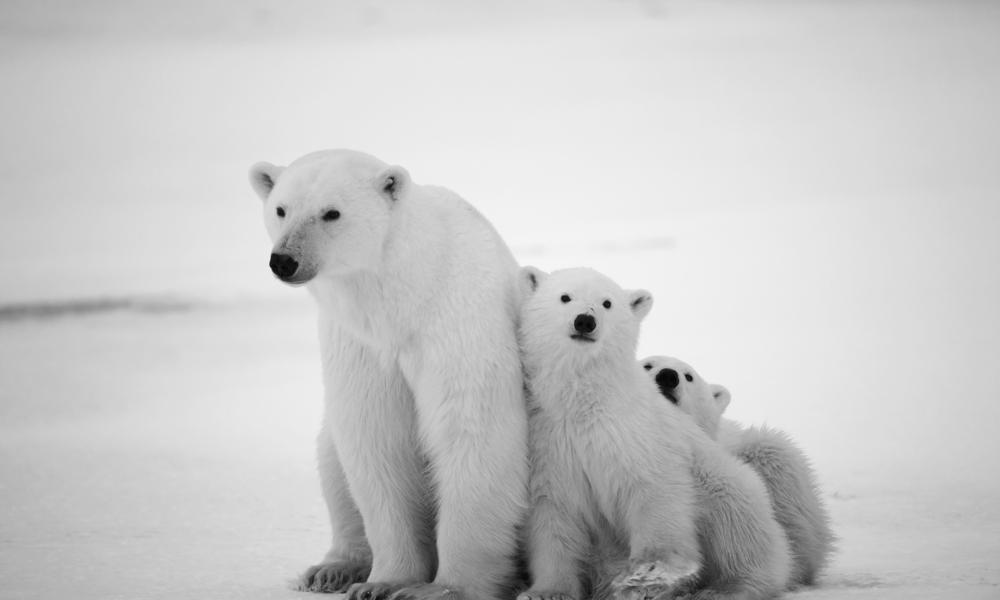
This week’s endangered species is the polar bear (Ursus maritimus)(photo from http://worldwildlife.org/species/polar-bear). These powerful symbols of the arctic weigh between 500 and 1000 lbs (and even up to 1400 lbs!), feeding primarily on ringed seals (U.S. FWS 2009). Polar bears are extremely strong swimmers and can live from 25 to 30 years in the wild. To live in the harsh arctic climate, they have evolved several different adaptations to stay warm – they’ve got a thick layer of blubber and are covered in a thick layer of insulating fur. Although the fur is white (providing camouflage in their white, icy environment), the skin underneath is actually black, allowing it to absorb the sun’s rays. Even the soles of the polar bear’s feet are covered in fur (National Geographic ND).
At around 3-5 years of age, polar bears are ready to reproduce (U.S. FWS 2009). Females dig dens in the arctic ice and give birth during the winter, usually to twins. The young stay with the female for over two years, in order to learn survival skills. All parental care is given by the female; in fact, the females must protect the young from the males who have been known to kill the cubs (National Geographic ND).
The polar bear population is currently estimated at 20,000-25,000 (U.S. FWS 2009). Polar bears are listed under the Endangered Species Act as threatened (U.S. FWS 2013) and listed on Appendix II of CITES, with primary threats to the population being the loss of sea ice, due to climate change. Several international agreements are in place to try to protect the polar bear and its habitat; Canada is the only nation with polar bears that currently allows sports hunting of this species (Washington Post 2013). Unfortunately, there was recently a set-back for polar bear protection at the international meeting of the Convention on International Trade in Endangered Species (CITES) of Wild Fauna and Flora. The group rejected a U.S. proposal to ban the global trade of polar bear parts. Canadian Inuits led the opposition (citing the need for international trade to protect their economy); 42 countries opposed the U.S. proposal, 38 voted in favor, and 46 members, including the 27 members of the European Union, abstained. Truly a disappointing day in the history of polar bear conservation.
Why should we care about the polar bear? As stated on the World Wildlife Federation’s website: “Polar bears are at the top of the food chain and have an important role in the overall health of the marine environment. Over thousands of years, polar bears have also been an important part of the cultures and economies of Arctic peoples. Polar bears depend on sea ice for their existence and are directly impacted by climate change—serving as important indicator species.” To learn more about the polar bear and what you can do to help, be sure to visit: http://worldwildlife.org/species/polar-bear
Sources:
Eilperin, J.. 2013. “U.S. Proposal to Protect Polar Bears Fails.” Washington Post, March 8, 2013.
The Washington Post today reported on a study in the British medical journal, the Lancet, in which 63 researchers from 24 institutions worldwide described current and future health effects of climate change. A few notable findings from the article:
Global temperatures have increased by .75 degrees Fahrenheit since 2000, but this increase is not uniform, with many areas experiencing extreme heat waves
From 2000 to 2016, 125 million vulnerable adults were exposed to heat waves (high temperatures for 3 or more days). 2015 was the worst year on record for heat waves.
Between 2007 and 2016, there were an average of 300 weather disasters per year. That's a 46 percent increase when compared to the decade between 1990 and 1999.
Climate refugees are an increasing issue worldwide -- 3,500 Alaskans have recently been forced to move. Think also about climate refugees from Kiribati (see video above), Yemen, and even Smith and Tangier Islands in the Chesapeake Bay.
Populations of the mosquito that carries dengue fever and Zika love warmer weather -- they've increased 9 percent since the 1950s
Check out the full article from the Washington Post, by Ben Guarino and Brady Dennis. And then consider this issue and the candidates' stances on climate change as you go to the polls on Tuesday.
Iceland is a chilly place! As I explored southern Iceland from the west coast to the east at the beginning of August, the temperature never hit 70 degrees F. I drove through the vast, open wilderness and noticed that the landscape looked somewhat similar to one of my favorite places in the U.S. -- New Mexico. But the instant I left the car, I knew I was in Iceland. The wind that blows across Iceland is MUCH colder than the wind that blows across New Mexico in August.
As I drove across chilly Iceland, I couldn't help but think about a rather odd topic -- warming. Global warming, that is. While playing with puffins at an aquarium, I spoke with people in the Westmann Islands who told me about a wetter than usual spring. Was this just a weather event or is the climate of the Westmanns getting wetter? I chatted with researchers who were investigating the distribution of orcas in the frigid water around Iceland. I wondered what would happen to the orcas and minke whales that I saw as the ocean absorbs more heat and CO2 in the future. As I hiked up to huge glaciers and gazed down on the glacial lagoons, I remembered reading national park signs describing the 5-meter annual loss of the glaciers leading to larger lagoons and downstream flooding. I felt fortunate to visit Iceland right now, and I'm curious to see what it will look like in 20 or 30 years.
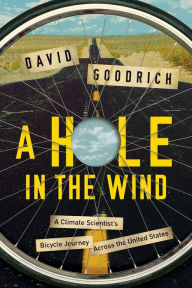
Planning for my trip to Iceland involved proper clothing selection (that would be lots of layers, since I'm a warm weather gal) and a few other items (but not too many, since I was flying on no-frills WOW airlines). One must-have is a book. As every avid traveler knows, you've got to bring along a good book when you travel. Playing solitaire on your phone or scrolling through instagram for hours during a long car, ferry, or plane ride just won't cut it. Just before leaving on my trip to Iceland, I attended a book signing by Dr. David Goodrich who retired as head of NOAA's Climate Observations and Monitoring Program, and served as the Director of the U.N. Global Climate Observing System in Geneva, Switzerland. For my Iceland trip, I brought along Dr. Goodrich's book, A Hole in the Wind. As I made my way across Iceland, I enjoyed Dr. Goodrich's story of his cross country (U.S.) bicycle trip (actually, several of his long-distance bike trips). Throughout the book, Dr. Goodrich skillfully weaves together biking adventures, history, and climate change stories. Each evening, after exploring a new wonder in Iceland, I enjoyed reading Dr. Goodrich's entertaining tales about the people he met. I also enjoyed learning about climate change from an expert, because Dr. Goodrich provides the facts about climate change in a non-threatening but informative manner. As my travels and the book drew to a close, I was inspired by the author's hopeful outlook. One of my kids once told me after meeting folks at a polar plunge environmental fundraiser, "these environmental activists deal with one of the most depressing topics, but they're the most positive people I know!" Dr. Goodrich is one of these positive people, which is why I highly recommend A Hole in the Wind to anyone looking for an entertaining yet informative read. The final section of the book is titled, "A Case for Hope", and Dr. Goodrich states, "It's a great battle, but one that's been won before. More than a battle, it's an opportunity."
I just got back from a fun getaway on Block Island RI, which is the home of the U.S.' first offshore wind farm. This windfarm will provide enough clean energy to power 17,000 homes, including all of Block Island (replacing their diesel fuel). People often think that the wind farms are "ugly", but I didn't think they were unsightly, and they certainly look a lot better than washed out cities from fossil-fuel caused sea level rise! Check it out:
Last weekend was the big #PeoplesClimateMarch, and I just finished reading Trevor Noah's book, Born a Crime (pretty good read, by the way). So I figured those two events are a sign that I should post Trevor Noah's latest piece on climate change. Enjoy:
Did you make it to one of the People's Climate Marches? The one in Washington DC was GREAT! Perfect weather and great turnout! Here are a few of the sights:
There were animals:
There were representatives from all religions, including Jews, Christians, Muslims, Hari Krishnas, and Unitarians:
Are you headed to a Climate March this weekend? Register here, so you'll have the schedule and they'll know how many to expect. Be sure to take pictures and send them me -- I'll post next week!
It's Earth Week, so let's talk about an environmental decision that everyone makes, every day -- what to eat. Should you eat vegetarian? vegan? local? Fair Trade? organic? Well, it all depends. In an environmentally-friendly system, food should be:
produced sustainably, meaning that producing food today won't affect future generations' ability to produce food
produced using as few resources as possible -- how much habitat does the crop require? how much water and energy was used to produce the food? how many resources were needed to transport the food?
produced causing as few externalities (ie. pollution) as possible
So what to eat? The answer is different for each person, because we all have different dietary restrictions, budgets, and places that we live. Here's an interesting article from CNN on the trade-offs and individual choices.
As stated previously on greenmomster, diets that are low on the food chain (that would be primarily plant-based) are most sustainable. Whether that means eating vegetarian once a week or going totally vegan, you're helping the environment to feed 7 billion (soon to be 9 billion) people sustainably.
But here's the other area in which we all can help to decrease our food-based environmental footprint -- food waste! By buying more frequently (so food doesn't go bad in your house), composting, and being willing to buy less-than-perfect-looking food, greenmomsters can help to reduce food waste. Save food, save money, save the environment!
It’s April Fools Day, so it's time for my annual compilation of Foolish Things I've Done to be Green! It's my look back at some of the really foolish, yet very earnest, things I’ve tried in the name of planet protection. I'll just keep adding to the list each year, and I’m sure I’ll have some new items for 2018!
This year's addition -- a Polar Plunge! In January, my husband and I jumped into the Potomac River to raise money for the Chesapeake Climate Action Network (CCAN)! Thanks to many of your donations, we raised quite a bit of money, and jumping into the river wasn't quite as bad as I expected. So let's keep working toward CCAN's motto -- keep winter cold!
Freezing my behind off at a "global warming" event -- I'll never figure out why people schedule climate change rallies in February. Sure, those of us who understand climate change also understand there's a difference between "weather" (what happens in February) and "climate" (what happens in a decade of Februarys). But planning climate change rallies in the middle of winter seems to play into the hands of climate change deniers. Wouldn't it be better to plan these events in August?
The Invertebrate Shuffle - One of our family traditions is stream monitoring(my kids told me that "spring break in the Bahamas" would be a much better tradition). Fortunately, I've been training for this activity for over 30 years. Stream monitoring requires doing the "invertebrate shuffle", which means twisting in the mud for a minute to loosen up all those invertebrates. I excel at this activity! I can even add an interpretive touch to the dance! Sort of like these peacock spiders:
Earth shoes -- OK, they’re not really an environmental item, but this is where it all started for me in the ‘70s. That “negative heel” was supposed to make me feel close to the earth, but it just gave me muscle strain. If you really want to wear ugly shoes that scream “I’m crunchy!” just wear Birkenstocks like all of the other greenmomsters out there.
Environmental mascot – this is foolish, yet fun! During all of my years of dancing, I was always a good technician, yet a lackluster performer. This situation was due to the fact that I found being in front of an audience to be a little embarrassing. A good mascot costume solves that problem – all of the fun of performing, with absolutely none of the recognition! When I was asked to be the EPA “water drop” during 25th anniversary Earth Day celebrations on the Washington DC mall, I couldn’t turn them down. Then came the pinnacle of my mascot career – Woodsy Owl! So foolish, yet so much fun! As Woodsy, I spread the environmental message AND joined in an aerobics demonstration, entertained little kids and the Secretary of Transportation, and danced with abandon in my yellow birdy feet at yet another Earth Day celebration. To prove my mascot-prowess, I have an official photo of myself (Woodsy). Last April, I added to my mascot resume -- Ranger Rick! Look for me at Vienna VA's "Walk on the Hill!"
Coconut oil– I decided to decrease my body’s exposure to harmful chemicals found in cosmetics by substituting coconut oil for my usual face cream. I looked absolutely fabulous, until every pore on my face became clogged, leaving me looking significantly younger. And by significantly younger I mean I looked like the acne-plagued teenager I once was.
Natural deodorant – Again, trying to lessen my chemical load. Been there, done that, got the pit-stained t-shirt.
Visiting the Dismal Swamp after a major flood in August – I’m often referred to as the Julie McCoy of our family, planning all sorts of activities and trips. One type of trip I love planning is the outdoorsy, environmentally-educational trip. But there was one time when I ran the family’s Love Boat aground. I read that the Dismal Swamp in southern Virginia was an absolutely beautiful place – I’ve seen pictures since our fateful trip, and indeed, it is a memorable spot. But timing is everything in life. I ignored our friends who mentioned that maybe “dismal” wasn’t a good name for a family vacation spot, maybe right after a major flood wasn’t the right timing, and maybe the mosquito population would be booming in the middle of August. “Pshaw!” I said. This was a natural area just waiting to be discovered by me and my family! We loaded up my then 2 year old son in the hiking backpack and headed into the swamp! Approximately 30 minutes later, we emerged with our tails between our legs, sweaty and swollen from mosquito bites. Fortunately, we didn’t catch malaria, I didn’t turn our Love Boat excursion into Gilligan’s 3-hour tour, and there was a nearby reggae festival to help us forget our swamp sorrows.
Vegetarian dog food – Although eating lower on the food chain is better for the environment, my dogs do not care. They were willing to starve themselves rather than help the environment. They told me that it’s ok to eat meat for every meal, that we should always DRIVE to the dog park, and that climate change is a totally natural phenomenon.
Using a first-generation recycled plastic garbage bag – OK, the technology has gotten much better, and I do use these bags regularly now. But sometimes it’s best not to be an “early adopter.” I learned this lesson when the bag I was using while changing the guinea pig cage exploded all over the rec room.
Indoor composting – Need I say more? Just because it says it’s a good idea on the internet, doesn’t mean it’s a good idea. I bought my composting bin, filled it with newspaper shreds and my worms that I’d bought off the internet, filled the compost bin with scraps and waited for my worms to work their magic! Well, the magic was the appearance of hundreds of fruit flies filling my entire basement in a blinding cloud. Just say no to indoor composting.
I just saw a combination bicycle/push mower that’s definitely going to be on someone’s foolish list next year.
Anyone else have any foolish green adventures you’d like to share?