I just received some interesting information from a reader of Greenmomster! Did you know that car covers can be recycled to make face masks? Here's the latest (thanks Mason!): https://www.carcovers.com/resources/how-car-covers-are-protecting-against-the-storm-of-COVID-19/
Thursday, December 31, 2020

Sunday, October 21, 2018
Mammal Monday -- zebras!
It's Mammal Monday and time to celebrate the zebra! One species of endangered zebra is the Grevy’s Zebra (Equus grevyi)! (image is from www.arkive.org) The Grevy’s zebra is one of three species of zebra and is found primarily in Kenya (95% of the population), but also in small areas of Ethiopia. According to the National Zoo, Grevy’s zebras can grow to about 990 pounds, with males being about 10% larger than females. They graze primarily on tough grasses found on the African savannah, and can live up to 20 years in captivity. The adults mate in August, September, and October and gestation lasts a whopping 13 months!
Estimated to have declined in population by up to 50% in the past two decades, Grevy’s zebras are on the IUCN’s list of threatened species primarily due to habitat destruction, human disturbance, and competition with grazing domestic animals. According to the authors of Wildlife Heroes (Scardina & Flocken, 2012), the social system of these zebras makes them particularly susceptible to threats: “Grevy’s zebras have a totally different social system than the more numerous plains zebra, which served them well in their ecological niche until resources and numbers began to decline. Breeding males remain on their territories year-round – sometimes even in times of severe drought. Females and nonterrritorial (bachelor) males will migrate to more habitable pastures. As fewer than three thousand Grevy’s zebra’s remain over thousands of square kilometers in northern Kenya and Ethiopia, the strongest, most territorial males are often left with a territory no females traverse. On top of habitat loss, water shortages, hunting pressures and human disturbance, this certainly makes a successful breeding season more difficult, so the downward population spiral continues.”
A few reasons why we should care about zebra populations:
1) Zebras, wildebeest, and antelope participate in a complex migration each year. Zebras eat the toughest grasses first, which stimulates new, more tender growth for the next wave of migratory herbivores.
2) Zebras are prey species to carnivores such as lions and hyenas. Grevy’s zebras, in particular, expand the range of these carnivores by inhabiting areas that other zebras do not (Scardina & Flocken, 2012)
3) Saving zebras helps to protect other species that depend on this complex landscape.
Want to help protect the Grevy’s zebra? Adopt a Grevy’s zebra at the Cincinnati zoo or support the Grevy’s Zebra Trust, which works to employ members of the local community in zebra monitoring programs.
Estimated to have declined in population by up to 50% in the past two decades, Grevy’s zebras are on the IUCN’s list of threatened species primarily due to habitat destruction, human disturbance, and competition with grazing domestic animals. According to the authors of Wildlife Heroes (Scardina & Flocken, 2012), the social system of these zebras makes them particularly susceptible to threats: “Grevy’s zebras have a totally different social system than the more numerous plains zebra, which served them well in their ecological niche until resources and numbers began to decline. Breeding males remain on their territories year-round – sometimes even in times of severe drought. Females and nonterrritorial (bachelor) males will migrate to more habitable pastures. As fewer than three thousand Grevy’s zebra’s remain over thousands of square kilometers in northern Kenya and Ethiopia, the strongest, most territorial males are often left with a territory no females traverse. On top of habitat loss, water shortages, hunting pressures and human disturbance, this certainly makes a successful breeding season more difficult, so the downward population spiral continues.”
But Kenya and Ethiopia aren't the only areas where conservation professionals are working to protect zebras. In Tanzania's southern highlands, 24 zebras were recently released (species and sub-species information was not available) into an area that lost it's zebra population 50 years ago.
A few reasons why we should care about zebra populations:
1) Zebras, wildebeest, and antelope participate in a complex migration each year. Zebras eat the toughest grasses first, which stimulates new, more tender growth for the next wave of migratory herbivores.
2) Zebras are prey species to carnivores such as lions and hyenas. Grevy’s zebras, in particular, expand the range of these carnivores by inhabiting areas that other zebras do not (Scardina & Flocken, 2012)
3) Saving zebras helps to protect other species that depend on this complex landscape.
Want to help protect the Grevy’s zebra? Adopt a Grevy’s zebra at the Cincinnati zoo or support the Grevy’s Zebra Trust, which works to employ members of the local community in zebra monitoring programs.
Friday, October 19, 2018
Black bean, kale, and hominy stew
Here’s a great recipe I adapted from the March 2013 issue of Cooking Light(I made this version a little more chunky, a little lighter on the spices). Serve with Phil’s Cornbread – it’s what we’re eating tonight!

Ingredients
1) Heat olive oil in a large pot. Add onion and jalapeno, and saute for about 5 minutes.
2) Add garlic and cumin; saute for about 2 more minutes
3) Add tomatillos, broth, water, salt, red pepper, black beans, and kale. Heat for about 10 minutes, or until the kale becomes tender.
4) Add the hominy for about 5 minutes and serve warm.
5) Garnish with sour cream, cheddar, and cilantro.
Serves a hungry family of five, with a little bit for leftovers!

Ingredients
- 11 oz jar of tomatillos, chopped very small
- 4 tblsp olive oil
- 2 onions, chopped
- the equivalent of 2 jalapeno peppers, from jarred jalapenos
- 4 tsp chopped garlic
- 4 tsp ground cumin
- 8 cups vegetable broth
- 2 cups water
- 1/2 tsp salt
- 1/4 tsp red pepper flakes
- 4 cans (15 oz each) black beans, rinsed and drained
- 2 8 oz. bunches of kale, cleaned and chopped
- 1 29 oz. can hominy, rinsed and drained
- sour cream
- shredded cheddar
- cilantro
1) Heat olive oil in a large pot. Add onion and jalapeno, and saute for about 5 minutes.
2) Add garlic and cumin; saute for about 2 more minutes
3) Add tomatillos, broth, water, salt, red pepper, black beans, and kale. Heat for about 10 minutes, or until the kale becomes tender.
4) Add the hominy for about 5 minutes and serve warm.
5) Garnish with sour cream, cheddar, and cilantro.
Serves a hungry family of five, with a little bit for leftovers!
Sunday, October 14, 2018
Vote, vote, and vote some more

President Trump does not understand the science behind climate change, what climate change is, or the threat that it poses to all of humanity. He proved this point during his recent interview with Lesley Stahl on 60 Minutes (transcript here). That's why we need to vote, vote, and vote some more. Vote for any candidate who is willing to face climate change head-on. Vote against candidates who bury their heads in the sand. Vote.
Monday, October 8, 2018
Go Garamond!
I print a lot. Unfortunately, my job as a teacher requires printing various materials for my students, because not all of my students have access to a computer outside of school. So I always print double-sided, and I try to recycling as much as possible. Not the best solution, but the best I can do....
Now there's something more I can try -- I can go garamond! It turns out that some fonts use less ink than others, saving significant ink and money in the long run. I think I'm going to mention this item to the next meeting of the high school's environmental club!
Saturday, September 29, 2018
Hedgehog highway
This new little film about how to help hedgehogs thrive in the U.K. reminds us of things we need to do here in North America too -- most notably, providing free access to habitat and not creating barriers such as walls and fences. Conservation managers call these free access areas "wildlife corridors" -- you may have seen them near highways. I've written about the proposed wall along the U.S./Mexico border is an environmental disaster, but removing wildlife barriers is also something we can tackle in our own backyards. And those hedgehogs really are cute!
Wednesday, September 26, 2018
Otterly wonderful!
It's Sea Otter Awareness Week, which means we have to celebrate! I was born in Carmel, California, and the Monterey Bay area is always a favorite of mine. This week's mammal comes from beautiful Monterey Bay -- it's the sea otter! Did you know,
- sea otters are the only marine mammal that doesn't use blubber to stay warm in the icy waters of the Pacific -- to stay warm, they have incredibly thick fur that traps air
- sea otters are a keystone species in their habitat -- the role that they play impacts all the other species in the area
- sea otter populations seem to be spreading (that's good news!) -- there was a recent sighting in southern California
- sea otter mothers tie their babies into floating seaweed while they go looking for food, but there's always a plan B:
Saturday, September 22, 2018
World Rhino Day!
"In almost all rhino conservation areas, there are other valuable plants and animals. The protection of rhinos helps protect other species including elephants, buffalo, and small game. Rhinos contribute to economic growth and sustainable development through the tourism industry, which creates job opportunities and provides tangible benefits to local communities living alongside rhinos. Rhinos are one of the "Big 5" animals popular on African safaris and they are a popular tourism draw in places like the Eastern Himalayas."
Do you want to help?
- Learn more about rhinos and their conservation
- Never buy products containing rhino horn or any other body part
- "Adopt" a rhino from WWF or donate to the African Wildlife Foundation to help with conservation efforts
Sunday, September 9, 2018
Food for Thought on a Sunday

Thursday, September 6, 2018
Meat-free Friday -- Lemon Pasta
| image from wikipedia |
Ingredients
- 2/3 cup olive oil
- 2/3 cup parmesan cheese
- 1/2 cup lemon juice
- 1 tsp salt
- 1 tsp pepper
- 1 lb farfalle pasta
- 1/3 cup basil
- 3/4 cup pine nuts or slivered almonds
1) Cook pasta until it's al dente.
2) Mix together olive oil, parmesan cheese, lemon juice, salt, pepper, and basil.
3) Pour liquid over pasta and toss with pine nuts or almonds.
Monday, September 3, 2018
Mammal Monday -- Przewalski's Horse
Greenmomster's been a little spare on the posts lately, because I've taken on a new job -- I'm now a high school science teacher! But now I'm back in the saddle, so what better mammal for this Monday that the Przewalski's Horse (pronounced “sheh-val-skee”)! This horse is native to plains and grasslands of Mongolia, as well as other parts of Asia and eastern Europe, but I first saw one at the National Zoo’s Smithsonian Conservation Biology Institute in Front Royal, VA. Although these horses are small (about 13 hands high and between 550 and 750 pounds), they’re impressive with tan fur on their bodies and a short, dark mane and tail. They have evolved to survive the harsh winters in Mongolia, but in the 20th century the species had trouble surviving in the face of habitat loss, loss of water sources to domestic animals, and overhunting. The Przewalski’s horse was declared extinct in the wild by the World Conservation Union in 1970.
Thanks to an active captive breeding program, Przewalski’s horses were reintroduced to the wild in 2008. There are currently 1,500 horses in captivity worldwide, and approximately 400 horses in reintroduction sites in Mongolia, Kazahkstan, and China. All of today’s current population of Przewalski’s horses come from 14 ancestors. Thus, the gene pool for this horse is very narrow. Scientists must very carefully coordinate breeding between the captive horses to try to maximize genetic diversity and make the population more able to withstand various stresses, such as disease.
So Przewalski’s horse is beautiful, but why should we care about its survival? Because a species like this one tells us when we’re negatively impacting the ecosystem. Humans are part of the natural world; we depend on natural resources for our survival. But sometimes we take more than our share, and the ecosystem on which we depend begins to suffer. Species like Przewalski’s horse tell us when our agricultural or hunting practices are unsustainable.
And if you needed more reasons to protect the Przewalski’s horse, here are 5 Reasons Przewalski’s Horses are cooler than thoroughbreds:
- It is the only truly wild horse remaining in the world (it’s never been tamed for riding).
- I’ve never fallen off a Prezwalski’s horse (I’ve definitely fallen off a thoroughbred)
- Prezwalski’s horses can make it through winter in Mongolia without a horse blanket.
- The Mongolian name for these horses is “takhi,” which means “spirit.” That’s way cooler than names like Chicken Lips or Buck Naked.
- Przewalski’s horses have 2 more chromosomes than domestic horses(66 vs. 64).
- Oh, and did you know that horse vasectomies can be reversed? Greenmomster’s always here for you with fun facts!
Thursday, August 23, 2018
Zucchini palooza!
In spite of all the rain this year, we've got a little zucchini at our house, so this week’s recipe once again features this plentiful vegetable. The recipe is adapted from 101 Things to do with Zucchini – enjoy!
Egg Stuffed Zucchini
Ingredients

Instructions

Egg Stuffed Zucchini
Ingredients
- 4 medium zucchini
- 1/2 cup water
- 1 large tomato, chopped
- 2 tblsp butter
- 4 eggs, beaten
- salt and pepper, red pepper flakes if you like a little zippier dish
- 1/2 to 1 cup of grated cheddar cheese

Instructions
- Cut zucchini in half lengthwise and scoop out the pulp, leaving about 1/2 inch of shell. Chop the pulp.
- Pour the water in a baking dish and put the zucchini shells in the dish, facedown. Cook the zucchini in an oven at 350 degrees for about 10 to 15 minutes, or until the zucchini is tender.
- Saute pulp and tomato in butter until tender. Add the eggs, salt and pepper. Once the egg is cooked, spoon it into the zucchini shells. Top with cheese and cook in the oven until cheese melts.
Monday, August 20, 2018
Mammal Monday -- Maned Wolves
I’m a very fortunate person, because I’ve actually had a close encounter with this week’s mammal and endangered species, the Maned Wolf. Maned wolves are beautiful creatures who live in the grassy areas of central south America (parts of Argentina, Bolivia, Brazil, Paraguay, and possibly parts of Peru and Uruguay). These wolves (people often say look like “foxes on stilts”) are omnivores, hunting at night and eating a diet which includes fruits and berries as well as small animals like rodents, reptiles, and insects. Because of this diet, the wolves play an important part in their ecosystems, controlling animal populations lower on the food chain and acting as seed dispersers. One of their primary food sources is the lobeira berry -- this fact caused some difficulty when zookeepers were first trying to raise the wolves in captivity many decades ago. Zookeepers knew that the wolves were omnivores, but didn’t know about the importance of lobeira berries in their diet. Until they worked out this puzzle, the wolves often suffered from dietary problems in captivity.
As mentioned on the ARKive website, these solitary wolves live in home ranges of 25 to 50 square km and only come together during the breeding season. Females reach sexual maturity at one year and can give birth to litters of 1 to 5 pups. The primary threat to these wolves, as is the case with many other endangered species, is habitat loss. Scientists and conservation managers are working hard to protect these wolves from loss of their habitat, as well as negative contact with humans and road kills.
I just read about Rogerio Cunha de Paula, one of the leading biologists working to protect the species. He is working to protect the Serra da Canastra National Park in Brazil from logging, mining, and conversion of habitat from soil plantations (see the book Wildlife Heroes by Julie Scardina and Jeff Flocken for more info). Many other people are also working hard to protect the wolves, and that’s how I got my close encounter. The National Zoo has been involved in maned wolf conservation for over 30 years and is the coordinator of the Species Survival Plan for the maned wolf. As a volunteer with the zoo, I was an “interpreter” about maned wolves for the public. One of the keepers at the maned wolf exhibit, my friend Kim, took extra time with me to teach me how truly special these animals are – she shared her knowledge of the wolves and gave me an unforgettable look at these fascinating creatures! What a treat to see these animals close-up, to hear their specific vocalizations, and yes, even to smell their (very strong) scents during mating season. Based on these encounters, I can say that the world would be a poorer place without the beautiful maned wolf.
Friday, August 17, 2018
It's that time of the year again!
Zucchini time!
Mexican Zucchini Soup
Ingredients
Mexican Zucchini Soup
Ingredients
- 1 small chopped onion
- 2 tsp butter
- 28 – 32 oz. veg broth
- 3 cups unpeeled chopped zucchini (peel it if it’s as big as our zucchini)
- 1 1/2 cups frozen corn
- 1 can hot Hatch chiles, chopped
- salt and pepper to taste
- 1 tblsp cumin
- 1 1/2 cup milk
- 3/4 cup grated pepper jack cheese
- 1/4 cup sliced green onions for garnish
- In a pan, saute the onion in butter until soft (2 or 3 minutes)
- Stir in broth, zucchini, corn, chiles, cumin, salt, and pepper. Bring to a boil, then reduce to a simmer and cook until zucchini is tender.
- Add milk and heat the soup back up, but don’t boil it.
- Serve garnished with pepper jack cheese and green onions
Monday, August 13, 2018
Happy World Elephant Day!
Yesterday was World Elephant Day, so I'm re-running the Great Big Elephant Quiz. Enjoy!
This week’s endangered species is the African Elephant (Loxodonta cylclotis) (photo from David Sheldrick Wildlife Trust). Found in sub-Saharan Africa, these elephants are listed as “vulnerable” by the IUCN, due to human/elephant conflicts and poaching for their ivory tusks.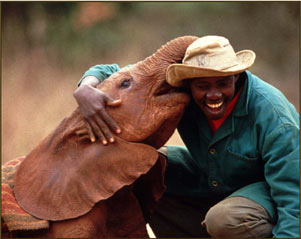
This week’s endangered species is the African Elephant (Loxodonta cylclotis) (photo from David Sheldrick Wildlife Trust). Found in sub-Saharan Africa, these elephants are listed as “vulnerable” by the IUCN, due to human/elephant conflicts and poaching for their ivory tusks.
Most of us have seen elephants, on TV or in zoos (or in the wild, if we’ve been lucky enough), but can you pass the GREAT BIG ELEPHANT QUIZ? See if you can answer the following 10 questions:
How’s a greenmomster to help?
- T/F Elephants only use their trunks for smelling
- T/F Elephants can use their ears to cool their bodies
- T/F African elephants are the largest land mammal on Earth
- T/F Herds are led by dominant females
- T/F Male elephants live in herds
- T/F Elephant gestation is one of the longest pregnancies on Earth
- T/F Both male and female elephants have tusks
- T/F Elephants are carnivores
- T/F Elephants have great memories
- T/F Elephants are big sleepers
- False – elephants also use their trunks for breathing, drinking, and picking up small objects. The trunk contains about 100,000 different muscles!
- True – thanks to radiation of heat through their ears
- True! Asian elephants are a little smaller
- True – elephant herds are made up of family groups of females, led by one dominant female
- False – once they hit maturity, these big guys are loners
- True – yes greenmomsters, your pregnancy may have seemed long, but it’s nothing compared to the 22 month gestation of an elephant. Oh, and you thought your 9 lbs baby was big? Try 200 lbs!
- True!
- False, thank goodness – elephants survive on grasses, roots, and bark. Up to 300 lbs per day!
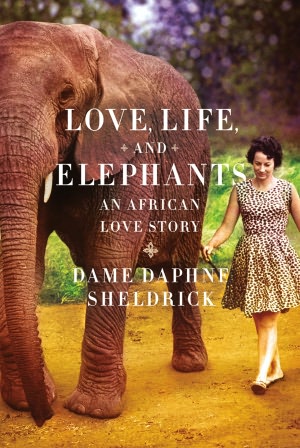
- True – not just a myth! For a fascinating book on elephants, their memories, and one woman’s love story and lifetime of trying to save orphaned elephants, check out Love, Life, and Elephants by Dame Daphne Sheldrick
- False – elephants don’t really sleep for long periods of time
How’s a greenmomster to help?
- NEVER buy ivory or other elephant products
- Read and learn about these fascinating creatures. An easy read on elephants that I really enjoyed was “Echo of the Elephants” by Cynthia Moss and Martyn Colbeck.
- Support elephant conservation. Two groups worth looking into: Save the Elephants and The David Sheldrick Wildlife Trust.
Sunday, August 5, 2018
Mammal Monday -- mountain lions
Maybe you saw this video of a family of mountain lions having a drink on a Colorado family's deck:
So let's take a look at mountain lions (Puma concolor), or cougars/pumas, for today's Mammal Monday. This cat, the largest in North America, has a range spanning from Canada all the way to Argentina. They're usually solitary animals who can defend a territory from 10 to over 300 square miles. As you can see from the video, they have litters of 2 to 4 offspring that can stay with the female for 1 to 2 years. Mountain lions are considered threatened under the Endangered Species Act, with the biggest threats to the species being habitat destruction and conflicts with livestock. Want to learn more? Check out the National Wildlife Federation's page on the species.
Friday, August 3, 2018
I can't believe I ate the whole thing!
This quote from an old Alka Seltzer commercial is what I was thinking when I tried today’s meat-free Friday concoction.
 Diane’s Dad’s Summer Sandwich won the NPR taste of summer contest, and it’s my choice for tonight’s dinner. So weird, yet so tasty. Here’s how you make it:
- toast two slices of any bread you like
- layer the following IN ORDER onto the bread, starting at the bottom
- crunchy peanut butter
- a slice of vidalia onion
- cucumber slices
- tomato slices
- a slice of white cheddar cheese
Monday, July 30, 2018
Mammal Monday -- Photo Ark

If you love wildlife and haven't seen Photo Ark, you should definitely check it out. Sartore has spent the last 25 years trying to document every species in human care, to photograph species before they disappear, and to get people to care about these species. I was lucky enough to see his Photo Ark exhibit at the National Geographic in Washington DC, and you can see the photos in his book. Here's a look at a day at the office for the Photo Ark crew:
Sunday, July 29, 2018
A Life Well Lived

Today's Sunday TODAY included a really nice tribute to Lincoln Brower, the scientist who studied and taught all of us about monarch butterflies and their incredible annual migration. If you plant milkweed in your garden, you can thank Lincoln Brower for helping to encourage protection of these beautiful insects. Take a few minutes to watch this tribute and celebrate a life well lived.
Friday, July 27, 2018
Changes to the ESA

There is a middle ground -- it's in the proposals from the folks who are focusing on species recovery. These groups think we should better fund recovery efforts and try new and creative partnerships that prevent the regulatory enforcement (the "hammer") of the Endangered Species Act. We saw this in some of the 4(d) rulings passed under the Obama administration, such as the exemption for the greater sage grouse. If you'd like to learn more about this issue, so that you can contact your elected officials during the current comment period, start by listening to this NPR On Point program regarding the new proposals. The accompanying reading list is a great place to learn more about the ESA.
Subscribe to:
Posts (Atom)