This one's a perfect soup for snowy February -- cheesy, warm, and filling!
Ingredients
1 cup chopped scallions
2 tbsp olive oil
6 cups vegetable broth
1/4 cup flour
one medium head of cauliflower (broken into small, bite-size pieces)
1 1/2 cups shredded pepper jack cheese
1/4 cup roasted red peppers
1/4 tsp red pepper
Instructions
1. Heat the oil in a saucepan and saute the onion about 3 minutes until tender
2. Add 5 cups vegetable broth and bring to boiling. Lower the heat, add the cauliflower, and cook until cauliflower is tender.
3. Whisk together 1 cup vegetable broth and flour. Add to saucepan.
4. Stir in remaining ingredients and cook until cheese is melted.
Recipe makes just enough for our family of 5, served with bread and two vegetable sides.
Friday, February 3, 2012
Thursday, February 2, 2012
Happy World Wetlands Day!
| Biking through the wetlands in Chincoteague VA |
| Cattails at Huntley Meadows |
Happy World Wetlands Day -- let’s appreciate our wetlands and strive to protect this valuable natural resource!
Tuesday, January 31, 2012
Birth Announcement–Maned Wolves!
Great news came from the Smithsonian’s Conservation Biology Institute in Front Royal VA – 4 maned wolf pups were born on January 5! Maned wolves are an endangered species found in the grasslands of South America. This omnivorous species is threatened mostly by habitat loss, a common problem for endangered species (see endangered species post). 

I have a special interest in this fascinating species, because I was lucky enough to learn about them as a volunteer at the Conservation Biology Institute. After studying the wolves, so that I could give tours and explain details to guests, I was allowed to enter the enclosure with one of the hand-raised wolves. What a terrific experience! I had never been so close to a wild wolf (even though she was hand-raised) – she definitely commanded my attention!
The 4 new pups add to the total of 72 pups born at the National Zoo. Congratulations to the entire staff who are working on conservation of this beautiful species!
Sunday, January 29, 2012
Eco-friendly Art

So there I was, wandering through a local craft fair, enjoying the free samples of onion dip and cookies, as well as the creativity of the artists displaying their wares. Not exactly a mecca of eco-friendly thought or products, but this green momster does enjoy a good craft show. As I turned down a new aisle, one jewelry display caught my eye – the jewelry was made from various leaves, seeds, even insect exoskeletons, covered in copper. The artists then add color to the copper to make these pieces really beautiful works of art. But here’s the really cool thing – it’s jewelry with no eco-angst! As I talked with one of the artists, Mary Anna Barratt, I found out that the copper for the jewelry is from recycled sources. Add to that the fact that the company donates part of their proceeds to Global ReLeaf at an organization called American Forests, and you’ve got a pretty eco-friendly company.
Nature’s Creations Natural Jewelry is a great example of two ways that we can make an eco-friendly impact on our environment. First as consumers, where we spend our money matters. We can choose to support eco-friendly businesses and send a message that we’d like more of the same. Second, as the artists from Nature’s Creations have done, we can search our everyday lives and practices and look for ways to go a little greener (check out low hanging fruit for simple ideas).
And full-disclosure – I did NOT receive any compensation or free jewelry for this post. But I am totally diggin’ my new copper cicada exoskeleton pin – so cool!

Friday, January 27, 2012
So you slept through science class, part 2 – molecules, energy, and zebra dung!
In the last post about the basics of science, we talked about DNA. I mentioned that DNA is a molecule, and I outlined its structure and the mutations that can occur in this molecule. Let’s back up a little this week – what exactly is a molecule (for those who always wanted to know, but were afraid to ask)?
When we look at atoms, we see many particles that make up atoms. These particles are called “sub-atomic particles,” and we usually refer to three distinct “sub-atomic particles” -- protons, neutrons, and electrons. Protons and neutrons hang out sort of in the center of the atom (the nucleus), while the electrons fly around the nucleus. The particles are extremely small, with electrons being the smallest. To give some perspective to the relative size of these sub-atomic particles, (this is really cool…) think of the atom as being the size of FedEx Field or any other large stadium. The nucleus, with its protons and neutrons would be roughly the size of a fly sitting on the 50 yard line. The electrons would be about the size of a few gnats flying around the rest of the stadium!
So now we know that protons, neutrons, and electrons make atoms which combine to make matter. But what about elements and molecules?
Each individual atom has a set number of protons in its nucleus (the center of the atoms). An element is a substance consisting of atoms that all have the same number of protons in their nuclei. So for the castle above, if it were made from one element, all the Legos would be the same. Oxygen is an element – every oxygen atom has 8 protons in its nucleus. If the atom had 7 or 9 protons, it wouldn’t be an oxygen atom; it would be the atom of a different element (the element nitrogen for 7 protons in each atom; the element fluorine for 9 protons in each atom). Carbon is an element – every carbon atom has 6 protons in its nucleus.
A molecule is simply the smallest particle of a substance -- any substance like water, DNA, or salt (compare that to an atom, which, as we said, is the smallest particle of an element). At this point (the molecular level) , we’re mixing atoms of various elements to make new substances. We’re no longer just dealing with elements, where every atom is the same. Now we’re mixing various types of atoms to make things like water, DNA, or salt. Molecules can be combinations of different atoms, or several of the same atom.
So, for organization of matter, we’ve got sub-atomic particles (protons, neutrons, electrons) –>atoms –> molecules.
At this point, my students are raising their hands and asking, “will this be on the test?” I need to answer the all-important question – Who gives a flying flit about molecules and matter? What does this have to do with environmental awareness?
Here’s why we care:
![]() |
| photo by William Widmer |
So there you have it -- molecules in a nutshell. And, yes, nutshells are made of molecules.
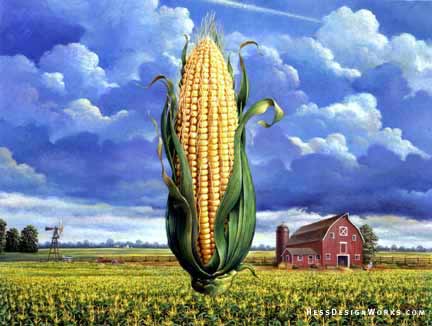
Meat-free Friday -- Phil's Cornbread
![]() |
| hessdesignworks.com |
As promised, the perfect side for last week's chili -- Phil's Cornbread! Make more than you think you'll need -- this is a crowd-pleaser!
Corn Bread
1 ½ cups flour (all purpose white for really fluffy corn bread; ½ white, ½ wheat for a little heavier, but healthier)
1 cup sugar
½ cup cornmeal
1 tbsp baking powder
½ tsp salt
1 ¼ cups milk
1 large eggs, lightly beaten
1/3 cup veg oil (you can also use canola)
3 tbsp melted butter
1) Sift together the flour, sugar, cornmeal, baking powder, and salt
2) In a separate bowl, mix together milk, eggs, oil, and butter.
3) Add liquid to solid and mix well
4) Pour into a greased, 9x9 inch pan and bake at 350 degrees for 35 minutes, or until a knife inserted into the center of the pan comes out clean.
Monday, January 23, 2012
Endangered Species, Fossil Fuels, and Cool Lizards
Just this past week, the Endangered Species Coalition published a report on the 10 U.S. species most threatened by fossil fuel production and use. Included in the list are well-known species such as polar bears and whooping cranes, little known species such as tan riffleshell and Kentucky arrow darter, and some of my favorites like the Kemp’s Ridley sea turtle, dunes sagebrush lizard, and Wyoming pocket gopher. Assuming that we care about these species and their roles in the ecosystem (see post "A few misconceptions about endangered species" 12/31/11), what’s a person to do? I’m not able to make national decisions about our country’s energy sources (although in a Desocracy we’d concentrate heavily on renewables and conservation). But remembering that our country makes up approximately 5% of the world’s population, but uses over 20% of the world’s oil, we each have an important role to play in protecting the listed endangered species. Start by figuring out your contribution to global warming (produced by your use of fossil fuels) and where you might be able to cut back. Take the Ecological Footprint quiz --you’ll find out how many Earths would be needed to sustain your lifestyle if everyone on Earth lived as you do. Next, check out the “Low Hanging Fruit” tab. There you’ll find tips on reducing your fossil fuel use by reducing plastics, eating less meat, driving less, conserving heat and air conditioning, using reusable bags (yes, those plastic bags are made of oil), and using your microwave. For more tips and fun facts, check out this great list of energy saving tips. To educate yourself more about “big picture” ideas on cutting oil use (mostly transportation) check out the suggestions from the Council on Foreign Relations and National Resources Defense Council. It may seem a topic that is too big to deal with, but we all have to do something, big or small – even DOD is wrestling with energy security and conservation.
So let’s each pick one thing this week that will reduce use of oil. I’m going to walk a little more this week, because I think those sagebrush lizards are worth saving.
Subscribe to:
Posts (Atom)