Happy Easter and Passover to all readers of Greenmomster! As we celebrate this week and continue to fight the good fight to protect our environment, let’s remember the words of Mother Teresa, “It is not how much we do, but how much love we put in the doing. It is not how much we give, but how
Saturday, March 30, 2013
Happy Easter!

Tuesday, March 26, 2013
Is this how we treat family?
In past posts, we’ve discussed illegal trafficking of various endangered species, including the illegal trade in elephant parts, reptiles (in book list), pangolins, and butterflies (in book list). This week, I wanted to call your attention to a recent UN report on our closest cousins, “Stolen Apes: The Illicit Trade in Chimpanzees, Gorillas, Bonobos and Orangutans,” (here’s a link to the pdf) produced by the UN Environment Programme (UNEP) through the Great Apes Survival Partnership (GRASP). This report estimates that over 22,000 great apes have been lost from the wild since 2005, and that 64% of those animals were chimpanzees. Unlike our usual culprits when it comes to threats to endangered species, we’re not looking at habitat loss, deforestation, mining, hunting for bushmeat, or pollution. The enemy now seems to be a very well-organized network of illegal trafficking in live animals or animal parts, yet only 27 arrests were made in Asia and Africa from 2005 to 2011, and only 1/4 of those arrests were prosecuted. Recommendations from the report include:
- increasing protection of habitat areas
- increased training for police officers and customs agents, as well as trans-national criminal intelligence units
- use of national and international multi-media campaigns that discourage ownership of ownership, trade, and use of great apes, and make legal penalties clear
- ending the use of great apes in entertainment, like movies and commercials
Sources:
Stiles, D., Redmond, I., Cress, D., Nellemann, C., Formo, R.K. (eds). 2013. Stolen Apes – The Illicit Trade in Chimpanzees, Gorillas, Bonobos and Orangutans. A Rapid Response Assessment. United Nations Environment Programme, GRID-Arendal. www.grida.no
UN News Centre. 2013. “Illicit Trade in Great Apes Increasingly Linked to Organized Crime, UN Report Finds.” Accessed 2/26/2013. http://www.un.org/apps/news/story.asp?NewsID=44271&Cr=wildlife&Cr1=#.UVIdhBeHt8E
Saturday, March 23, 2013
Hugging my neighborhood trees
If you don't want to miss any of the latest news from greenmomster, be sure to "Like" us on facebook.
“Someone’s sitting in the shade today, because someone planted a tree a long time ago.” Warren Buffett
I live in an older neighborhood; many of the original houses were built in the 1950s. As is often the case in older neighborhoods, many folks are buying the older houses, knocking them down, and building newer, bigger homes. No problem – I like new shiny things just as much as the next guy and some of these houses are really beautiful and very energy efficient. Here’s what I don’t like – I don’t like it when builders are allowed to knock down every tree on the property prior to building. Since our neighborhood is older, this process means we’re removing trees that could be 50 years old or older. When we look at the pros and cons of tree removal and planting younger trees, the cons very much outweigh the pros:
Pros for removing old trees and planting younger ones:
Sources:
Farmer, M.C., M.C. Wallace, and M. Shiroya. 2011. “Bird diversity indicates ecological value in urban home prices.” Urban Ecosystems doi: 10.1007/s11252-011-0209-0.
Leung, D.Y.C, and J.K.Y. Tsui, C. Feng, Y. Wing-Kin, L.L.P. Vrijmoed, L. Chun-Ho. 2011. “Effects of Urban Vegetation on Urban Air Quality” Landscape Research, April 2011, vol. 36, issue 2. pp. 173-188.
Little, J.B. 2009. “Where Money Grows on Trees.” American Forests, Spring 2009, vol. 115, issue 1. pp. 43-45.
“Someone’s sitting in the shade today, because someone planted a tree a long time ago.” Warren Buffett
I live in an older neighborhood; many of the original houses were built in the 1950s. As is often the case in older neighborhoods, many folks are buying the older houses, knocking them down, and building newer, bigger homes. No problem – I like new shiny things just as much as the next guy and some of these
 houses are really beautiful and very energy efficient. Here’s what I don’t like – I don’t like it when builders are allowed to knock down every tree on the property prior to building. Since our neighborhood is older, this process means we’re removing trees that could be 50 years old or older. When we look at the pros and cons of tree removal and planting younger trees, the cons very much outweigh the pros:
Pros for removing old trees and planting younger ones:
- Younger trees take up more CO2 as they grow. This pro is countered by the stored carbon released when the older trees are cut down and burned or otherwise disposed of.
- Aesthetically, it’s just not attractive -- Our neighborhood is becoming a patchwork of large houses surrounded by little trees. As my kids would say, it looks like a Lego display built from two different sized kits.
- Soil erosion -- Big, old trees have big root systems. Little trees have little root systems. Big trees hold soil in place better than little trees. Soil runoff is a huge issue in urban and suburban areas, because sedimentation (mud in the water) and phosphorous pollution (phosphorous attaches itself to soil particles) very negatively impact waterways across the country – in my area it greatly impacts the Chesapeake Bay and its tributaries.
- Decreased bird diversity -- As mentioned in a previous post, the presence of rarer birds has been shown to raise housing sale prices. You’ll find more bird diversity in older, mixed stands of trees (Farmer et.al. 2011). Remove the trees, decrease property values.
- Increased energy costs -- Shade trees reduce energy costs (estimated at $25 – $30/per year/per tree) (Little 2009). Remove the trees, pay higher energy bills.
- Decreased local air quality -- Trees help to improve urban air quality by sequestering carbon, reducing urban heat island effects, and even trapping pollutants on their leaves. (Leung et. al. 2011) Remove the trees, deal with decreased urban air quality.
Sources:
Farmer, M.C., M.C. Wallace, and M. Shiroya. 2011. “Bird diversity indicates ecological value in urban home prices.” Urban Ecosystems doi: 10.1007/s11252-011-0209-0.
Leung, D.Y.C, and J.K.Y. Tsui, C. Feng, Y. Wing-Kin, L.L.P. Vrijmoed, L. Chun-Ho. 2011. “Effects of Urban Vegetation on Urban Air Quality” Landscape Research, April 2011, vol. 36, issue 2. pp. 173-188.
Little, J.B. 2009. “Where Money Grows on Trees.” American Forests, Spring 2009, vol. 115, issue 1. pp. 43-45.
Friday, March 22, 2013
Asparagus season!
For all the latest meat-free Friday recipes, plus environmental news, be sure to "Like" us on Facebook!
It’s almost asparagus season (photo from vegkitchen.com)! My favorite way to prepare asparagus is very simple. First I wash the asparagus, use a potato peeler to peel the stems a little, and snap off the hard ends. I then place the asparagus on a baking sheet, spray with olive oil, sprinkle with salt, and broil at about 450 degrees for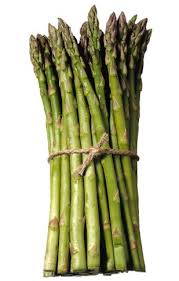 about 15 minutes – delicious!
Feeling a little more ambitious? Then try this recipe for Lemony Vegetable Risotto that I’ve adapted from Family Circle (July 2012):
Ingredients
32 oz. vegetable broth
1 bag frozen asparagus, cut into 1 inch pieces (or the equivalent of fresh asparagus)
1 bag frozen peas (or the equivalent of fresh peas)
1 tblsp olive oil
1 tblsp unsalted butter
1/3 cup diced shallots
1 cup arborio rice
1/2 cup white wine
3 tblsp lemon juice
1/2 cup grated parmesan cheese
1/4 tsp salt
Instructions
1) Boil the broth and 1/2 cup water. Add asparagus and peas for about 3 minutes. Remove veggies with a slotted spoon and set aside, but keep the water/broth.
2) Heat oil and butter in a large pan, and add shallots, cooking for about 2 minutes. Stir in the rice and cook for another minute. Pour in wine and cook until the liquid is almost gone.
3) To the rice mixture, add 1/2 cup of the reserved water/broth, stirring well, and cook until the broth is almost gone. Repeat this step with additional 1/2 cups of water/broth until the rice is tender (it will probably take about 25 minutes).
4) Stir in lemon juice, parmesan, peas and asparagus. Enjoy immediately!
It’s almost asparagus season (photo from vegkitchen.com)! My favorite way to prepare asparagus is very simple. First I wash the asparagus, use a potato peeler to peel the stems a little, and snap off the hard ends. I then place the asparagus on a baking sheet, spray with olive oil, sprinkle with salt, and broil at about 450 degrees for
Feeling a little more ambitious? Then try this recipe for Lemony Vegetable Risotto that I’ve adapted from Family Circle (July 2012):
Ingredients
32 oz. vegetable broth
1 bag frozen asparagus, cut into 1 inch pieces (or the equivalent of fresh asparagus)
1 bag frozen peas (or the equivalent of fresh peas)
1 tblsp olive oil
1 tblsp unsalted butter
1/3 cup diced shallots
1 cup arborio rice
1/2 cup white wine
3 tblsp lemon juice
1/2 cup grated parmesan cheese
1/4 tsp salt
Instructions
1) Boil the broth and 1/2 cup water. Add asparagus and peas for about 3 minutes. Remove veggies with a slotted spoon and set aside, but keep the water/broth.
2) Heat oil and butter in a large pan, and add shallots, cooking for about 2 minutes. Stir in the rice and cook for another minute. Pour in wine and cook until the liquid is almost gone.
3) To the rice mixture, add 1/2 cup of the reserved water/broth, stirring well, and cook until the broth is almost gone. Repeat this step with additional 1/2 cups of water/broth until the rice is tender (it will probably take about 25 minutes).
4) Stir in lemon juice, parmesan, peas and asparagus. Enjoy immediately!
Tuesday, March 19, 2013
Goin’ Native!
 It’s almost spring, which means I’m looking for some interesting trees and plants for my garden, to add a little zest to the landscape and to fill in holes from any plants that didn’t make it through the winter. I’ve had a longstanding hole in my backyard along the fenceline that I plan to fill in this spring. I’m going to plant two redbuds (Cercis canadensis, photo credit: Arbor Day Foundation, www.arborday.org) and look forward to their beautiful spring blooms. Why did I choose the eastern redbud? The most important reason is that it’s a species that’s native to the mid-Atlantic region where I live.
Ecologists separate plant and animal species into non-native and native species. Here’s how this classification works:
- As a general rule of thumb for the Chesapeake region, non-native species are species introduced to the ecosystem after the arrival of Europeans in this area (1700s), and native species are species that were here before that time.
- Non-native species have been introduced to ecosystems in many different ways – as plants for people’s gardens (roses), as crops (tomatoes), as possible fur producing animals (nutria), as ornamental animals for the lawns and ponds of wealthy landowners (mute swan), as misguided attempts at erosion control (kudzu), as packing material to protect fragile items (Japanese stiltgrass).
- Some non-natives don’t cause any problems (roses or tomatoes); they stay where they’re planted and serve the intended purpose.
- But some non-native species “go rogue”. When they leave the habitat in which they evolved, and enter a new habitat, they’re able to outcompete other species. This unbalanced competition causes disruptions in species interactions that have evolved over thousands of years.
- A great example of an invasive non-native species in the Chesapeake Bay is the snakehead fish – this top predator can really clean out a lake, leaving almost nothing in its wake. AND it has no natural predators – talk about a one-two punch for native ecosystems!
That’s why we want to try to plant as many native plants in our gardens as possible. They’ve evolved to be able to handle the climate in the native area – think less water needed, fewer pesticides (they’ve evolved natural defenses), less fertilizer (they’re used to the native soils). They have also evolved to work with other native species. Many plants and insects come out of winter sleep at about the same time – the plants are ready to be pollinated, just as those pollinators wake up! What a great system!
So I’ll be planting my two beautiful redbuds this weekend and enjoying them for many years to come! If you’d like to see some native species from your area, check out eNature’s listing of local species by zip code. What are you planting in your garden?
Saturday, March 16, 2013
A “Sticky” Situation for this endangered species!
 My son, Noah, told me about this week’s endangered species, the Lord Howe stick insect (Dryococelus australis) (island photo is home, sweet home for the stick insect, credit: John White; insect photo credit Rod Morris/www.rodmorris.co.nz). The fascinating story of this insect is one of the best endangered species stories I’ve heard in a long time. Here’s the Reader’s Digest version:
- Huge stick insect lives on Lord Howe Island in the south Pacific near Australia
- In 1918 a supply ship runs aground on the island and inadvertently introduces black rats to the island
- The black rats feast on the great big, tasty stick insects; insects are believed to be extinct by 1960
- But wait! In 2002, scientists might have found the stick insects on Ball’s Pyramid (which, by the way, is why my two sons found this story so funny, being 12 and 14-year old boys…..)
I’m not going to reinvent the wheel – you just have to read this story, expertly told by the folks at NPR: Six-Legged Giant Finds Secret Hideaway, Hides For 80 Years.

Friday, March 15, 2013
Black bean, hominy, and kale stew
Be sure to “Like” greenmomster on facebook for your weekly meat-free Friday recipes!
Here’s a great recipe I adapted from the March 2013 issue of Cooking Light (I made this version a little more chunky, a little lighter on the spices). Serve with Phil’s Cornbread for a tasty, hearty end-of –winter meal!

Ingredients
11 oz jar of tomatillos, chopped very small
4 tblsp olive oil
2 onions, chopped
the equivalent of 2 jalapeno peppers, from jarred jalapenos
4 tsp chopped garlic
4 tsp ground cumin
8 cups vegetable broth
2 cups water
1/2 tsp salt
1/4 tsp red pepper flakes
4 cans (15 oz each) black beans, rinsed and drained
2 8 oz. bunches of kale, cleaned and chopped
1 29 oz. can hominy, rinsed and drained
sour cream
shredded cheddar
cilantro
Instructions
1) Heat olive oil in a large pot. Add onion and jalapeno, and saute for about 5 minutes.
2) Add garlic and cumin; saute for about 2 more minutes
3) Add tomatillos, broth, water, salt, red pepper, black beans, and kale. Heat for about 10 minutes, or until the kale becomes tender.
4) Add the hominy for about 5 minutes and serve warm.
5) Garnish with sour cream, cheddar, and cilantro.
Serves a hungry family of five, with a little bit for leftovers!
Here’s a great recipe I adapted from the March 2013 issue of Cooking Light (I made this version a little more chunky, a little lighter on the spices). Serve with Phil’s Cornbread for a tasty, hearty end-of –winter meal!

Ingredients
11 oz jar of tomatillos, chopped very small
4 tblsp olive oil
2 onions, chopped
the equivalent of 2 jalapeno peppers, from jarred jalapenos
4 tsp chopped garlic
4 tsp ground cumin
8 cups vegetable broth
2 cups water
1/2 tsp salt
1/4 tsp red pepper flakes
4 cans (15 oz each) black beans, rinsed and drained
2 8 oz. bunches of kale, cleaned and chopped
1 29 oz. can hominy, rinsed and drained
sour cream
shredded cheddar
cilantro
Instructions
1) Heat olive oil in a large pot. Add onion and jalapeno, and saute for about 5 minutes.
2) Add garlic and cumin; saute for about 2 more minutes
3) Add tomatillos, broth, water, salt, red pepper, black beans, and kale. Heat for about 10 minutes, or until the kale becomes tender.
4) Add the hominy for about 5 minutes and serve warm.
5) Garnish with sour cream, cheddar, and cilantro.
Serves a hungry family of five, with a little bit for leftovers!
Subscribe to:
Posts (Atom)