Friday, January 22, 2016

Perfect winter meat-free Friday dinner!

Believe it or not, this recipe is a hit with the kids!  It’s a filling, warm soup – perfect for the middle of winter, using lots of in-season items.DSC_0086

Cabbage and Potato Soup
  • 1 small head of cabbage, coarsely chopped into 1 to 2 inch squares
  • 6 yukon gold potatoes, peeled and chopped into 2 inch cubes
  • 1 medium onion, coarsely chopped
  • 3 to 4 tablespoons butter
  • 1/2  tablespoon black pepper
  • 1/2 teaspoon salt
  • 2 1/2 tablespoons fresh thyme (about 1 1/2 tablespoons if you’re using dried thyme)
  • 4 cups vegetable broth
  • 2 cups water


Instructions:
  1. Melt the butter in a large soup pot and saute the onion, potatoes, salt, and pepper for about 5 minutes
  2. Add vegetable broth and water; boil until the potato is just soft enough to mash.
  3. Using a hand potato masher, mash the potatoes in the soup until half the potatoes are mashed and half are still in chunks.  If you really like a smooth soup, instead of hand-mashing, use a blender to puree about half the soup.
  4. Add cabbage and thyme; cook until cabbage is soft.
  5. Makes about 4 servings.
Enjoy!

Wednesday, January 20, 2016

10 fun polar bear facts!

Be sure to “Like” greenmomster on facebook for all the latest posts!

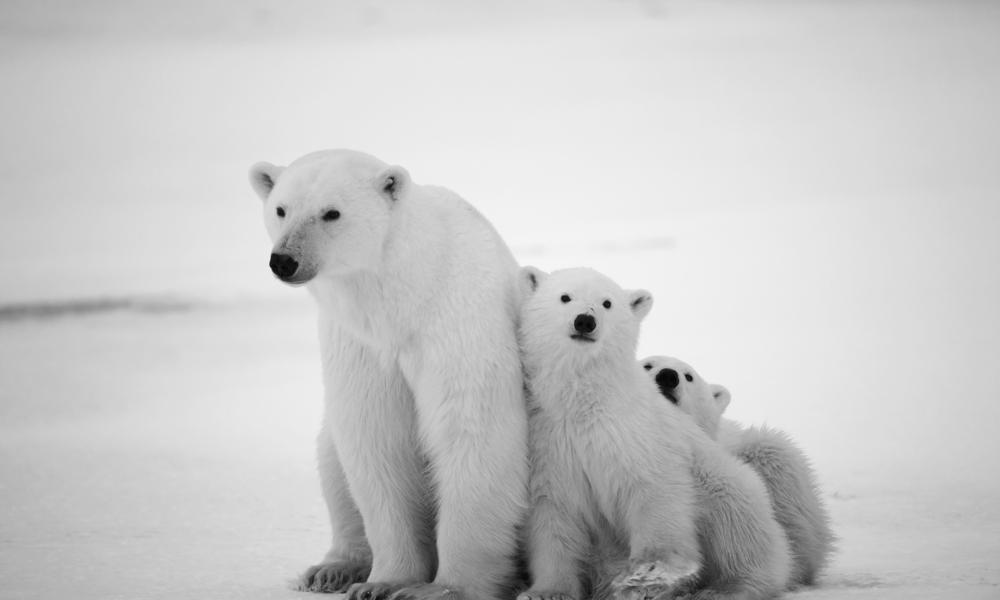
It’s winter, so let’s look at the polar bear (Ursus maritimus)(photo from http://worldwildlife.org/species/polar-bear).   Here are 10 things to know about polar bears:

  1. These powerful symbols of the arctic weigh between 500 and 1000 lbs (and even up to 1400 lbs!),
  2. Polar bears feed primarily on ringed seals (U.S. FWS 2009).
  3. Polar bears are extremely strong swimmers
  4. Polar bears can live from 25 to 30 years in the Polar Bear Familywild. 
  5. To live in the harsh arctic climate, they have evolved several different adaptations to stay warm – they’ve got a thick layer of blubber and are covered in a thick layer of insulating fur.  Although the fur is white (providing camouflage in their white, icy environment), the skin underneath is actually black, allowing it to absorb the sun’s rays.  Even the soles of the polar bear’s feet are covered in fur (National Geographic ND).
  6. At around 3-5 years of age, polar bears are ready to reproduce (U.S. FWS 2009).  Females dig dens in the arctic ice and give birth during the winter, usually to twins. 
  7. Polar bear cubs stay with their mothers for over two years, in order to learn survival skills.  All parental care is given by the female; in fact, the females must protect the young from the males who have been known to kill the cubs (National Geographic ND).
  8. The polar bear population is currently estimated at 20,000-25,000 (U.S. FWS 2009).
  9. Polar bears are listed under the Endangered Species Act as threatened (U.S. FWS 2013) and listed on Appendix II of CITES, with primary threats to the population being the loss of sea ice, due to climate change.  Several international agreements are in place to try to protect the polar bear and its habitat.
  10. Canada is the only nation with polar bears that currently allows sports hunting of this species (Washington Post 2013). 

Why should we care about the polar bear?  As stated on the World Wildlife Federation’s website:  “Polar bears are at the top of the food chain and have an important role in the overall health of the marine environment. Over thousands of years, polar bears have also been an important part of the cultures and economies of Arctic peoples. Polar bears depend on sea ice for their existence and are directly impacted by climate change—serving as important indicator species.”   To learn more about the polar bear and what you can do to help, be sure to visit:  http://worldwildlife.org/species/polar-bear

Sources:

Eilperin, J.. 2013. “U.S. Proposal to Protect Polar Bears Fails.” Washington Post, March 8, 2013.

National Geographic.  ND.  “Polar Bear Ursus maritimus”  Accessed online 3/8/2013.  http://animals.nationalgeographic.com/animals/mammals/polar-bear/

U.S. Fish and Wildlife Service.  2013.  “Species Profile.  Polar Bear (Ursus Maritimus)”  Last updated 3/8/2013.  Accessed online 3/8/2012.  http://ecos.fws.gov/speciesProfile/profile/speciesProfile.action?spcode=A0IJ

U.S. Fish and Wildlife Service. 2009.  “Polar Bear Ursus maritimus”  Last updated October 2009.  Accessed online 3/8/2013.  http://www.fws.gov/endangered/esa-library/pdf/polar_bear.pdf

World Wildlife Fund.  2013.  “Polar Bear”  Accessed online 3/8/2013. http://worldwildlife.org/species/polar-bear

Saturday, January 16, 2016

Better late than never!

Here’s your meat-free Friday recipe on Saturday morning!  No worries – this recipe is great for weekends too.  It’s adapted from Lighten up, y’all:  Classic Southern Recipes made Healthy and Wholesome, by Virginia Willis. 

CameraAwesomePhoto (86)

Southern Style Shepherd’s Pie with Grits

Ingredients

  • 1/2 cups stone-ground grits –cook according to package directions
  • 1 tsp olive oil
  • 1 sweet onion, chopped
  • 1 celery stalk, chopped
  • 1 carrot, chopped
  • 2 tblsp jar garlic
  • 2 packages Quorn Chick’n Tenders (thawed)
  • 1/4 tsp red pepper flakes
  • pinch of cinnamon
  • pinch of nutmeg
  • 1 (9oz) bag of baby spinach
  • 1/4 cup white wine
  • 1 tblsp oregano
  • 1/4 cup grated parmesan cheese

Instructions

  1. Preheat the oven to 350 degrees F and grease an 9x13 pan with cooking spray.
  2. Cook grits according to package directions.
  3. While the grits are cooking, heat the oil in a large pot.  Add onion, celery, and carrot and cook until starting to soften.  Add garlic and saute for about 1 minute.  Add the chick’n tenders and cook for about 5 minutes.  Add the red pepper flakes, cinnamon, and nutmeg.  Pour in wine and add spinach.  Cover the pot and simmer until the spinach starts to wilt.  Add oregaano.
  4. Add the parmesan cheese to the grits and stir well.
  5. Pour the chick’n/vegetable mixture into the pan and spread across the bottom of the pan.  Top with the grits, spreading the grits evenly with a wet rubber spatula, and cook until the grits are set and golden brown, about 30 – 40 minutes.

Enjoy!

Lighten Up, Y'all: Classic Southern Recipes Made Healthy and Wholesome

Wednesday, January 13, 2016

In case you missed it…..

(photo from the LA Times, www.latimes.com)

Here’s what President Obama said about climate change during last night’s State of the Union address:

“Look, if anybody still wants to dispute the science around climate change, have at it. You’ll be pretty lonely, because you’ll be debating our military, most of America’s business leaders, the majority of the American people, almost the entire scientific community, and 200 nations around the world who agree it’s a problem and intend to solve it.

But even if the planet wasn’t at stake; even if 2014 wasn’t the warmest year on record — until 2015 turned out even hotter — why would we want to pass up the chance for American businesses to produce and sell the energy of the future?

Seven years ago, we made the single biggest investment in clean energy in our history. Here are the results. In fields from Iowa to Texas, wind power is now cheaper than dirtier, conventional power. On rooftops from Arizona to New York, solar is saving Americans tens of millions of dollars a year on their energy bills, and employs more Americans than coal — in jobs that pay better than average. We’re taking steps to give homeowners the freedom to generate and store their own energy — something environmentalists and Tea Partiers have teamed up to support. Meanwhile, we’ve cut our imports of foreign oil by nearly sixty percent, and cut carbon pollution more than any other country on Earth.

Now we’ve got to accelerate the transition away from dirty energy. Rather than subsidize the past, we should invest in the future — especially in communities that rely on fossil fuels. That’s why I’m going to push to change the way we manage our oil and coal resources, so that they better reflect the costs they impose on taxpayers and our planet. That way, we put money back into those communities and put tens of thousands of Americans to work building a 21st century transportation system.

None of this will happen overnight, and yes, there are plenty of entrenched interests who want to protect the status quo. But the jobs we’ll create, the money we’ll save, and the planet we’ll preserve — that’s the kind of future our kids and grandkids deserve.

Climate change is just one of many issues where our security is linked to the rest of the world.”

I like that the President dismissed climate change denial, and connected a clean energy future with a strong economy.  Here’s a link to the entire speech. 

Your thoughts?

Friday, January 8, 2016

Meat-free Friday–Creamed Corn-Stuffed Tomatoes

Here’s a crowd-pleaser I adapted from Lighten up, Y’all, Classic Southern Recipes made Healthy and Wholesome by Virginia Willis.  I played with the amounts of various ingredients and found the recipe to be very forgiving.

IMG_3138

Ingredients

  • 6 medium tomatoes
  • 2 tsp olive oil
  • scraped kernels from 4 ears of fresh sweet corn, or 2 cups of frozen or canned kernels
  • 1 poblano chile, cored, seeded and chopped
  • salt and pepper to taste
  • 3 tblsp parmesan cheese
  • 1 tsp fresh chopped thyme
  • 1/4 cup italian bread crumbs

Instructions

  1. Preheat oven to 350 degrees F
  2. To prepare tomatoes, slice off the tops, remove the cores, and hollow out the shells.  Keep the pulp and squeeze with your hands or a spoon.
  3. To make the filling:  Heat the oil in a skillet and add corn, poblano pepper, and salt and pepper.  Cook until the corn is tender.  Add the tomato pulp and cook for about 5 minutes.  Add the cheese and thyme.
  4. Arrange the tomato shells in a casserole dish and fill with the filling.  Sprinkle with breadcrumbs.
  5. Bake for about 25 minutes or until the topping is golden and tomatoes are tender.  Be careful when serving – the tomatoes get pretty soft!

Enjoy!

Monday, January 4, 2016

Green Resolutions!

We’re back!  After a little end-of-year hiatus (thanks to a technical problem with the website….), greenmomster is back on line and looking forward to 2016!  Have you made your New Year’s Resolution yet? Are any of your resolutions “green”?  If you want to try living more sustainably this year, here are a few resolutions you might want to consider:

  • Eat meatless one day per week (why? check out this post)
  • Go for a hike at least one time per month to unwind and enjoy nature!

newyears8

  • Use only reuseable bags at the grocery store.  Friends don’t let friends use plastic.
  • Resolve to watch 4 documentaries on environmental topics this year.  Some of greenmomster’s favorites include:  Turtle, the Incredible Journey; Merchants of Doubt; YERT:  Your Environmental Road Trip; Ingredients.
  • Choose one environmental issue – elephant poaching, climate change, fracking, clean water, the illegal trade in tiger or reptile parts, the Keystone XL pipeline, mountaintop removal, local agriculture, another local issue – and resolve to get involved.  Research the topic and, at least twice during 2016, write to your elected officials to share your opinion. 

climatechange7

  • Read at least two books on environmental topics.  If you read Silent Spring by Rachel Carson, or The Forest Unseen by David George Haskell as greenmomster suggested last year, try Love, Life, and Elephants by Dame Daphne Sheldrick or Red-Tails in Love by Marie Winn this year.  You could even read Dr. Seuss’ The Lorax, if you like shorter reads!

climatechange2

  • Reduce your use of plastics – start by “just saying no” to plastic straws.  Here’s an interesting article on the topic from HuffPost.  Be sure to use your baggie dryer, and don’t forget to avoiding products with unnecessary packaging – do your bananas really need to be in a plastic baggie?
  • Vote green!  Don’t miss any elections in 2016! 
  • Get out of your comfort zone!  Choose one environmental action that’s going to take a bit of work and make it your goal for 2016.
What’s your 2016 green resolution?  Please share!

Friday, December 4, 2015

It’s World Wildlife Conservation Day!

Happy World Wildlife Conservation Day!  The World Wildlife Fund and State Department want you to learn about illegal wildlife trafficking. 

I’ve written several posts in the past regarding illegal wildlife trafficking, including a post on ivory, protection of pangolins and lions, and reviews of books written about illegal trade of reptiles (plowshare tortoise photo from newyorker.com) and butterflies.  Biodiversity conservation is a critical environmental and social issue.  The illegal trade decimates wildlife populations, but also harms human communities.  As stated by Jim Leape, Director General of World Wildlife International, “It is communities, often the world’s poorest, that lose the most from this illicit trade, while criminal gangs and corrupt officials profit. Frontline rangers are losing their lives and families that depend on natural resources are losing their livelihoods.” (WWF 2012)

Want to learn more?  60 Minutes presented a fascinating piece on reptile conservation.  Arkive also provided a great overview of the illegal trade issue on their blog.  Additionally, The World Wildlife Fund recently posted all presentations from a symposium on illegal wildlife trade – definitely worth a view to learn more about this important issue.

If you’re interested in helping to stop the international illegal trade in wildlife, check out how you can participate through World Wildlife Fund.

Source:
World Wildlife Fund.  2012.  “Illegal wildlife trade threatens national security, says WWF report”  Accessed 12/12/12. 
http://wwf.panda.org/?207054/Illegal-wildlife-trade-threatens-national-security-says-WWF-report