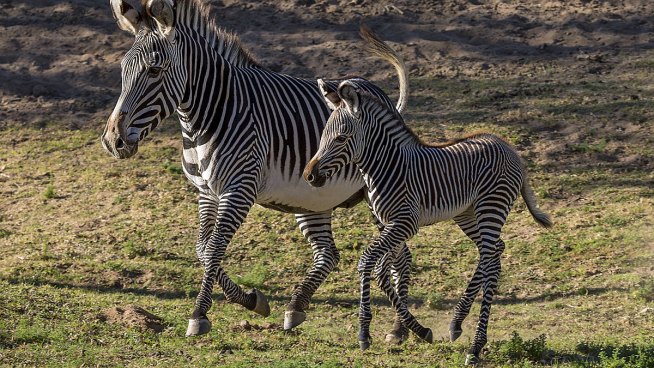
In previous posts, greenmomster has written about the beautiful and endangered Grevy’s zebra. Well, now there’s great news out of the San Diego Safari Park – a new foal was born on January 5 (photo credit: Ken Bohn, Jan. 14, 2014 at the San Diego Zoo Safari Park), adding to the 140 Grevy’s zebras born in this very successful breeding program. With only about 2,250 Grevy’s in the wild, every birth is good news. Remember, you can help by adopting a Grevy’s zebra at the Cincinnati zoo or support the Grevy’s Zebra Trust, which works to employ members of the local community in zebra monitoring programs.
Be sure to “Like” greenmomster on Facebook for all the latest endangered species updates!
In previous posts we’ve talked about ecosystems and the role that each species plays in an ecosystem. Over thousands of years, species in an ecosystem evolve together. An example of this “co-evolution” would be insects that begin to come out of winter sleep at about the same time that flowers begin to bloom – this coordination ensures that the insects get nectar for food and that the plants get pollination. When these native species evolve together, this type of coordination helps the ecosystem to remain healthy.
Sometimes, new species that didn’t evolve in the ecosystem are introduced. These species would be considered non-native. Here in the Chesapeake Bay region, we often consider any species that was introduced after Europeans arrived in the area (let’s say the 1600s) to be a non-native. Some non-natives stay where they’re planted and really don’t cause much trouble – plants such as roses, tomatoes, or tulips are non-natives. Sure, non-native species may not be the greenest option, since they require more water or fertilizer than natives, but they aren’t quite the problem that their cousins the “non-native invasive” are.
Non-native invasive species are plants or animals that are introduced into an ecosystem and quickly begin to outcompete native species. They may be a predator that eats everything in sight, such as the northern snakehead (photo credit Virginia Department of Game and Inland fisheries), or they could be a plant that outcompetes and kills other plants in the area (check your backyard for English ivy…). Common non-native invasives include house sparrows and kudzu, but there are many, many more. And these species aren’t just an ecological nuisance, they can have major economic impacts too. Kudzu can costs homeowners substantial amounts once it gets into their landscaping (think herbicides). Zebra mussels were first introduced in the Great Lakes region, but have spread throughout the U.S. The Missouri Department of Conservation estimates that this small mollusk, responsible for clogging water intake pipes and power plant pipes, fouling boat hulls, and displacing native species, will cost the U.S. billions of dollars by the end of this decade. Another species that has the potential to do serious economic damage is the emerald ash borer, which kills ash trees. If you like baseball, you should be concerned, because wood baseball bats are made from ash. Check out this video about the tiny invader: Good news though, birds may be helping with reducing this insect species.
So how can a greenmomster help? There are two easy ways to be part of the solution. Since one of the best ways to limit the negative effects of non-natives is to prevent their establishment in new ecosystems, greenmomsters can:
Try to choose native plants for landscaping
Never set an unwanted pet (such as a snake) loose into the environment. Check with a local nature center for proper ways to find them new homes.
Be sure to "Like" greenmomster on Facebook for all the greenest updates!
It’s portobello mushrooms this week! This recipe is adapted from Michael Symon’s 5 in 5 cookbook (I highly recommend treating yourself to a copy of this cookbook!). The main change I made was cooking the mushrooms and onions in a frying pan, instead of grilling – for this method, you can use a little less liquid than the grilling option, but it works well just the same. I made some of the sandwiches with blue cheese and some without for my non-cheese loving family members – still a hit either way!
Ingredients
5 portobello mushrooms, stems removed and gills scraped out with a spoon
1 medium red onion, sliced
1/4 cup olive oil
1/4 cup balsamic vinegar
salt and pepper to taste
blue cheese slices
5 burger buns
2 cups arugula or arugula blend
Instructions
Preheat grill or pan
Whisk oil and vinegar together and drizzle over mushroom and onion (if you’re using the frying pan, drizzle while the mushrooms and onions are in the pan so that you can cook using the liquid). Season with salt and pepper.
Cover and cook mushroom and onions for about 3 minutes. Flip and cook another minute or so (until mushrooms are soft).
If you’re using the frying pan, remove mushrooms with a slotted spatula. Place mushroom on roll and top with cheese and arugula.
OK, I absolutely hate reporting on this study, because I love collecting shells at my favorite beaches – Edisto Island SC and Bull Island SC. Every year I make a frame decorated with some shells and put my kids’ vacation picture in it. I still think it’s a great alternative green souvenir (as opposed to many other items I don’t need that have been shipped long distances and end up in a closet). But alas, a new study reports that there might be a negative environmental impact to tourists collecting shells. The study, in PLOS One and reported on in Conservation Magazine, included surveys of a beach in Spain. Researchers found a significant change in the number of shells after the only factor that had changed was tourism (urban development, fishing, weather, wave action didn’t change significantly). Shells provide shelter for many sea creatures and birds often use them to build nests. So I guess we should keep our eyes on this research and maybe agree to take home fewer shells next year.
Source: Kowalewski, M., R. Domenech, and J. Martinell. 2014. Vanishing clams on an Iberian beach: Local consequences and global implications of accelerating loss of shells to tourism. PLOS ONE doi:10.1371/journal.pone.0083615
In endangered species conservation, as in many aspects of life, the good looking individuals have a leg up on the competition. We often choose to protect the attractive species, while ignoring the species that aren’t as eye-catching. As Dante Alighieri once said, “Beauty awakens the soul to act”. But in conservation, we need to look for beauty in non-traditional packages.
A recent article in the Huffington Post, “11 Animals We May Allow To Go Extinct Because They’re Not Cute and Fuzzy” shines light on a serious issue – the public’s focus on only those species that we find physically beautiful. We know, from our previous science class posts, that each species has an important role to play in the ecosystem – the species fills a “niche”. Many species needing conservation aren’t exactly the Sports Illustrated swimsuit models of nature. Species such as the Lord Howe Island Stick Insect, the Golden Poison Dart Frog, the short-tailed albatross, and the pygmy three-toed sloth all play important roles in their ecosystems and require species conservation efforts. Niches should be our basis for preservation (and volunteering and donating), rather than the animals’ cuteness – be sure to check out the article to learn more about the species.
But that pygmy three-toed sloth is pretty cute (photo credit: Huffington Post)….
Be sure to “Like” greenmomster on Facebook for all your meat-free Friday recipes!
Time again for breakfast for dinner! This delicious dish was adapted from a recipe by Gale Belser in ‘Pon Top Edisto, a cookbook from the Trinity Episcopal Church in my favorite vacation spot – Edisto Island SC! The recipe is easy AND it’s a crowd-pleaser – what could be better than that?
Cheese, egg, and spinach casserole Ingredients
1/4 cup butter
1 16 oz. carton cottage cheese
6 eggs, beaten
6 tblsp four
8 oz. shredded cheddar cheese
salt and pepper to taste
1 package frozen spinach, thawed and with water squeezed out Instructions
Preheat oven to 350 degrees
Melt butter in a small baking dish (9x9)
Combine the remaining ingredients, except spinach, in a separate bowl
Pour half egg mixture into baking dish. Spread spinach in a layer on top. Pour second half of egg mixture on top of the spinach.
As you know from reading this blog, our family spends a good bit of time each year volunteering at Sky Meadows State Park, our favorite Virginia state park. The Virginia State Parks system is hosting a “First Day” photo contest and we need your help to win! We’ve submitted our photo, taken at Sky Meadows on January 1. Now all we need is for all of you greenmomsters to vote for our photo at this link one time per day until January 10. We really appreciate your support!
 In previous posts, greenmomster has written about the beautiful and endangered Grevy’s zebra. Well, now there’s great news out of the San Diego Safari Park – a new foal was born on January 5 (photo credit: Ken Bohn, Jan. 14, 2014 at the San Diego Zoo Safari Park), adding to the 140 Grevy’s zebras born in this very successful breeding program. With only about 2,250 Grevy’s in the wild, every birth is good news. Remember, you can help by adopting a Grevy’s zebra at the Cincinnati zoo or support the Grevy’s Zebra Trust, which works to employ members of the local community in zebra monitoring programs.
 In
In  Common non-native invasives include house sparrows and kudzu, but there are many, many more. And these species aren’t just an ecological nuisance, they can have major economic impacts too. Kudzu can costs homeowners substantial amounts once it gets into their landscaping (think herbicides). Zebra mussels were first introduced in the Great Lakes region, but have spread throughout the U.S. The

 OK, I absolutely hate reporting on this study, because I love collecting shells at my favorite beaches –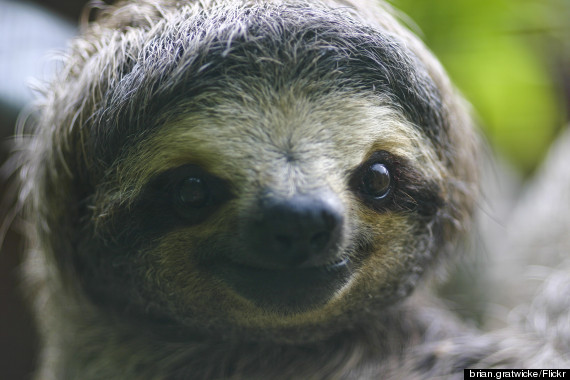


 As you know from reading this blog, our family spends a good bit of time each year volunteering at Sky Meadows State Park, our favorite Virginia state park. The Virginia State Parks system is hosting a “First Day” photo contest and we need your help to win! We’ve submitted our photo, taken at Sky Meadows on January 1. Now all we need is for all of you greenmomsters to vote for our photo at