Sunday, November 17, 2013

So you slept through science class, part 8–How do ecologists get those numbers?

Like getting all the latest green news?  Be sure to "Like" greenmomster on Facebook!

Here in greenmomster’s science class, we’ve covered many topics including endangered species, wildlife corridors, and biodiversity, but you may be wondering, “how do environmental managers come up with the numbers on which their decisions are based?”  It turns out, there are many ways to calculate the size or activity of a population of organisms:
  • If the organisms are relatively still, like oysters or dandelions, scientists will often use a “quadrat” or a sample area like a circle or square to estimate the number of individuals in a larger area.  First, you lay down the quadrat.  Next, you count the number of individuals in the quadrat.  Repeat this procedure several times, and then do the calculation to get your estimate for a larger area.
  • If the organisms have a tendency to move, sometimes scientists will conduct “mark-recapture” surveys.  Let’s say they want to know how many box turtles are in an area.  First the scientists set out traps to catch the box turtles.  Then they mark the turtles they caught and set them free.  When the scientist later catches more turtles, he or she checks to see whether the turtles are marked.  That info (number of marked vs. number of unmarked) goes into a calculation to determine the population size.
  • Another way to count individuals and determine any change over time is to walk a line or transect through an area over the course of a week, month, year, or longer.  As the scientist walks along, he or she counts each individual of a species that is seen within a set distance (maybe 15 feet).   Repeating this procedure over a long time can possibly tell a scientist if a change in population size is occurring over time or between different locations.  I used this method when studying butterflies in butterfly gardens.  My butterfly watching volunteers and I walked transects through over 100 gardens, once per week, for six months during each of two years – it gave us a great idea of which butterfly gardens attracted the most butterflies and which types of butterflies they attracted.
There are so many ways to calculate population sizes!  What about when the individuals aren’t very visible, like underwater animals?  There’s some fascinating work that’s been done on whales to determine where they go and what they do when they’re underwater – check out this video from Science Friday.
And what’s a scientist to do, if there aren’t any formally gathered data to be found?  A recent study reported on in the the Fall 2013 issue of dukenvironment magazine showed that even antique menus can be helpful clues in determining historic fish stocks.  The researchers took a look at the types of fish that were found on menus from restaurants in Hawaii in the early and mid-1900s:  “The team’s analysis of 376 menus from 154 different restaurants showed that near-shore species such as reef fish, jacks and bottom fish, for example were common on Hawaiian menus before 1940, but by its statehood in 1959, they appeared collectively on less than 10 percent of menus sampled.  Restaurants began shifting to serving large pelagic species, such as tuna and swordfish.  By 1970, 95 percent of the menus contained large pelagics; inshore fish had all but disappeared.”  The team then went on to try to come up with reasons for the shift – population? taste? technology?  So creative!
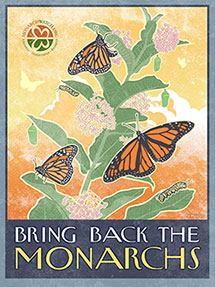
Bring Back The MonarchsCould you be part of a scientific study?  You bet!  Many scientific studies that gather information on populations use “citizens scientists”.  If you’re interested in getting involved, check out these interesting programs:
  • Monarch Watch allows you to help count monarchs and track their North American migration
  • Project Feeder Watch allows you to help count birds that visit your backyard feeders during the winter
  • The Xerces Society has several opportunities for you to help monitor populations of dragonflies
  • You can help the USGS monitor frogs in your area
Now that you know the basics, you’re ready to help!  Not only do scientists have to be technically strong to solve today’s environmental challenges, they also have to be creative, and who’s more creative than a greenmomster?
Sources:
“Seafood Menus reflect long-term ocean changes.”  Fall 2013.  dukenvironment. p 12.

Friday, November 15, 2013

Spaghetti with olives

Like getting your Meat-Free Friday recipes and all the latest green news?  Be sure to “Like” Greenmomster on Facebook!
IMG_20131109_180658_721This tangy pasta recipe is always a big hit at our house.  I adapted the recipe from one found in the November 2012 issue of Cooking Light.  Serve with salad and some King’s Hawaiian Rolls and you’ve got a great Friday night meal!

Ingredients
8 ounces spaghetti, cooked al dente
2 tblsp olive oil
2 small onions, chopped
2 tsp minced garlic
1 tsp dried oregano
1/2 tsp celery salt
1/4 tsp black pepper
1/4 tsp crushed saffron
1 package fake ground beef (I like Morningstar Farms or Lightlife)
2 cups red pasta sauce (homemade or prepared)
1/2 cup pepper-stuffed olives
1 tblsp capers

Instructions
  1. Heat oil in a large pot.  Add onions and saute until almost clear.  Add garlic and saute about 1 minute.  Add oregano, celery salt, pepper and saffron.
  2. Add fake beef and cook thoroughly.
  3. Stir in red sauce, olives, and capers.  Bring to a boil.
  4. Pour over warm pasta and enjoy!

Sunday, November 10, 2013

Farming for the Future

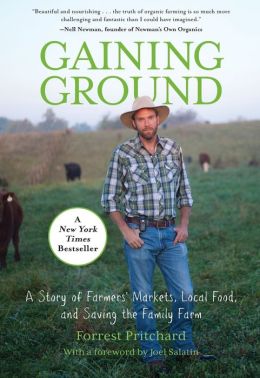
Gaining Ground: A Story of Farmers' Markets, Local Food, and Saving the Family FarmWant to keep up on all the latest green news?  Be sure to "Like" greenmomster on facebook!

Many greenmomsters are trying to change their families’ eating habits by buying more organic and locally-grown fruit, vegetables, and meats, but what goes into producing such foods?  In his book, Gaining Ground, Forrest Pritchard tells us about his life farming in Virginia.  Rather than following his classmates to more lucrative jobs in large cities, Mr. Pritchard decided to return to his family’s farm after graduating from William and Mary (Alma Mater of a Nation!).  Over the course of several years, Mr. Pritchard learns to farm using sustainable practices and selling his food locally.  This entertaining book takes the reader through the highs and lows of his adventure.  Additionally, the author answers important questions:
  • Why is organically grown food beneficial to the environment and to our health?
  • Why is food sold at farmers’ markets slightly more expensive than food sold at grocery stores?
  • What is meant by  “industrially" raised meat? How does it differ from “pasture raised”?
  • How can things go wrong with a rampaging hog?
  • Why should I try to shop for local food products?  Do local farmers really need my support?
  • How does agriculture affect the local environment – in this case, the Chesapeake Bay watershed?
  • Can I influence which products my local farmers choose to grow and produce?
Although I’m not a meat-eater (I’ll more likely buy his wife’s locally made pasta), I highly recommend this enjoyable read – you’ll be hooked after the story of the stingy old lady buying firewood.  You’ll learn a lot about food production and your purchasing choices, and as an added bonus, you’ll understand why William and Mary produces some of the best scholars in the U.S. (Alma Mater of a Nation!)

Friday, November 8, 2013

Virginia Vegetarian Pasta Fazool

If you want to get your weekly meat-free Friday recipes, be sure to “Like” us on Facebook!

IMG_20131107_171034_745There are roughly a jillion ways to make this dish and everyone claims that theirs is correct.  Most versions are “soupier” than ours, but here’s how we do it at our house and there are rarely any leftovers!
phil096
Ingredients:
1 lb ditalini or other small-ish, cooked al dente
2 packages Smart Sausage Italian Style
olive oil
2 15 oz. cans kidney beans, drained and rinsed
1 25 oz. jar prepared red pasta sauce (or an equivalent amount of your homemade sauce)

Instructions:
1)  Slice “sausage” into 1/2 inch pieces.  Fry in an excess amount of olive oil until brown (you should have some extra liquid olive oil in the pan when you’re finished cooking).
2)  Add “sausage”, cooking oil, kidney beans, and sauce to the pasta and warm through.  Garnish with parmesan cheese and enjoy with a salad!

Monday, November 4, 2013

Wade in the Water–a stream monitoring update

About a year and a half ago, our family decided to volunteer to become stream monitors – we wanted to find out whether our local streams were healthy.  If you’ve been following our adventures, you know that the news wasn’t always good.  But our latest stream is alive – not healthy – but alive!  On Sunday, we headed out to wade in the water (not nearly as gracefully as Alvin Ailey’s company in the best piece of American choreography EVER).  It was a crisp, sunny fall day – perfect for a little stream monitoring!   Since I’m still recovering from knee surgery, my husband wedged his size 12 feet into my waders and did the “stream dance”.  IMG_20131027_115556_939  After only two 1-minute sessions of dancing, we captured over the required 200 invertebrates!  A careful examination of our net turned up lots of interesting species.  IMG_20131027_120440_023  Unlike our summertime survey, we didn’t see many scuds (photo from www.flyfishersrepublic.com) .  This time our net was filled with over 100 clams; we also had several big invertebrates like hellgrammites (which we learned really do have pinching mouthparts!) and fly larvae. 
Each time we head out to monitor our stream, the kids become more skilled at gathering samples and identifying the various invertebrates.  They’ve also been noticing the differences in species during the different seasons, and have become more aware of pollution issues in their own backyard.  It’s been a great experience that the kids have applied in their science classrooms at school. 

Interested in adopting a stream with your family?  Check out the Izaak Walton League website.   You’ll find monitoring programs around the U.S.  If you happen to live in Virginia, the Virginia Save our Streams (SOS) program is worth a look – we’ve really enjoyed our experience with the program!

To keep up on our stream monitoring adventures and other green news, be sure to "Like" greenmomster on Facebook!
Button

Saturday, November 2, 2013

Sudsy joy!

On our facebook page, as well as on this blog, I’ve written about many of the chemicals in our cleaning and beauty products.  Since greenmomsters recommend that you avoid these toxins as much as possible, I wanted to let you know about a great soap company that I’ve been using for several years – the Parsonage Handmade Soaps.  All products are made using organically-grown herbs and pure essential oils, and they’re free of detergents, other chemicals, and petroleum products.  But most important – they clean well and smell great!  I also really like the packaging – there’s very little.  Each soap is wrapped with a pretty piece of fabric (I actually use them as bookmarks).  The company ships for only $5.95.  So if you’d like to go a little more natural with your beauty products, try Parsonage Soaps. 

By the way, I received zip, nada, nichts for this endorsement – I just like the product and thought I’d let you know.

Friday, November 1, 2013

Mushroom and “bacon” casserole!

Like getting all the latest news and recipes on Greenmomster?  Be sure to “Like” us on Facebook!

IMG_20131031_182440_466Here’s a tasty recipe for cool fall nights – we ate it on Halloween night!  Not a quick recipe, but the end-result is filling and a crowd pleaser.  I adapted this recipe from one found in the November 2013 issue of Cooking Light.

Ingredients
4 cups veggie broth
2 cups water
12 slices Morningstar Farm veggie bacon strips, microwaved to crunchy
2 tblsp olive oil
1 cup chopped onion
1 tbsp thyme
3 tsp jar garlic
8 ounces sliced cremini mushrooms
8 ounces sliced shitake mushrooms
1/2 tsp salt
2 cups uncooked barley
3 ounces shredded Gruyere cheese
1/2 cup chopped, drained oil packed sundried tomatoes
2 tsp soy sauce
1 tsp pepper
1 (10 oz.) package frozen spinach, thawed

Instructions
  1. Preheat oven to 375 degrees
  2. Combine water and veggie broth and warm in a large pot
  3. Heat olive oil.  Saute onion, thyme, and garlic until onion is soft.  Add mushrooms and salt and cook until the mushrooms are soft (about 10 minutes).
  4. Stir in barley and cook for about 1 minute.
  5. Add 2 cups broth and cook until almost absorbed.  Continue to add broth mixture, one cup at a time, until broth is absorbed and barley is soft.
  6. Stir in 1/2 Gruyere, tomatoes, soy sauce, pepper, spinach, and crumbled “bacon.”
  7. Place barley mixture into a greased glass baking pan.  Sprinkle remaining cheese on top.
  8. Cover with aluminum foil and cook for 15 minutes.  Remove foil and cook for another 10 minutes.
Enjoy!