Showing posts with label locally grown. Show all posts

Tuesday, January 27, 2015

Interesting new ingredients

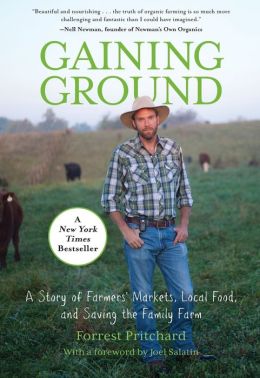
Many folks these days are trying to buy more “locally grown” food (grown within about 150 miles of home). Local food is grown in season, is fresher, and often tastes better than produce shipped across the country. Additionally, by buying locally grown food, you make a small reduction in the energy costs needed for shipping, and every little bit helps! One of the best parts of buying locally grown food is supporting local, smaller farms.  It’s not going to solve every environmental issue associated with feeding 7 billion people, but buying local could be an addition to our bag of tricks.  Interested in learning how important “buying local” is to small farms? Check out Forrest Pritchard’s book, Gaining Ground, about his experiences as a small farmer in VA.

When you’re trying to buy local, does all of your food have to come from the local area? Nope – some items just aren’t grown locally. In Barbara Kingsolver’s book, Animal, Vegetable, Miracle: a Year of Food Life, her family tried to buy only locally grown food for an entire year, but each person was allowed two “non-local” items, ie. coffee, orange juice, some wines, even candy.  Here’s an example of the other extreme:  a chef who owns a 100% locally sourced restaurant in…..wait for it…….Maine!  I guess if he can do it, we can give it a try!

My church screened an interesting documentary about the local food movement and its environmental impacts, called Ingredients.  It’s definitely worth an hour to learn a little more about the environmental impacts of food production.

Many folks don’t like to eat locally, because they say the food is more expensive, but cheap food often has hidden costs (see Ingredients, above).  Additionally, many farmers markets now accept SNAP benefits!  Remember, one of the best ways to get inexpensive, local food is to grow your own. Turning your lawn into a vegetable garden and pollinator garden is a more productive use of your space.  And you’ll get great veggies too!

Sunday, November 10, 2013

Farming for the Future

Gaining Ground: A Story of Farmers' Markets, Local Food, and Saving the Family FarmWant to keep up on all the latest green news?  Be sure to "Like" greenmomster on facebook!

Many greenmomsters are trying to change their families’ eating habits by buying more organic and locally-grown fruit, vegetables, and meats, but what goes into producing such foods?  In his book, Gaining Ground, Forrest Pritchard tells us about his life farming in Virginia.  Rather than following his classmates to more lucrative jobs in large cities, Mr. Pritchard decided to return to his family’s farm after graduating from William and Mary (Alma Mater of a Nation!).  Over the course of several years, Mr. Pritchard learns to farm using sustainable practices and selling his food locally.  This entertaining book takes the reader through the highs and lows of his adventure.  Additionally, the author answers important questions:
  • Why is organically grown food beneficial to the environment and to our health?
  • Why is food sold at farmers’ markets slightly more expensive than food sold at grocery stores?
  • What is meant by  “industrially" raised meat? How does it differ from “pasture raised”?
  • How can things go wrong with a rampaging hog?
  • Why should I try to shop for local food products?  Do local farmers really need my support?
  • How does agriculture affect the local environment – in this case, the Chesapeake Bay watershed?
  • Can I influence which products my local farmers choose to grow and produce?
Although I’m not a meat-eater (I’ll more likely buy his wife’s locally made pasta), I highly recommend this enjoyable read – you’ll be hooked after the story of the stingy old lady buying firewood.  You’ll learn a lot about food production and your purchasing choices, and as an added bonus, you’ll understand why William and Mary produces some of the best scholars in the U.S. (Alma Mater of a Nation!)

Monday, September 16, 2013

Learning from the neighbors

IMG_20130915_123500_951In Vienna VA yesterday, we had a great event called the Sustainability Home and Garden Tour – an opportunity for folks in town to tour neighbors’ homes and yards to learn about green improvements.  Local residents visited various homes in which the owners had added solar-powered attic fans, energy-efficient windows, upgraded insulation and other conservation improvements, geothermal heat, and solar panels.  Several neighbors (including our family) opened their yards and gardens to demonstrate native plantings, pollinator gardens, rainbarrels, walkways and garden houses made from recycled materials, composting, and organic vegetable gardens.  Our family tried to demonstrate that eco-friendly landscaping doesn’t require a lot of time and can be done by busy families (in fact, we were shuttling kids to soccer practice during the afternoon).  And it wasn’t just the visitors who learned new information – I got several helpful gardening tips from neighbors visiting our gardens!   Local businesses also demonstrated their “green cred” and some even gave out locally grown free samples! 

Does your community have a similar event?  Please share!

Wednesday, June 5, 2013

World Environment Day–Think. Eat. Save.

Today is the UN-sponsored World Environment Day and the theme is Think.  Eat.  Save.  As in “Think before you eat and help save our environment.”  Here are a few food-related facts from the UN website that they’d like you to know:
  • 1 in every 7 people in the world go to bed hungry
  • over 20,000 children under the age of 5 die from hunger every day
  • global food production uses 25% of the Earth’s habitable land
  • global food production accounts for 70% of freshwater consumption and 30% of global greenhouse gas emissions
  • the UN Food and Agriculture Organization estimates that a third of global food production (1.3 billion tons of food) is either wasted or lost – food waste is a huge drain on natural resources
So on World Environment Day, here are a few suggestions for all the greenmomsters:
  • Eat low on the food chain.  Can’t remember why we should consume less meat?  Be sure to read the meat-free friday post that explains the issue.
  • Try growing your own food.  Food doesn’t have to travel (think greenhouse gas emissions), if you grow it in your backyard.  These are just a couple of our garden boxes – so far, we’ve got radishes, carrots, snow peas, tomatoes, basil, zucchini, cucumber, thyme, rosemary, blueberries, figs, okra, and cantalope going in our little 1/3 acre yard.
IMG_20130528_185252_561
  • Try composting – it’s a great way to enrich your garden and reduce food waste
  • Buy in bulk – it reduces food packaging. 
  • Eat leftovers!  Don’t throw that food away – save it!  Everyday Leftovers is a fun website that provides ideas for “re-creating” those leftovers.  And always reheat in class containers, not plastic!
IMG_20130605_113010_201
Happy World Environment Day to all the greenmomsters who know as the Lorax did,
Unless someone like you cares a whole awful lot,
nothing is going to get better.
It's not.

Monday, March 12, 2012

Treehouse Chats–Christa Kermode

Actors have The Actor’s Studio, the Redskins have the Redskins Report, and politicians have Meet the Press.  Now the greenmomster’s got Treehouse Chats, a once-a-month introduction to someone working or volunteering in the environmental field.

DSC_0037 (2)This month’s Treehouse chat is with Christa Kermode.  She’s a Virginia State Parks Ranger and currently works as the Volunteer/Special Events Coordinator at Sky Meadows State Park.  As a volunteer with Sky Meadows (I take pictures at the park and park events), I got to know Christa a few years ago.  She’s always a friendly face, keeping the enthusiastic, but not necessarily focused, volunteers like me on task and enjoying our jobs.  Christa’s job is critical to the success of the park.  Thanks to budget cuts and a small full- and part-time staff, state parks rely heavily on volunteer hours to provide trail maintenance, educational programs, and guided hikes, just to name a few activities.

Let’s chat.  Christa, what’s your educational background? I graduated in 2002 with  my BA in Environmental Studies/Geography from UCLA. Wow, you’re a long way from California… Well, I was born and raised in Michigan.  Then my boyfriend (now husband) and I went to school out in California.  When it came time to find jobs, Virginia had a great one for my husband, and I found a job that I really enjoy with the state parks. 

What is it that you enjoy about your job?  I love working with our wonderful volunteer team and chatting with visitors (interviewer’s note:  Christa makes volunteering a fun and rewarding experience.  We get to know the park and its environment and history, take part in activities like the Dog Day at the park – see Christa’s photo with her dog, Pepper, and even enjoy a spaghetti dinner, made by Christa, at a local winery each year as a “thank you” for volunteering).

What is your favorite activity outside of work? (green or not green) Currently my favorite activities outside of work are reading outside and enjoying the fresh air.

Which place most inspires you to keep working for the environment?  I love Yosemite National Park, but I also love Sky Meadows here in VA.  I find the beautiful views and mountains of both places inspiring!

What’s your favorite non-meat meal (find it in the next Meat-free Friday post)?  Broccoli Cheese Casserole

What’s one green tip you can give to blog readers?  Now that the weather is turning warm, try planting a garden.  When it comes to food, grow your own or buy local!

Wednesday, February 15, 2012

Cotton – the fabric of our lives?

Today, I’m thinking about my favorite article of clothing – the t-shirt.  What other piece of clothing can you wear to bed, wear to work out, make into a dress, and wear to work (if you work at home like this green momster)?  I love t-shirts -- big, baggy t-shirts.  I’ve always loved t-shirts, from the t-shirt I had in 8th grade with a St. Bernard dog on it that said, “don’t eat yellow snow!”, to my honeymoon souvenir t-shirt covered in lizards that says “all gecked out and nowhere to go,” to my current favorite 4-H fair t-shirt designed by my son.  Yes, I’ve always been a snappy dresser.

So I’m thinking about t-shirts, which gets me thinking about cotton.  The biggest producers of cotton in the world are the U.S., China, Pakistan, and Australia.  Texas is the biggest state producer of cotton and was hard hit by last year’s drought.  Cotton requires a relatively long, hot growing season and fertile soil with lots of nitrogen.  The other thing that cotton needs is a way to fight off insect predators, and that’s where we get into some environmental trouble.  Up to 15% of a cotton crop can be lost to insects.  In the past, the response of cotton growers has been pesticides and fertilizers. 

According to Mother Earth News and the Organic Trade Association, 25% of the world’s insecticide use goes to cotton crops alone.  Three of the most acutely hazardous insecticides, according to the World Health Organization, are 3 of the top ten insecticides used for cotton production.  These pesticides can make their way into soil and water supplies, affecting the health of workers in the cotton fields and anyone else who lives in the area.  Pesticide exposure can lead to birth defects, reproductive disorders, nervous disorders, and weaker immune systems.  The arrival of Bt cotton, or cotton with the insecticide inside the plant, has added to the impact of this crop on native, beneficial insects.  Additionally, excess use of nitrogen fertilizer to supplement the soil leads to runoff into local water sources. The result of this runoff can be eutrophication and dead zones where there isn’t enough oxygen for fish and other aquatic life to survive (check out how this happens in the Chesapeake Bay).

To make 1 cotton t-shirt, it takes roughly 1/3 of a pound of insecticides and fertilizers.  Wow, read that again.  So what’s a consumer to do?   Organic cotton is one option.  It’s more expensive than regular cotton, because it costs more to make sure growing cotton doesn’t have so many environmental “side-effects.”  One disadvantage of organic cotton is the increased area needed for cultivation (some of the crop will be lost to insects).  But the advantages greatly outweigh the disadvantages – less pesticide exposure, cleaner water, and better working conditions for farm laborers.  And if you’re into “buying American,” the U.S. is the 6th largest producer of organic cotton.  For more information on organic cotton (how it’s grown, the producers, etc.), check out Organic Cotton.

Coming down the pipe are some selective breeding programs to develop naturally insect-resistant cotton crops, as well as colored cotton, which reduce the need for pesticides and dyes.  Sally Fox is the innovator of this new type of organically grown cotton.

Sally Fox–organic, colored cotton
Let’s say organic cotton isn’t an option for you.  Another way to lessen the impact of the cotton you buy, is by buying locally grown and produced cotton product.  Often, cotton grown in the U.S. is shipped overseas to be made into t-shirts and jeans.  The fossil fuels used to ship cotton around the world for production adds greenhouse gases to the atmosphere.  Are there any locally produced options (organic or conventionally grown)?  In North Carolina, there’s a cotton production system that ships less than 700 miles from field to t-shirt.  Check out the information on Cotton of the Carolinas.

Cotton of the Carolinas
Living on the west coast of the U.S.?  Check out what’s going on with the Sustainable Cotton Project.

So now you’re saying, “But it’s too expensive and difficult to buy organic or locally produced t-shirts every time my child needs new clothes.”  Fair enough.  Then consider every frugal green momster’s favorite option – check out second-hand stores for kids’ clothes, so that those cotton products get one more chance and new clothes don’t have to be produced.

So here’s my plan:  I’m going to hold on to my old t-shirts, jeans, and cotton blankets, but when it’s time to replace them, I’m going to search out the organic or locally grown option.  Will I be able to afford to go organic every time?  Probably not.  But every little bit helps (be the hummingbird!)  I already bought an organic cotton blanket from Pottery Barn, and I was very pleased with the product.  Patagonia, a major sportswear producer, has pledged to only use organic cotton in its products.

Oh, and if you’re wondering how to work your old jeans into the “reduce, reuse, recycle” ethic and you thought Daisy Dukes were your only option, check this out:  http://video.nationalgeographic.com/video/kids/green-kids/cotton-making-jeans-kids/ – recycled cotton insulation!

Anybody else have ideas for low-impact cotton?

Thursday, February 9, 2012

Happy Valentines Day!

It’s almost time for Valentines Day, and for many of us, that means flowers and chocolate.  I love having flowers brighten my mid-winter house, but I’ve been wondering whether there’s an eco-friendly flower option for my husband as he shops (not so subtle hint, hint).   I came across an excellent article on thethirsty rose topic in a 2009 issue of  Scientific American.  To summarize, don’t assume that all imported flowers are less “green” than other flowers; sometimes the lighting and heating required in the greenhouses in more northern climates easily outweighs the shipping necessary from more tropical flower fields.  A few other tips from the writers of the article (and me):
  • check out organically grown flowers
  • look into other sustainable growers, such as Florverde
  • try locally grown flowers; here in northern VA, I often buy locally grown tulips from Whole Foods.
  • roses are very difficult to ship; think about selecting heartier breeds that are easier (less energy demanding) to ship, like bird of paradise, ginger, or lilies
  • try field-grown flowers in season, like dahlia, sunflower, or larkspur
  • try something totally different and give a plant that can be replanted in the garden.  If you’re in the Chesapeake Bay watershed, try native plants that look great in winter.
If you’re really interested in the topic of flowers, a good read that’s on my future reading list is Flower Confidential: The Good, the Bad, and the Beautiful in the Business of Flowers by Amy Stewart. 
Just a few ideas to make Valentines Day green – all of the romance, none of the guilt!