Showing posts with label environmental work. Show all posts

Tuesday, October 18, 2016

Remember to vote locally for the environment!

All the political talk this fall seems to be about the presidential food fight.  For those of us who care about environmental issues, voting in local and state elections is just as important as the presidential election.  Here's a great example of local environmental work in action:

The Town of Vienna Community Enhancement Commission today received the Environmental Excellence Award from Fairfax County VA.  I'm proud to be a part of these hardworking folks who have accomplished much good for the environment, including:

  • the Solarize program, which allows local residents to install solar panels on their homes at lower cost due to a group purchase
  • participation on the VA Green Restaurant program, including the recognition of the VA Green Restaurant of the Year right here in Vienna -- Cafe Amouri!
  • development of a program to conserve tree cover in Vienna
  • removal of invasive English ivy from trees throughout Vienna
  • sponsorship of an annual Green Expo in Vienna to educate residents on sustainability
Congratulations to Vienna's CEC!  (David Steiner, Tara Ruzkowski, Jack Ruzkowski, and Maureen Alonso not pictured)


Thursday, June 26, 2014

Fool’s Gold

I know it’s not April Fools Day, but for Throwback Thursday, I decided to repost an article that brings a smile to my face – I hope it makes you smile too!

Be sure to “Like” greenmomster on Facebook!

It’s April Fools Day and here’s a look back at some of the really foolish, yet very earnest, things I’ve tried in the name of planet protection.  This list is by no means complete, and I’m sure I’ll have some new items for 2013!

Earth shoes -- OK, they’re not really an environmental item, but this is where it all started for me in the ‘70s.  That “negative heel” was supposed to make me feel close to the earth, but it just gave me muscle strain.  If you really want to wear ugly shoes that scream “I’m crunchy!” just wear Birkenstocks like all of the other greenmomsters out there.

woodsyowl_desireeEnvironmental mascot – this is foolish, yet fun!  During all of my years of dancing, I was always a good technician, yet a lackluster performer.  This situation was due to the fact that I found being in front of an audience to be a little embarrassing.  A good mascot costume solves that problem – all of the fun of performing, with absolutely none of the recognition!  When I was asked to be the EPA “water drop” during 25th anniversary Earth Day celebrations on the Washington DC mall, I couldn’t turn them down.  Then came the pinnacle of my mascot career – Woodsy Owl!  So foolish, yet so much fun!  As Woodsy, I spread the environmental message AND joined in an aerobics demonstration, entertained little kids and the Secretary of Transportation, and danced with abandon in my yellow birdy feet at yet another Earth Day celebration.  To prove my mascot-prowess, I have an official photo of myself (Woodsy).

Coconut oil – I decided to decrease my body’s exposure to harmful chemicals found in cosmetics by substituting coconut oil for my usual face cream.  I looked absolutely fabulous, until every pore on my face became clogged, leaving me looking significantly younger.  And by significantly younger I mean I looked like the acne-plagued teenager I once was. 

Natural deodorant – Again, trying to lessen my chemical load.  Been there, done that, got the pit-stained t-shirt.

Visiting the Dismal Swamp after a major flood in August – I’m often referred to as the Julie McCoy of our family, planning all sorts of activities and trips.  One type of trip I love planning is the outdoorsy, environmentally-educational trip.  But there was one time when I ran the family’s Love Boat aground.  I read that the Dismal Swamp in southern Virginia was an absolutely beautiful place – I’ve seen pictures since our fateful trip, and indeed, it is a memorable spot.  But timing is everything in life.  I ignored our friends who mentioned that maybe “dismal” wasn’t a good name for a family vacation spot, maybe right after a major flood wasn’t the right timing, and maybe the mosquito population would be booming in the middle of August.  “Pshaw!” I said.  This was a natural area just waiting to be discovered by me and my family!  We loaded up my then 2 year old son in the hiking backpack and headed into the swamp!  Approximately 30 minutes later, we emerged with our tails between our legs, sweaty and swollen from mosquito bites.  Fortunately, we didn’t catch malaria, I didn’t turn our Love Boat excursion into Gilligan’s 3-hour tour, and there was a nearby reggae festival to help us forget our swamp sorrows. 

Vegetarian dog food – Although eating lower on the food chain is better for the environment, my dogs do not care.  They were willing to starve themselves rather than help the environment.  They told me that it’s ok to eat meat for every meal, that we should always DRIVE to the dog park, and that climate change is a totally natural phenomenon.

Using a first-generation recycled plastic garbage bag – OK, the technology has gotten much better, and I do use these bags regularly now.  But sometimes it’s best not to be an “early adopter.”  I learned this lesson when the bag I was using while changing the guinea pig cage exploded all over the rec room.

Indoor composting – Need I say more?  Just because it says it’s a good idea on the internet, doesn’t mean it’s a good idea.  I bought my composting bin, filled it with newspaper shreds and my worms that I’d bought off the internet, filled the compost bin with scraps and waited for my worms to work their magic!  Well, the magic was the appearance of hundreds of fruit flies filling my entire basement in a blinding cloud.  Just say no to indoor composting.

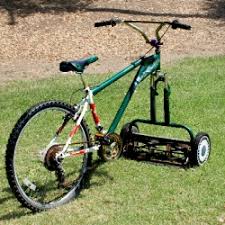
I just saw a combination bicycle/push mower that’s definitely going to be on someone’s foolish list next year. 
Anyone else have any foolish green adventures you’d like to share?

Sunday, November 17, 2013

So you slept through science class, part 8–How do ecologists get those numbers?

Like getting all the latest green news?  Be sure to "Like" greenmomster on Facebook!

Here in greenmomster’s science class, we’ve covered many topics including endangered species, wildlife corridors, and biodiversity, but you may be wondering, “how do environmental managers come up with the numbers on which their decisions are based?”  It turns out, there are many ways to calculate the size or activity of a population of organisms:
  • If the organisms are relatively still, like oysters or dandelions, scientists will often use a “quadrat” or a sample area like a circle or square to estimate the number of individuals in a larger area.  First, you lay down the quadrat.  Next, you count the number of individuals in the quadrat.  Repeat this procedure several times, and then do the calculation to get your estimate for a larger area.
  • If the organisms have a tendency to move, sometimes scientists will conduct “mark-recapture” surveys.  Let’s say they want to know how many box turtles are in an area.  First the scientists set out traps to catch the box turtles.  Then they mark the turtles they caught and set them free.  When the scientist later catches more turtles, he or she checks to see whether the turtles are marked.  That info (number of marked vs. number of unmarked) goes into a calculation to determine the population size.
  • Another way to count individuals and determine any change over time is to walk a line or transect through an area over the course of a week, month, year, or longer.  As the scientist walks along, he or she counts each individual of a species that is seen within a set distance (maybe 15 feet).   Repeating this procedure over a long time can possibly tell a scientist if a change in population size is occurring over time or between different locations.  I used this method when studying butterflies in butterfly gardens.  My butterfly watching volunteers and I walked transects through over 100 gardens, once per week, for six months during each of two years – it gave us a great idea of which butterfly gardens attracted the most butterflies and which types of butterflies they attracted.
There are so many ways to calculate population sizes!  What about when the individuals aren’t very visible, like underwater animals?  There’s some fascinating work that’s been done on whales to determine where they go and what they do when they’re underwater – check out this video from Science Friday.
And what’s a scientist to do, if there aren’t any formally gathered data to be found?  A recent study reported on in the the Fall 2013 issue of dukenvironment magazine showed that even antique menus can be helpful clues in determining historic fish stocks.  The researchers took a look at the types of fish that were found on menus from restaurants in Hawaii in the early and mid-1900s:  “The team’s analysis of 376 menus from 154 different restaurants showed that near-shore species such as reef fish, jacks and bottom fish, for example were common on Hawaiian menus before 1940, but by its statehood in 1959, they appeared collectively on less than 10 percent of menus sampled.  Restaurants began shifting to serving large pelagic species, such as tuna and swordfish.  By 1970, 95 percent of the menus contained large pelagics; inshore fish had all but disappeared.”  The team then went on to try to come up with reasons for the shift – population? taste? technology?  So creative!
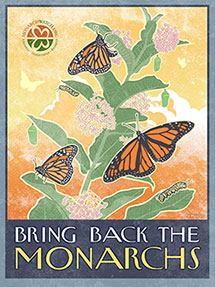
Bring Back The MonarchsCould you be part of a scientific study?  You bet!  Many scientific studies that gather information on populations use “citizens scientists”.  If you’re interested in getting involved, check out these interesting programs:
  • Monarch Watch allows you to help count monarchs and track their North American migration
  • Project Feeder Watch allows you to help count birds that visit your backyard feeders during the winter
  • The Xerces Society has several opportunities for you to help monitor populations of dragonflies
  • You can help the USGS monitor frogs in your area
Now that you know the basics, you’re ready to help!  Not only do scientists have to be technically strong to solve today’s environmental challenges, they also have to be creative, and who’s more creative than a greenmomster?
Sources:
“Seafood Menus reflect long-term ocean changes.”  Fall 2013.  dukenvironment. p 12.

Sunday, July 1, 2012

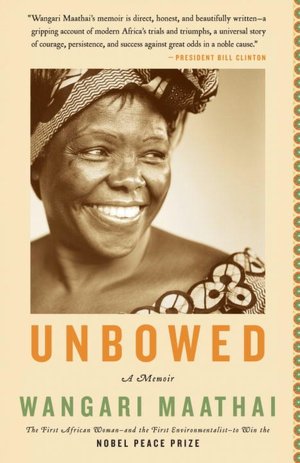
Book Review–Unbowed by Wangari Maathai

I just got back from a vacation up to New England (it was great!), and my “vacation book” was Unbowed, by Wangari Maathai.  Not your usual light summer read, but definitely a book worth reading.  Wangari Maathai was born in Kenya in 1940, founded the Green BeltUnbowed: A Memoir Movement, and, in 2004, became the first African woman to receive the Nobel Peace Prize.  This memoir recounts her early childhood in Kenya during colonial times, her studies in the U.S., and her return to Kenya.  We learn how Maathai started and developed the Green Belt Movement, which was a network of rural women who grew and planted trees throughout Kenya (over 40 million trees according to the book).  The reader also follows her journey through the political landscape of Kenya as democracy developed.  Written in a very matter-of-fact tone, this memoir is not exactly an edge-of-your-seat thriller, but the reader’s  patience pays off.  As Maathai calmly describes the many ups and downs of her personal journey, the reader gets a detailed look at the sacrifices this remarkable woman made for the country and environment she loved. 

Monday, May 14, 2012

Susan Stillman–May Treehouse Chat

Actors have The Actor’s Studio, the Redskins have the Redskins Report, and politicians have Meet the Press.  Now the greenmomster’s got Treehouse Chats, a once-a-month introduction to someone working or volunteering in the environmental field.Susan Billy Goat Trail (2)
This month, we’re chatting with Susan Stillman, local activist on environmental issues, particularly energy and climate issues.

How did you get interested in working on environmental issues?   Four or five years ago, climate change became very evident to me, so I started to inform myself on the facts. An old colleague from my Department of Transportation days came to me and asked if I would bring my sales skills to the advocacy of the Sierra Club.

When I was in college I wrote a paper about the politics of the tobacco industry in Virginia. It was amazing to me that a product that was obviously causing horrible health harms to those who used it and the innocents around them was still allowed and that there was big corporate money that was fighting to the death to keep tobacco as a mainstream part of our society. There are a lot of similarities between the denial of the harms of tobacco and the denial that climate changing is occurring and that it is human caused. It is disconcerting to me when the profits of a company are considered to be more important than the health of living beings. We will have other ways of generating energy besides fossil fuels. I want to make this transition happen more quickly than not.

What is your current job (volunteer or paid) and what do you like best about it?    My work is totally volunteer. I feel so privileged that I can do volunteer work, because it is so rewarding. The people that I work with are the best part of the effort. The staff people at the Sierra Club aren’t paid very much. They could have much better paying jobs as they are very bright and hard working. They are, however, dedicated to making the world a better place and for this they are willing to be paid less. The volunteers that I work with are incredibly well versed in various areas. Some are lawyers that are experts on environmental law and energy. Electricity, in particular, is very complicated. We have volunteers that understand the ends and outs of the generation, transmission and dispatching of electricity. The details just make your eyes glaze over. These folks could be relaxing on the beach or earning salaries, but they have decided that making things better for future generations is more important.

The issues that I work on at the state and national level are very long term, as the political impasse that we have reached as a country is obstructing our movement toward energy efficiency and renewable energy. The Community Enhancement Commission (CEC) in Vienna, VA, has the responsibility of making the town more sustainable. Sustainability is a very broad term, but it generally means that we leave a place in a better state than we found it, so that those that come after us can enjoy the same natural resources. The CEC co-hosts the Green Expo each April. We have made available, for free, devices to help homeowners figure out where electricity is being wasted in their homes (Watt Watcher Program). Recently the CEC announced a program to recognize home builders and homeowners that build or retrofit homes to nationally recognized energy efficiency standards like Energy Star (My Green Vienna Home). The CEC has already recognized 3 builders with this program. In the fall (September 15 and 16, 2012) we hold a native plant sale at the Community Center and a Sustainable Home and Garden Tour. We are currently looking for home owners that would like to show off their energy efficient homes, geothermal systems, rain gardens, native gardens, gardens that are protected from deer, and other interesting sustainable practices. We had 18 homes on the tour last year and it was very well attended.

What is your educational and professional background? I have a BS Degree in Political Science and Psychology from James Madison University and a Masters in Urban Affairs from Virginia Tech. Right out of graduate school I worked at the Department of Transportation and became involved in computer technology. We designed the first integrated office automation system. Moving from the government to private industry, eventually to Sun Microsystems, I sold systems to the Defense Department for command and control. About 14 years ago I became a professional volunteer, spending 8 years teaching English as a Second Language in a variety of venues.

What is your favorite activity outside of work (green or not green)? I’m an avid bicyclist and spend as much time as possible on my bike.  I’m also a member of the Ayr Hill Garden Club. I garden at my home, and I love to do creative floral design.

What’s your favorite environmental book? Doug Tallamy’s book “Bringing Nature Home”. As my sister says “that book will change your life.” It encourages you to plant native plants to create food for the creepy crawly things that birds feed their babies. Using so many non-native plants in our landscape, as we have done over the last 30 years, has endangered the bird population. It is so easy to integrate natives into your landscape and will save you work and money as they are meant to grow here.

What’s your favorite non-meat meal?  Cheesy Chard from “Recipe from a Small Planet”  (It’ll be posted on Meat-Free Friday)

What’s the place that most inspires you to keep working for the environment?  The White House grounds!  More and more people are coming to realize that climate change is really happening and they are speaking up for their future, the future of their children and their children’s children. I participated in the anti-XL pipeline demonstration at the White House. There were people there from all over the country and we surrounded the White House grounds many times over. It was amazing.

As we say thank you for this great interview, do you have one green tip for blog readers?  I love to watch my gas and electric bills go lower just from paying attention. Additional insulation really made a difference in home comfort and the gas bill. This is an investment that just keeps on giving.

Tuesday, April 17, 2012

Treehouse Chats–Erin and Daniel Lebbin

Actors have The Actor’s Studio, the Redskins have the Redskins Report, and politicians have Meet the Press.  Now the greenmomster’s got Treehouse Chats, a once-a-month introduction to someone working or volunteering in the environmental field.
This month, we’re chatting with Erin and Daniel Lebbin who both work for the American Bird Conservancy (and happen to be my next-door neighbors!).

What is your educational background?
Daniel- I studied Biology and Environmental Policy in college. After that, I earned a PhD in Ecology and Evolutionary Biology studying birds in the Amazon.  Erin- I come from a humanities background with degrees in English Literature and Art History.

What is your current job and what do you like best about it?
 Daniel- I currently work for American Bird Conservancy (ABC) where I manage conservation projects in South America. In these projects, I work with local partners to create new nature reserves for some of the most endangered birds in the world. The part I like best is the feeling that I can make a difference.  (Check out his book, The American Bird Conservancy Guide to Bird Conservation)  Erin - Daniel and I are lucky to work together at ABC; my job is to raise money for conservation projects in Latin America and the Caribbean. I'm with Daniel-- the best part of my job is protecting land, including some of the most biologically rich forests in the Americas.  (Editor’s note:  their protection of birds is truly a family affair – their standard poodle accompanies them to the office each day!)

Tell us about some of your work/travel/research.
Erin- Since I have been working with ABC, I have visited some of our project sites in Colombia and Peru. I take people who have supported the projects so they can see the real results of their philanthropy.  Daniel- I travel to South America to visit partners and project sites where I document successes and work to resolve problems. I mostly go to Peru where we have projects high in the mountains where there are glaciers, to the lowlands of the steamy Amazon jungle. In two weeks, I will go to Bolivia where I will visit a project in the Beni Savannnah, home to the Blue-throated Macaw.

What is your favorite activity outside of work? (green or not green)
Erin- I love gardening, reading, hiking, and traveling.  Daniel- Birdwatching, ultimate frisbee, and spending time with friends.

Do you do any environmental volunteering outside of work?
Daniel- When Erin and I lived in Baltimore, we volunteered for Lights Out Baltimore, a program that monitored bird collisions with glass buildings along Baltimore Harbor. This involved getting up very early in the morning, pre-sunrise, searching the buildings for injured or dead birds and sometimes rescuing dazed and confused birds that were still alive. When birds migrate at night, they can get confused by artificial lights and collide with glass windows that they don't see. ABC is working to reduce this problem through better design of buildings, lighting, and retrofitting existing windows with bird tape to make them more visible.

Do you have a favorite environmental book or movie?
Erin-I can watch Planet Earth over and over again.  Daniel- Horton Hears a Who.

Favorite non-meat meal?
Erin- Spinach rice casserole from one of the Moosewood cookbooks.  Daniel- Polenta Pie

What's the place that most inspires you to keep working for the environment?
Erin- Definitely the giant Sequoia groves in the Sierra Nevadas of California.  Daniel- The Andes

Do you have one green tip for blog readers?
Erin- Plant native trees, shrubs, and wildflowers in your yard. In a time when more and more natural habitat is lost every year, our native gardens can provide food and shelter for birds, butterflies, and beneficial insects.   Daniel- Keep your housecats in doors. It's healthier for them, and better for wildlife. Outdoor cats kill hundreds of millions, and perhaps even a billion, birds in the US alone each year. Cats are also a favorite prey of coyotes, often get hit by cars, and are more susceptible to diseases. If you love your cat, keep it indoors.

Saturday, April 14, 2012

Wildlife Heroes–book review!

Wildlife Heroes: 40 Leading Conservationists and the Animals They Are Committed to SavingAnyone who knows this greenmomster, knows that I’m a fan of the Today Show.  Last year on Presidents’ Day, my family and I stood outside of the Today Show studios for several hours in 20 degree weather as part of the Today Show crowd.  WeIMG_0219 eagerly held up our “Go Caps!” signs and shivered as we hoped to be on TV!  We got to meet Jenna Wolfe and Janice Huff (who were both very friendly, despite the fact that they were wearing skirts and heels in the aforementioned 20 degree weather), but alas, we did not meet Julie Scardina.  Who’s Julie Scardina, you ask?  She’s the Animal Ambassador for Sea World and my favorite guest on the Today Show.  I love watching as Julie nimbly handles both the wildlife she’s introducing to the audience and the hosts of the Today Show who often show a bit of animal angst.  I LOVE the animals!  I love hearing all the interesting facts about the animals, where they live, and why we should care.

My Today Show bliss has lately continued into the evening, as I’ve been reading the new book, Wildlife Heroes, by Julie Scardina and Jeff Flocken (DC Office Director for the International Fund for Animal Welfare).  This book tells the stories of 40 conservationists and the various animals they work to protect.  Each of the profiles includes information on a species and its habitat, stories about how these conservationists protect the animals, and beautiful photos.  We learn about the educational background of these conservationists (a very helpful piece of information, if you’re trying to inspire children to go into the sciences), as well as the current status (endangered, threatened, etc) of the animals.  I particularly liked the two sidebars in each chapter, “What you should know about [the species]” and even more important, “Why it is important to save [the species]”. 

The book is divided into sections on land animals, aquatic animals, animals that fly or live in the forest canopy, and critical wildlife issues.  The authors state in the introduction that their focus is on larger vertebrates, which I thought might make me less interested in the stories, since I love those invertebrates!  But each story was so fascinating, I just kept reading and reading.  I especially enjoyed the chapter on our recent blog endangered species of the week, the maned wolf, and the chapter on Nguyen Van Thai’s efforts to protect the Asian pangolins.  The book also includes a section on how readers can help with conservation – it’s as if they’ve been reading my blog!  Another great feature of the book is its organization.  The stories are each 4-5 pages long – just the right length for the time-pressed reader.  So while all the other greenmomsters in the waiting room of the orthodontist’s office were playing Angry Birds on their iPhones, I had just enough time to polish off a story or two before my kids emerged from the orthodontist’s chair.

Definitely worth a read – Wildlife Heroes by Julie Scardina and Jeff Flocken!

Saturday, March 31, 2012

Foolish things I’ve done to be green….

It’s April Fools Day and here’s a look back at some of the really foolish, yet very earnest, things I’ve tried in the name of planet protection.  This list is by no means complete, and I’m sure I’ll have some new items for 2013!

Earth shoes -- OK, they’re not really an environmental item, but this is where it all started for me in the ‘70s.  That “negative heel” was supposed to make me feel close to the earth, but it just gave me muscle strain.  If you really want to wear ugly shoes that scream “I’m crunchy!” just wear Birkenstocks like all of the other greenmomsters out there.

woodsyowl_desireeEnvironmental mascot – this is foolish, yet fun!  During all of my years of dancing, I was always a good technician, yet a lackluster performer.  This situation was due to the fact that I found being in front of an audience to be a little embarrassing.  A good mascot costume solves that problem – all of the fun of performing, with absolutely none of the recognition!  When I was asked to be the EPA “water drop” during 25th anniversary Earth Day celebrations on the Washington DC mall, I couldn’t turn them down.  Then came the pinnacle of my mascot career – Woodsy Owl!  So foolish, yet so much fun!  As Woodsy, I spread the environmental message AND joined in an aerobics demonstration, entertained little kids and the Secretary of Transportation, and danced with abandon in my yellow birdy feet at yet another Earth Day celebration.  To prove my mascot-prowess, I have an official photo of myself (Woodsy).

Coconut oil – I decided to decrease my body’s exposure to harmful chemicals found in cosmetics by substituting coconut oil for my usual face cream.  I looked absolutely fabulous, until every pore on my face became clogged, leaving me looking significantly younger.  And by significantly younger I mean I looked like the acne-plagued teenager I once was. 

Natural deodorant – Again, trying to lessen my chemical load.  Been there, done that, got the pit-stained t-shirt.

Visiting the Dismal Swamp after a major flood in August – I’m often referred to as the Julie McCoy of our family, planning all sorts of activities and trips.  One type of trip I love planning is the outdoorsy, environmentally-educational trip.  But there was one time when I ran the family’s Love Boat aground.  I had read that the Dismal Swamp in southern Virginia was an absolutely beautiful place – I’ve seen pictures since our fateful trip, and indeed, it is a memorable spot.  But timing is everything in life.  I ignored our friends who mentioned that maybe “dismal” wasn’t a good name for a family vacation spot, maybe right after a major flood wasn’t the right timing, and maybe the mosquito population would be booming in the middle of August.  “Pshaw!” I said.  This was a natural area just waiting to be discovered by me and my family!  We loaded up my then 2 year old son in the hiking backpack and headed into the swamp!  Approximately 30 minutes later, we emerged with our tails between our legs, sweaty and swollen from mosquito bites.  Fortunately, we didn’t catch malaria, I didn’t turn our Love Boat excursion into Gilligan’s 3-hour tour, and there was a nearby reggae festival to help us forget our swamp sorrows. 

Vegetarian dog food – Although eating lower on the food chain is better for the environment, my dogs do not care.  They were willing to starve themselves rather than help the environment.  They told me that it’s ok to eat meat for every meal, that we should always DRIVE to the dog park, and that climate change is a totally natural phenomenon.

Using a first-generation recycled plastic garbage bag – OK, the technology has gotten much better, and I do use these bags regularly now.  But sometimes it’s best not to be an “early adopter.”  I learned this lesson when the bag I was using while changing the guinea pig cage exploded all over the rec room.

Indoor composting – Need I say more?  Just because it says it’s a good idea on the internet, doesn’t mean it’s a good idea.  I bought my composting bin, filled it with newspaper shreds and my worms that I’d bought off the internet, filled the compost bin with scraps and waited for my worms to work their magic!  Well, the magic was the appearance of hundreds of fruit flies filling my entire basement in a blinding cloud.  Just say no to indoor composting.

I just saw a combination bicycle/push mower that’s definitely going to be on someone’s foolish list next year. 

Anyone else have any foolish green adventures you’d like to share?

Tuesday, March 27, 2012

You put your whole self in!

I went to a terrific event at my son’s school last Friday night that reminded me of this line from the “Hokey Pokey.”  The event was called “Make the Cut,” and it was an event for people to donate hair to make wigs for cancer patients.  Over 50 boys and girls at Thoreau Middle School donated 8 inches of hair in honor of one of their classmates who is currently battling cancer.  What a great group of kids, willing not just to raise money, but to literally give a piece of themselves to help others! 

Watching these inspirational students got me thinking about volunteering in general, and volunteering for the environment in particular.  Although contributing money or participating in a walk-a-thon are great ways of supporting your favorite charity, giving ofmonarch caterpillar your time and talents is often even more challenging and more rewarding.  One of the ways we can actually “put our whole selves in” to volunteering for the environment is through citizen science.  Never heard of it?  Well, it’s a way for members of the public to participate in environmental scientific research.  I know folks who have participated in scuba diving to help with oyster research in the Chesapeake Bay, folks who have counted nesting loggerhead turtles in the middle of the night, folks who have climbed into chilly creeks to help with amphibian research in the Shenandoah mountains, and folks who watch pandas at the National Zoo for hours on end, logging each of the panda’s movements for researchers to later analyze.  When I was working on my dissertation on butterfly gardens, I used nearly 100 “citizen scientists” to help me with my research.  My volunteers counted butterflies each week from May to October during the hottest part of the day and submitted their results so that we could learn more about the usefulness of these habitat islands. 

Citizen scientists participate in bio-blitz activities in the Potomac Gorge and other spots nationwide.  They help count winter birds through Project Feeder Watch and tag monarch butterflies with Monarch Watch.  They help survey fireflies in their yards during the summer, and survey for eagles in the winter in New Jersey.  The Sierra Club even offers opportunities for service trips for citizen scientists and volunteers!DSC_0025  Want to know more?  Listen to the most recent program on the Animal House about citizen science.

Citizen science is a great way to get a little bit more involved in environmental science and volunteering.  It usually requires no special training (they’ll train you), but if you have a specific expertise that’s nothing but an extra plus!  And just like the kids who “put their whole selves in,” the rewards of this type of volunteering are exciting and memorable!

Monday, February 6, 2012

Treehouse Chats

DSC_0023
Thom Mistele (back left) w/ greenmomster's gang
Actors have The Actor’s Studio, the Redskins have the Redskins Report, and politicians have Meet the Press.  Now the greenmomster’s got Treehouse Chats, a once-a-month introduction to someone working or volunteering in the environmental field.  First up, my good friend Thom Mistele!  Thom and I went to college (College of William and Mary, where he got a BS in Biology) and grad school together (Master of Environmental Management).  Then Thom decided to get an additional MBA at UNC-Chapel Hill.  He’s been teaching people about the environment since our school days, and I think you’ll find his ideas and attitude as inspiring as I do!
What is your current job and what do you like best about it?
I am a science teacher at a large, regional (i.e. rural) public high school in western New Jersey. I teach biology (all levels except A.P.) and A.P. Environmental Science.
I do not have one thing about the job that I like; I have several. Here's the list that comes to mind today:
  • I love the energy that the kids have and the humor that they bring to school every day. They may not bring their homework, and they can be frustrating at times, but the kids here make me laugh every day. One day, I was laughing so hard that I could not speak, and tears were running down my face. Those kids still remind me that they made a teacher cry - and it was five years ago!
  • I love knowing that I have a job that makes a difference in the lives of my students. My students don't have to like biology, and several arrive specifically not liking it. But by the end of the course, I count as victories the feedback I get, such as "This didn't suck" or "I never thought about ___ like that before." At the A.P. level, I try to get feedback from former students after one and two years of college. Most appreciate the vast scope of our A.P. curriculum (after the fact) and rattle off how many of their college courses, both science and easy (i.e. non-science...lol) contain references to materials we studied together in high school.
  • I love that I have a job that allows me to continually learn new things. The field of biology changes all the time, so I get to try to keep on top of all the changes. Emphasis is on "try."
What is your favorite activity outside of work? (green or not green)
My favorite activity outside of work is birding, as it affords me plenty of time outdoors and involves other passions, like hiking and photography.  My county's Parks & Recreation Department has a very active birding program with monthly trips to NJ/NY/PA bird hotspots.   I can spend hours at home watching the feeders in my backyard, especially during and after a snow storm. 
Do you do any environmental volunteering outside of work?
I help the county maintain/monitor bluebird nesting boxes by doing an annual winter clean-out of the boxes, recording of species using the boxes by nest type, and minor maintenance.  
Favorite environmental book?
I hate picking favorites.  Here are a few I have enjoyed in recent years and assigned to my A.P. students:
  • Hot, Flat, and Crowded by Thomas Friedman
  • Unbowed by Wangari Maathai
  • The Boy Who Harnessed the Wind by William Kamkwamba
  • The Omnivore's Dilemma by Michael Pollan
What place most inspires you to keep working for the environment?
I love our National Park system, and my goal is to visit each of the "major" parks (50+) and many of the National Monuments (some of which are huge).  When I am in these parks, I am inspired by the work being done by the rangers, educators, and other professionals to teach people about our natural heritage.   Last summer, I spent three weeks in Alaska, my jaw dropping many times at the sheer scope and beauty of that state and its amazing wildlife.  I have similar feelings for Grand Teton National Park  and the Colorado National Monument. 
One green tip for blog readers?
My students sometimes get down about all the negative case studies, news articles, and problems associated with environmental science that I teach them.  So I tell them what I am going to tell you - don't lose heart.  The news media bombard us with stories of environmental disasters, "environment-last" politics and  legislation, vanishing black rhinos, and gender-bending fish and amphibians.  But there are success stories out there, waiting to be written by people like us (like the Green Momster!).  So don't lose heart.  Speak your mind, vote your conscience, make a difference in countless small ways.  Help that turtle across the road, teach your kids about the amazing migration of monarch butterflies, buy something locally-produced or certified as fair-trade, ride your bike, recycle, pick up litter -- all these things are important, even more so when you do them with a friend or your family.