Showing posts with label movies. Show all posts

Tuesday, September 20, 2016

The Million Dollar Duck

I love great storytelling whether it's a well-written novel, a story on the radio, or a professional storyteller.  But I think my favorite type of storytelling is the documentary.  Skilled filmmakers can take what might otherwise be a mundane topic and make it interesting, even exciting!

The filmmakers behind The Million Dollar Duck did exactly that -- they made the story of the national duck stamp an edge-of-your-seat movie about an art competition.  If you're not familiar with the duck stamp, it's an annual stamp that the U.S. Fish and Wildlife issues to raise money to support national wildlife refuges.  And raise money it does!  98 cents of every $1 spent on duck stamps goes directly into the national wildlife refuge system.  Since 1934, the duck stamp program has purchased more than 5.7 million acres of wetland habitat.  And it all starts with an art contest.

So here's your next movie night pick!  Pop some popcorn, make a milkshake and enjoy The Million Dollar Duck as it tracks the highly skilled artists who enter the competition each year.  It's definitely worth watching -- here's the trailer.


Sunday, July 20, 2014

I heart lemurs!

For Mothers Day, my son took me to Island of Lemurs Madagascar 20140703112725 at the Smithsonian National Museum of Natural History.   It’s IMAX, so it’s shown on a screen that’s 6 stories high!  It’s narrated by Morgan Freeman, so you know it’ll be entertaining!  It’s 3-D, so you get to wear the funny looking glasses 20140703111256!  And it’s a great G-rated movie about lemurs and the threats they face in their home of Madagascar.  I’ve posted previously about these beautiful animals and the research center at Duke University.  I thought this movie did a great job of presenting the current state of lemurs and what’s being done, both locally and internationally, to try to protect these creatures.  The photography was stunning, and the animals were fascinating (particularly the nimble sifakas).  My only negative comment would be that the music was, at times, a bit overdone – but that was easily forgiven as the movie closed to Hanitra Rasoanaivo’s rockin’ version of “I will survive.” 

Duke® Bumper Sticker.

Remember, we heart lemurs, but we also heart greenmomster on Facebook!

Thursday, May 1, 2014

5 Ways to Get Out of Your Comfort Zone!

As everyone on Facebook knows, it’s “throwback Thursday!”  So Greenmomster is joining the trend by re-publishing former posts that still seem relevant.  Since we just celebrated Earth Day, here’s an Earth Day post from 2012!

For this Earth Day, I’m not going to suggest tree-planting or trash pickup (see Climate Mama for family friendly ideas).  I’m not going to suggest going for a hike or canoe ride.  Most of us have a “comfort zone” in which we live.  Unfortunately, our comfort zones have led to some pretty uncomfortable realities for the Earth on which we live.  This Earth Day, let’s talk about uncomfortable subjects and do something to address the really big “elephants in the room.”  Here are 5 suggestions for Earth Day activities that might get us out of our comfort zones.

1)  Talk about human population growth and its effect on the planet.  Population growth is the “elephant in the room” that no one wants to discuss, but we need to discuss it.  There are currently 7 billion people on Earth and many estimates expect a peak of 9 billion people!  There are lots of suggestions regarding how we might slow population growth, from increasing women’s educational and economic levels to handing out condoms.  What do you think is the most practical solution?  What’s the best way to get people to consider the environment when planning family size?  On a light note, one group will be giving out endangered species condoms – check them out!

Burning the Future: Coal in America2)  Watch a movie about the coal industry in West Virginia.  We should all know where our energy comes from and how our energy use affects the lives of other citizens.  To help raise greater public awareness about the environmental and public health impacts of coal,BURNING THE FUTURE: COAL IN AMERICA will air on PBS this April and May.  The film will also be available to view free online during Earth Day Weekend (4/21-22/2012).  If you’d like to register to watch the film, visit the online registration. 

3)  Educate yourself about climate change.  No matter how much we’d like to stick our heads in the sand, climate change is occurring and it is primarily caused by human activity.  Here is some of what we know about climate change from the UN’s Intergovernmental Panel on Climate Change (2007)(IPCC) and the National Oceanic and Atmospheric Administration (NOAA):

  • “Global atmospheric concentrations of carbon dioxide, methane and nitrous oxide have increased markedly as a result of human activities since 1750 and now far exceed pre-industrial values determined from ice cores spanning many thousands of years. The global increases in carbon dioxide concentration are due primarily to fossil fuel use and land use change, while those of methane and nitrous oxide are primarily due to agriculture. (IPCC 2007)
  • Current levels of atmospheric CO2 are the highest in the past 650,000 years. (NOAA)
  • “Average arctic temperatures increased at almost twice the global average rate in the past 100 years. Arctic temperatures have high decadal variability, and a warm period was also observed from 1925 to 1945.” (IPCC 2007)
  • “Palaeoclimatic information supports the interpretation that the warmth of the last half century is unusual in at least the previous 1,300 years. The last time the polar regions were significantly warmer than present for an extended period (about 125,000 years ago), reductions in polar ice volume led to 4 to 6 m of sea level rise.” (IPCC 2007).  The people in the island nation ofKiribati are planning to move their country in response to current sea level rise.
  • “Most of the observed increase in global average temperatures since the mid-20th century is very likely due to the observed increase in anthropogenic greenhouse gas concentrations. This is an advance since the TAR’s conclusion that “most of the observed warming over the last 50 years is likely to have been due to the increase in greenhouse gas concentrations”. Discernible human influences now extend to other aspects of climate, including ocean warming, continental-average temperatures, temperature extremes and wind patterns.” (IPCC 2007)

4)  Let your legislators know that climate change is an important issue to you and you really want to see some action on the issue.  Climate change is not a Democratic or Republican issue.  Legislators on both side of the aisle have stated the need for immediate action.  Check out statements and actions from  Representative Bob Inglis, Senator Olympia Snowe, Senator Susan Collins, Governor Chris Christie, Representative Chris Smith, President Obama, Representative (resigned) Jay Inslee, and Representative Henry Waxman.  Local governments around the country are preparing for the effects of climate change.  A May, 2010, article in Scientific American outlined how cities from Berkeley CA to Austin TX to Denver CO are introducing innovative programs to address climate change.  In 2009, the 1000th mayor signed the Mayors Climate Protection Agreement, committing to reduce carbon emissions by 7 percent below 1990 levels by 2012.  As a group of committed citizens, we must support our elected officials when they act to slow climate change, and strongly encourage them to develop a national energy policy that puts climate change in the forefront.  

5)  Figure out your personal impact and resolve to make one BIG change.  Still not sure what your impact is?  Check out www.footprintnetwork.org to see what your personal impact on climate change is.  You’ll see that burning fossil fuels, whether to produce electricity in your home, to produce food, or to run your car is a huge contributor to CO2 emissions that affect climate change.  Conservation of energy is the biggest way we, as individuals, can slow climate change. 

Here’s to leaving our comfort zones and entering a more Earth-friendly future!  Happy Earth Day to all!

Be sure to “Like” Greenmomster on Facebook!

Sunday, April 27, 2014

7 types of nature lovers–which one are you?

I’ve noticed that many people enjoy nature, but they do it in distinctly different ways.  Here are 6 examples of the ways I’ve seen folks enjoy nature -- what type of greenmomster are you?

The Hands-On Greenmomster – Some folks really enjoy touching, smelling, seeing, and hearing new things when they’re out in nature.  We’ve got a couple of folks in our family who just aren’t happy with a hike unless a salamander is caught, a millipede is wrangled, a sea turtle is cheered on its journey to the ocean, or an owl pellet is dissected.  These folks would rather spend an afternoon fishing than hiking.  IMG_20140419_193248 

The Party Animal – Is being outside more fun when you’re with a group?  climatechange8 Maybe you enjoy guided nature hikes or joining a group for the 4th of July Butterfly Counts.  Nature’s great, but for you “the more, the merrier”!

The Lone Wolf – Do you prefer to enjoy nature on your own – no conversations to distract you?  Then maybe you’re a “lone wolf”!  A dog companion is OK, but the humans need to stay home when you’re headed into nature (be sure to let someone know where you’re going!) snowy amos

The Nature Athlete – Some folks like being out in nature, but it’s the physical challenge that really excites them.  We’ve got members of our family who’ve done 24 hour speed hikes (not my idea of a good time), or enjoy 100 mile bike rides (in one day).  They love being outside, but they REALLY love combining the experience with a physical challenge!

The Armchair Athlete – Do you love nature, but the bugs and the heat get you down?  Don’t like getting your shoes dirty or working up a sweat?  Maybe viewing nature through nature shows, movies, or photography magazines is more your speed.  I personally can’t wait to see Disney’s Bears  Tickets and the Island of Lemurs:  Madagascar. 

The Scientist – Maybe learning about the science behind nature is what really excites you!  skymeadowsastronomy3 Nothing like a little astronomy to help you enjoy nature at night!

The Farmer – Your favorite way to experience nature is through your garden or beehive.  You love watching plants grow and knowing all of the insects that depend on them.  DSC_0013

Tell us what type of nature lover you are – or maybe add to the list!

Be sure to “Like” Greenmomster on Facebook!

Monday, April 7, 2014

Lights, camera, action!

Be sure to “Like” greenmomster on Facebook for all the updates on movies, books, and more!

Over the weekend I had the pleasant surprise of watching Ann Curry’s Our Year of Extremes:  Did Climate Change Just Hit Home?  At last!  An hour during primetime devoted to a documentary about climate change!  The program was very user-friendly and clearly presented the issue for folks who aren’t very familiar with the details.  If you missed it, we’ll keep you posted regarding re-runs, because it’s worth a watch.  Interested in some other green films that have come out lately?  Then check out the following:

(photo from teenthropologist.wordpress.com)

Saturday, February 2, 2013

Revisiting the Chimpanzee!

This week’s endangered species is an old friend about whom I’ve written before – the chimpanzee (Pan troglodytes).  The chimpanzee is listed as endangered on the IUCN List of Threatened Species and was in the news this past week because of a report from theThe Chimps of Fauna Sanctuary: A True Story of Resilience and Recovery NIH’s Council of Councils Working Group on the Use of Chimpanzees in NIH-Supported Research.  This report recommends that research using chimpanzees follow expanded and strict guidelines regarding housing and treatment of the chimpanzees.  Thanks to these guidelines, many experts foresee an eventual phasing out of most, if not all, NIH-funded research involving chimpanzees.  Want to learn more about why chimpanzees are so special?  Read on!

There are four subspecies of chimpanzee, each with unique appearance, distribution, and behavior:  the western chimpanzee (P. t. verus), the central chimpanzee (P. t. troglodytes), eastern chimpanzee (P. t. schweinfurthii), and the Nigeria-Cameroon chimpanzee (P. t. ellioti).  Chimpanzees are omnivores that live in a complex social structure with much parental care of young.  Although chimpanzees usually reach sexual maturity at 7 years of age, they usually don’t reproduce until they’re 13-14 years old.  Young stay with parents for over 5 years, and sometimes up to 10 years.  According to the World Wildlife Fund, the major threats to chimpanzee populations are habitat loss and degradation, hunting, and disease.

Check out these books and movies, if you’d like to learn more about these fascinating animals and the people who work with them:

  • Disney’s Chimpanzee – Wow!  You knew that the greenmomster would be checking this film out on opening weekend, and it was terrific!  As explained by the filmmakers, Alastair Fothergill and Mark Linfield, on NPR, this film is not a documentary.  It’s a storywith “heroes”, “bad guys”, and a conflict.  The filmmakers very cleverly weave together nature footage to tell an entertaining story, and, as an extra plus, they teach us quite a bit about chimpanzees.  The photography is incredible, but never gets in the way of the story and the chimpanzees.  Additionally, filmmakers managed to document a behavior rarely seen by scientists – a dominant male chimpanzee “adopting” a baby chimpanzee after its mother is killed.  I highly recommend this movie for your entire family!
  • The Chimps of Fauna Sanctuary – A sadder tale than the one told in the movie Chimpanzee, is the story of chimpanzees formerly used for medical research.  In The Chimps of Fauna Sanctuary, Andrew Westoll describes his experiences as a volunteer at Fauna Sanctuary.  The sanctuary was established in 1997 for animals from farming, entertainment, education, and research.   The sanctuary’s primary focus is providing a home for chimpanzees rescued from research.  Andrew Westoll’s fascinating book gives us a glimpse into the intelligence and complex social structure of chimpanzees, and the dedication of the people who are committed to helping them. (If you’re interested in learning about the first 100 chimpanzees used in scientific research in the U.S., see Wesleyan University’s recent research.)
  • Jane Goodall Institute (JGI) – Jane Goodall’s name is synonymous with chimpanzees and wild chimpanzee preservation.  She has devoted her life to studying and protecting chimpanzees and still travels over 300 days per year.  One of the many activities of the JGI is the Roots and Shoots program, founded in 1991 by Goodall and a group of Tanzanian students to organize youth interested in service projects, campaigns, and events that help to conserve and protect the natural world.  Goodall has written many books, but two of the more recent books that I’ve read and enjoyed are Harvest for Hope (A Guide to Mindful Eating) and Reason for Hope (A Spiritual Journey).

Sources:

Council of Councils Working Group.  2013.  “Council of Councils Working Group Report on the Use of Chimpanzees in NIH-Supported Research.”  Accessed online 1/25/2013.  http://dpcpsi.nih.gov/council/pdf/FNL_Report_WG_Chimpanzees.pdf

National Public Radio.  2012.  “Following the LIves of Chimpanzees on Screen.”  April 19,2012.  Accessed online 1/25/2013.  http://www.npr.org/2012/04/19/150734375/following-the-lives-of-chimpanzees-on-screen

Westoll, A.  2011.  The Chimps of Fauna Sanctuary.  Houghton Mifflin Harcourt.  ISBN-13: 9780547327808

World Wildlife Fund.  2013.  “Chimpanzees”  Accessed online 1/25/2013.  http://wwf.panda.org/what_we_do/endangered_species/great_apes/chimpanzees/

Monday, September 10, 2012

Greenmomster at the movies–The Big Year

While on vacation, we rented The Big Year  – what a great surprise!  “The Big Year” is a birding term – birders spend an entire year trying to see as many different species of bird as they can in North America (excluding Mexico) in one year.  This movie is about two birding enthusiasts (Steve Martin and Jack Black) trying to beat the current record holder (Owen Wilson).  Not only did my family and I learn a little something about the birding world (I’m more of a butterfly wackadoo myself), but we were thoroughly entertained, wondering how the year would end!  Both Steve Martin and Jack Black’s characters are more subdued than you’re probably used to seeing from these two actors, but in this case change was good!  Rating this movie on entertainment value (high) and the greenmomster’s other two criteria (a movie should never be more than 90 minutes, and talking animals are always a plus), this movie scored big!  At only 1 hour and 40 minutes they kept it pithy.  No talking animals, but hey, the entire movie centered around birds.  Appropriate for the entire family, The Big Year is definitely worth a rental!

Tuesday, April 24, 2012

Lovin’ those Chimpanzees!

Greenmomster’s Endangered Species of the Week is the Chimpanzee (Pan troglodytes), which is listed as endangered on the IUCN List of Threatened Species.  There are four subspecies of chimpanzee, each with unique appearance, distribution, and behavior:  the western chimpanzee (P. t. verus), the central chimpanzee (P. t. troglodytes), eastern chimpanzee (P. t. schweinfurthii), and the Nigeria-Cameroon chimpanzee (P. t. ellioti).  Chimpanzees are omnivores that live in a complex social structure with much parental care of young.  Although chimpanzees usually reach sexual maturity at 7 years of age, they usually don’t reproduce until they’re 13-14 years old.  Young stay with parents for over 5 years, and sometimes up to 10 years.  According to the World Wildlife Fund, the major threats to chimpanzee populations are habitat loss and degradation, hunting, and disease.

Check out these books and movies, if you’d like to learn more about these fascinating animals and the people who work with them:

  • Disney’s Chimpanzee – Wow!  You knew that the greenmomster would be checking this film out on opening weekend, and it was terrific!  As explained by the filmmakers, Alastair Fothergill and Mark Linfield, on NPR, this film is not a documentary.  It’s a story with “heroes”, “bad guys”, and a conflict.  The filmmakers very cleverly weave together nature footage to tell an entertaining story, and, as an extra plus, they teach us quite a bit about chimpanzees.  The photography is incredible, but never gets in the way of the story and the chimpanzees.  Additionally, filmmakers managed to document a behavior rarely seen by scientists – a dominant male chimpanzee “adopting” a baby chimpanzee after its mother is killed.  I highly recommend this movie for your entire family!
  • The Chimps of Fauna Sanctuary – A sadder tale than the one told in the movie Chimpanzee, is the story of chimpanzees formerly used for medical research.  In The Chimps of Fauna Sanctuary, Andrew Westoll describes his experiences as a volunteer at Fauna Sanctuary.  The sanctuary was established in 1997 for animals from farming, entertainment, education, and research.   The sanctuary’s primary focus is providing a home for chimpanzees rescued from research.  Andrew Westoll’s fascinating book gives us a glimpse into the intelligence and complex social structure of chimpanzees, and the dedication of the people who are committed to helping them. (If you’re interested in learning about the first 100 chimpanzees used in scientific research in the U.S., see Wesleyan University’s recent research.)
  • Jane Goodall Institute (JGI) – Jane Goodall’s name is synonymous with chimpanzees and wild chimpanzee preservation.  She has devoted her life to studying and protecting chimpanzees and still travels over 300 days per year.  One of the many activities of the JGI is the Roots and Shoots program, founded in 1991 by Goodall and a group of Tanzanian students to organize youth interested in service projects, campaigns, and events that help to conserve and protect the natural world.  Goodall has written many books, but two of the more recent books that I’ve read and enjoyed are Harvest for Hope (A Guide to Mindful Eating) and Reason for Hope (A Spiritual Journey).

Wednesday, April 18, 2012

5 Ways to Get Out of Your Comfort Zone for Earth Day!

Dwarf seahorse

For this Earth Day, I’m not going to suggest tree-planting or trash pickup (see Climate Mama for family friendly ideas).  I’m not going to suggest going for a hike or canoe ride.  Most of us have a “comfort zone” in which we live.  Unfortunately, our comfort zones have led to some pretty uncomfortable realities for the Earth on which we live.  This Earth Day, let’s talk about uncomfortable subjects and do something to address the really big “elephants in the room.”  Here are 5 suggestions for Earth Day activities that might get us out of our comfort zones.

1)  Talk about human population growth and its effect on the planet.  Population growth is the “elephant in the room” that no one wants to discuss, but we need to discuss it.  There are currently 7 billion people on Earth and many estimates expect a peak of 9 billion people!  There are lots of suggestions regarding how we might slow population growth, from increasing women’s educational and economic levels to handing out condoms.  What do you think is the most practical solution?  What’s the best way to get people to consider the environment when planning family size?  On a light note, one group will be giving out endangered species condoms – check them out!

Burning the Future: Coal in America2)  Watch a movie about the coal industry in West Virginia.  We should all know where our energy comes from and how our energy use affects the lives of other citizens.  To help raise greater public awareness about the environmental and public health impacts of coal, BURNING THE FUTURE: COAL IN AMERICA will air on PBS this April and May.  The film will also be available to view free online during Earth Day Weekend (4/21-22).  If you’d like to register to watch the film, visit the online registration. 

3)  Educate yourself about climate change.  No matter how much we’d like to stick our heads in the sand, climate change is occurring and it is primarily caused by human activity.  Here is some of what we know about climate change from the UN’s Intergovernmental Panel on Climate Change (2007) (IPCC) and the National Oceanic and Atmospheric Administration (NOAA):

  • “Global atmospheric concentrations of carbon dioxide, methane and nitrous oxide have increased markedly as a result of human activities since 1750 and now far exceed pre-industrial values determined from ice cores spanning many thousands of years. The global increases in carbon dioxide concentration are due primarily to fossil fuel use and land use change, while those of methane and nitrous oxide are primarily due to agriculture. (IPCC 2007)
  • Current levels of atmospheric CO2 are the highest in the past 650,000 years. (NOAA)
  • “Average arctic temperatures increased at almost twice the global average rate in the past 100 years. Arctic temperatures have high decadal variability, and a warm period was also observed from 1925 to 1945.” (IPCC 2007)
  • “Palaeoclimatic information supports the interpretation that the warmth of the last half century is unusual in at least the previous 1,300 years. The last time the polar regions were significantly warmer than present for an extended period (about 125,000 years ago), reductions in polar ice volume led to 4 to 6 m of sea level rise.” (IPCC 2007).  The people in the island nation of Kiribati are planning to move their country in response to current sea level rise.
  • “Most of the observed increase in global average temperatures since the mid-20th century is very likely due to the observed increase in anthropogenic greenhouse gas concentrations.  This is an advance since the TAR’s conclusion that “most of the observed warming over the last 50 years is likely to have been due to the increase in greenhouse gas concentrations”. Discernible human influences now extend to other aspects of climate, including ocean warming, continental-average temperatures, temperature extremes and wind patterns.” (IPCC 2007)

4)  Let your legislators know that climate change is an important issue to you and you really want to see some action on the issue.  Climate change is not a Democratic or Republican issue.  Legislators on both side of the aisle have stated the need for immediate action.  Check out statements and actions from  Representative Bob Inglis, Senator Olympia Snowe, Senator Susan Collins, Governor Chris Christie, Representative Chris Smith, President Obama, Representative (resigned) Jay Inslee, and Representative Henry Waxman.  Local governments around the country are preparing for the effects of climate change.  A May, 2010, article in Scientific American outlined how cities from Berkeley CA to Austin TX to Denver CO are introducing innovative programs to address climate change.  In 2009, the 1000th mayor signed the Mayors Climate Protection Agreement, committing to reduce carbon emissions by 7 percent below 1990 levels by 2012.  As a group of committed citizens, we must support our elected officials when they act to slow climate change, and strongly encourage them to develop a national energy policy that puts climate change in the forefront.  

5)  Figure out your personal impact and resolve to make one BIG change.  Still not sure what your impact is?  Check out www.footprintnetwork.org to see what your personal impact on climate change is.  You’ll see that burning fossil fuels, whether to produce electricity in your home, to produce food, or to run your car is a huge contributor to CO2 emissions that affect climate change.  Conservation of energy is the biggest way we, as individuals, can slow climate change. 

Here’s to leaving our comfort zones and entering a more Earth-friendly future!  Happy Earth Day to all!

Saturday, April 7, 2012

Movie review–Coral Reef Adventure

Today, the kids and I headed down to the Smithsonian Museum of Natural History to check out the giant prehistoric snake, the new Nature’s Best photo contest winners, and a new IMAX documentary – Coral Reef Adventure.  As with other IMAX features, this one didn’t disappoint. 

The movie follows the 10-month adventure of two experienced scuba divers/researchers, as they travel worldwide to investigate the decline of coral reefs.  We travel with them from Fiji to Australia to Bali to see both healthy and dying coral reefs.  Liam Neeson’s narration discusses the various threats to coral reefs worldwide, including ocean warming, overfishing, and siltation.  The photography is, as usual, spectacular.  From incredible close-ups showing symbiotic relationships between gobi fish and shrimp (photo from the bbc) , to the usual sphincter-tightening aerial shots for which IMAX is famous, the film consistently shows the beauty of this natural world and emphasizes the importance of conserving these areas.  I really didn’t see too many weak points to the film. Sometimes the photographic techniques are a little heavy-handed, such as the use of flash when photographing healthy reefs, but no flash when photographing dead reefs.

Without being overly pessimistic, the filmmakers discuss the issue of coral reef decline and the possible extinction of most coral reefs within the next 30 years.  Pretty depressing stuff, but the film presents this information in a constructive, educational, and even hopeful manner.   Accompanied by the music of Crosby, Stills, and Nash (including a funny piece of “Our House” as the little shrimp cleaned house for the gobi fish), the film is as entertaining as it is informative.

I highly recommend seeing this documentary when it comes to your nearest IMAX!

Saturday, March 3, 2012

Thinking about the Lorax

Being the best Greenmomster in the whole, wide world, I took my kids out to dinner and The Lorax movie on the day it opened (check out the kid’s page with enviro-tips and activities).  Based on my movie preferences, I knew I’d like it – it’s less than 90 minutes and hasThe Lorax talking animals (see my earlier movie reviews).  The movie expands on the book, The Lorax, by Dr. Seuss.  Since the book is relatively short, the movie makers added a future to the story – we find out who received the truffula seed, why he received it, and what he did with it.  The movie’s got it all, environmental message, budding romance, and the obligatory chase scene.  It’s even got a few musical numbers!  I would’ve liked to hear a bit more of Seuss’ poetry in the movie, but all in all, I liked this flick.

As I was watching The Lorax, the old phrase “reduce, reuse, recycle” came to mind.  At one point, one of the characters, the Once-ler, did a musical number about his invention, the Thneed.  Totally forgetting the “reduce, reuse, recycle” ethos, the Once-ler produces thousands of Thneeds.  What’s a Thneed?  According to the original book, “A Thneed’s a Fine-Something-That-All-People-Need!  It’s a shirt.  It’s a sock.  It’s a glove.  It’s a hat.  But it has other uses.  Yes, far beyond that.  You can use it for carpets.  For pillows! For sheets!  Or curtains!  Or covers for bicycles seats!”  Yes, the Once-ler was convinced that he was making something that people needed and wanted.  And the movie shows thousands of people clamoring for this invention, convinced that they needed it.

But then my son made an interesting observation.  He noticed that no one was wearing or using a Thneed later in the movie.  Obviously, this thing that everyone HAD to have, wasn’t really so necessary.  This one little point from the movie got me thinking about all the things that we HAVE to have; all of the things we use precious natural resources to produce that end up in a closet, garage, or landfill somewhere.  How many times have we replaced a phone, to get a newer, smarter one?  How many times have we thrown away food that rotted before we got around to eating it? Got the latest exercise equipment gathering dust in your basement?  What about taking an unnecessary bag at the store?  Ever grabbed too many mustard packets at a restaurant (to avoid having to get up and get more), and then thrown them away at the end of the meal?  It’s the “reduce” portion of the pollution prevention puzzle that’s the most important, but also seems to be the most difficult to achieve.  Take a quick look at many of the “environmental” websites and blogs out there – how many are simply selling “green” products?  Rather than reducing the constant consumption that affects our environment, we fool ourselves into thinking that “green” consumption is somehow innocuous.  It may be better than other consumption, but even “green” consumption is consumption.

So should we simply stop buying stuff?  I think we all know that’s not an option for most of us.  We all need food, clothing, housing, and some of the fun stuff too (I personally enjoy printing my photographs and wearing decent running shoes).  What we need to do is become more conscious of our decisions, trying to focus heavily on the “reduce” part of pollution prevention.  When you do want to make a purchase, think twice.  You’re not just deciding whether you can afford it, but deciding whether the planet can afford it – are you using resources wisely?  For my fellow greenmomsters, I know this is a tricky time in life to reduce.  I recently saw a photo project of Swedish students posing for photos with all of their belongings made into a sculpture.  Who doesn’t remember the days when we could fit everything we owned into the back of a station wagon?  Back then, “reduce” was a pretty easy goal – just one person to fend for, a relatively low starting salary, roommates from whom we could borrow what we needed.  But now that we’re greenmomsters, the stuff really can pile up.  The key for us is being conscious of our decisions.  Resources that we choose to use now, may not be available for our kids later. 

At this point, I hear my other son saying, “But Mom, if we don’t use the resources, then someone else will.  What can one person’s decisions really do?”  At that point, I head back to the wisdom of The Lorax – “UNLESS someone like you cares a whole awful lot, nothing is going to get better.  It’s not.”

Tuesday, January 10, 2012

It’s Showtime!

It’s time for the Golden Globes, which gets me thinking about movies.  Now, I’m no movie expert, but frankly, neither are a lot of the other people who are out there writing movie reviews.  I will begin by telling you about my biases when it comes to movies: 
  • my favorite movies last no more than 90 minutes;
  • I hate previews and commercials (the movie should start as my derriere hits the seat in the movie theater – don’t waste my time with the other stuff);
  • if the movie includes talking animals, I’ll probably love it. 
Here are some of the movies I’ve seen recently that have some sort of environmental tilt to them:
Vanishing of the Bees:  Excellent overview of colony collapse disorder and the importance of honey bees in today’s agricultural and natural environment.  We keep bees at our house and even the kids enjoyed this documentary – they were so moved by it, that they wrote a letter to President Obama (beekeeper in chief) about the issue.
Dirt! The Movie:  Interesting topic, although the consensus at my house was the point could have been delivered in half the time.  The movie raises many interesting issues about various agricultural methods and new initiatives underway.  Filmmakers ignore the elephant in the room – the issue of human population.  I loved hearing the interview with Nobel Prize winner Wangari Maathi (what a loss when she died this past year) – her hummingbird story will be repeated in our house frequently!  Movie ends with a positive message.
Dolphin Tale:  Sugary sweet tale about efforts to save a dolphin with a damaged tail.  Morgan Freeman is always fun to watch and the setting in which the two child characters are growing up definitely looks like fun.
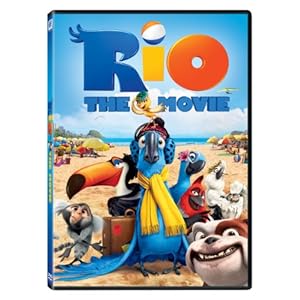
Rio:  90 minutes – check!  Talking animals – check!  I loved this movie about two endangered parrots and the effort to save them.  Parade scene is very funny.
David Attenborough’s Life Series: One of the best nature documentary series I’ve seen.  Fascinating natural history information delivered in a calm, British accent (and admit it fellow Americans, they just sound smarter than we do with that accent).  The photography is unbelievable – you’ll spend as much time wondering how they got the shot as you will marveling over the beauty and complexity of nature.
We Bought a Zoo:  Not really an environmental movie, but I enjoyed this one – I’ve always wanted to buy a zoo (my husband says we already live in one….)
Happy Feet:  Loved the talking, dancing penguins!  Unfortunately, the message at the end of the movie was a little heavy-handed for a kids’ movie.  Still worth a rental.
Frontline’s Poisoned Waters:   It’s loooong (2 hours), but well worth your time.  A comprehensive overview of the issues in two major U.S. waterbodies, the Chesapeake Bay and Puget Sound.  The conclusion emphasizes the need for public involvement, education, and action.
A few classics to consider on movie night:  Never Cry Wolf, Born Free, Erin Brokovich, and Babe (OK, not environmental, but it’s meat-free AND it has talking animals!).
If you’re popping your popcorn for movie night and really need help deciding which environmental film to watch, check out Grinning Planet.  Anybody else have suggestions for environmental movie night?
Eagerly awaiting The Lorax and GreenFire – I’ll keep you posted!