Monday, April 30, 2012

5 Reasons Seahorses are Cooler than Thoroughbreds

This week’s Endangered Species of the Week is the greenmomster’s first fish – the seahorse (photo from animals.nationalgeographic.com)!  There are approximately 48 species of seahorse, one-quarter of which are threatened with extinction.  SeahoPhoto: yellow seahorse anchored to coralrses live in shallow tropical and temperate waters around the world.  Although they’re not good swimmers, these tiny fish (from 1/2 inch to more than a foot long) can manage to eat up to 3,000 brine shrimp per day.  Seahorses use camouflage for protection and can anchor themselves to plants and coral by holding on with their tails.  Seahorses’ main threats to survival include overharvest for both the Asian medicine and aquarium trade, loss of habitat, and loss by by-catch (non-target fish captured in fishing nets).  Scientists and conservationists around the world are working hard to protect sea horses with innovative programs.  Project Seahorse is one organization trying to protect seahorses by saving seahorses directly, protecting the world’s shallow seas, cleaning up fisheries, making the fish trade sustainable, and training conservationists.   Scientists are also trying to develop captive breeding programs for seahorses – a very tricky task indeed.

So they’re fun to look at, but why do we really need to conserve seahorses?  Here’s your answer from Wildlife Heroes, by Scardina and Flocken:  “Seahorses’ unique reproductive behaviors could offer valuable insight into reproductive ecology.  Additionally, seahorses are predator fish that prey on bottom-dwelling organisms – removal of the species from their habitat could disrupt the ecosystem balance.”

And now, 5 reasons seahorses are cooler than thoroughbreds (see also 5 reasons Przewalski’s horses are cooler than thoroughbreds):

  1. I’ve never fallen off a seahorse
  2. Seahorse males carry and give birth to the live young
  3. Seahorses are are monogamous
  4. Seahorses use their tails for more than just swatting flies
  5. Seahorses can breath underwater

Tuesday, April 24, 2012

Lovin’ those Chimpanzees!

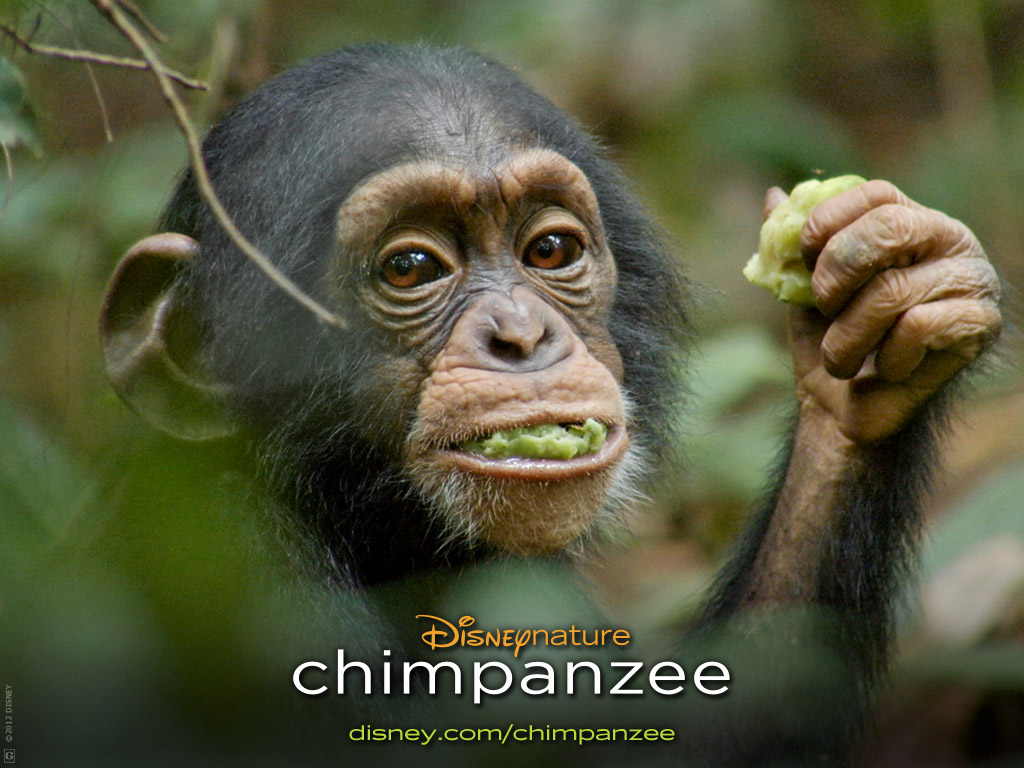
Greenmomster’s Endangered Species of the Week is the Chimpanzee (Pan troglodytes), which is listed as endangered on the IUCN List of Threatened Species.  There are four subspecies of chimpanzee, each with unique appearance, distribution, and behavior:  the western chimpanzee (P. t. verus), the central chimpanzee (P. t. troglodytes), eastern chimpanzee (P. t. schweinfurthii), and the Nigeria-Cameroon chimpanzee (P. t. ellioti).  Chimpanzees are omnivores that live in a complex social structure with much parental care of young.  Although chimpanzees usually reach sexual maturity at 7 years of age, they usually don’t reproduce until they’re 13-14 years old.  Young stay with parents for over 5 years, and sometimes up to 10 years.  According to the World Wildlife Fund, the major threats to chimpanzee populations are habitat loss and degradation, hunting, and disease.

Check out these books and movies, if you’d like to learn more about these fascinating animals and the people who work with them:

  • Disney’s Chimpanzee – Wow!  You knew that the greenmomster would be checking this film out on opening weekend, and it was terrific!  As explained by the filmmakers, Alastair Fothergill and Mark Linfield, on NPR, this film is not a documentary.  It’s a story with “heroes”, “bad guys”, and a conflict.  The filmmakers very cleverly weave together nature footage to tell an entertaining story, and, as an extra plus, they teach us quite a bit about chimpanzees.  The photography is incredible, but never gets in the way of the story and the chimpanzees.  Additionally, filmmakers managed to document a behavior rarely seen by scientists – a dominant male chimpanzee “adopting” a baby chimpanzee after its mother is killed.  I highly recommend this movie for your entire family!
  • The Chimps of Fauna Sanctuary – A sadder tale than the one told in the movie Chimpanzee, is the story of chimpanzees formerly used for medical research.  In The Chimps of Fauna Sanctuary, Andrew Westoll describes his experiences as a volunteer at Fauna Sanctuary.  The sanctuary was established in 1997 for animals from farming, entertainment, education, and research.   The sanctuary’s primary focus is providing a home for chimpanzees rescued from research.  Andrew Westoll’s fascinating book gives us a glimpse into the intelligence and complex social structure of chimpanzees, and the dedication of the people who are committed to helping them. (If you’re interested in learning about the first 100 chimpanzees used in scientific research in the U.S., see Wesleyan University’s recent research.)
  • Jane Goodall Institute (JGI) – Jane Goodall’s name is synonymous with chimpanzees and wild chimpanzee preservation.  She has devoted her life to studying and protecting chimpanzees and still travels over 300 days per year.  One of the many activities of the JGI is the Roots and Shoots program, founded in 1991 by Goodall and a group of Tanzanian students to organize youth interested in service projects, campaigns, and events that help to conserve and protect the natural world.  Goodall has written many books, but two of the more recent books that I’ve read and enjoyed are Harvest for Hope (A Guide to Mindful Eating) and Reason for Hope (A Spiritual Journey).

Saturday, April 21, 2012

Guest Blogger–Marna Ashburn Krajeski!

Happy Earth Day!   Today we’ve got a guest blogger with a great idea – reuseable produce bags!  This is a terrific idea, because I often find myself at the grocery store trying to balance one dozen apples on the checkout conveyer belt and annoying the checker who’s helping me.  No more wet puddles on the conveyor belt because I didn’t use a plastic bag for the lettuce!  Many thanks to our guest blogger, Marna Ashburn Krajeski – fellow W&M alum and writer extraordinaire!  Marna Ashburn Krajeski lives and writes in Rhode Island, where she and her two teenagers enjoy sailing, kayaking, and surfing. She’s the author of three books for military families and blogs at www.HouseholdBaggage.com and www.TheHangingIndent.com.


clip_image001  

  clip_image001[5] 

clip_image001[7]  

  clip_image001[10] 

clip_image001[12]

  clip_image001[14]

clip_image001[16] 

clip_image001[18] 

 clip_image001[20] 

clip_image001[22]


clip_image001[24]    

clip_image001[26]


clip_image001[28]

Friday, April 20, 2012

Meat-Free Friday–Pasta Sauce

Most greenmomsters probably already have a tomato sauce recipe that they’re using, but just in case you’re still using sauce from a jar, here’s an easy recipe that I make and freeze until I need it.

DSC_0061
Ingredients:
3 large cans diced or whole tomatoes, undrained
3 small cans of tomato paste
1 cup of water
about 1 tsp salt
about 2 tsp pepper
about 1/2 cup sugar
about 2 tblsp dry oregano
about 2 tblsp dry basil

Instructions:
Mix together ingredients and simmer for about 2 hours.  If you like thinner sauce, add another cup of water.

Wednesday, April 18, 2012

5 Ways to Get Out of Your Comfort Zone for Earth Day!

Dwarf seahorse

For this Earth Day, I’m not going to suggest tree-planting or trash pickup (see Climate Mama for family friendly ideas).  I’m not going to suggest going for a hike or canoe ride.  Most of us have a “comfort zone” in which we live.  Unfortunately, our comfort zones have led to some pretty uncomfortable realities for the Earth on which we live.  This Earth Day, let’s talk about uncomfortable subjects and do something to address the really big “elephants in the room.”  Here are 5 suggestions for Earth Day activities that might get us out of our comfort zones.

1)  Talk about human population growth and its effect on the planet.  Population growth is the “elephant in the room” that no one wants to discuss, but we need to discuss it.  There are currently 7 billion people on Earth and many estimates expect a peak of 9 billion people!  There are lots of suggestions regarding how we might slow population growth, from increasing women’s educational and economic levels to handing out condoms.  What do you think is the most practical solution?  What’s the best way to get people to consider the environment when planning family size?  On a light note, one group will be giving out endangered species condoms – check them out!

Burning the Future: Coal in America2)  Watch a movie about the coal industry in West Virginia.  We should all know where our energy comes from and how our energy use affects the lives of other citizens.  To help raise greater public awareness about the environmental and public health impacts of coal, BURNING THE FUTURE: COAL IN AMERICA will air on PBS this April and May.  The film will also be available to view free online during Earth Day Weekend (4/21-22).  If you’d like to register to watch the film, visit the online registration. 

3)  Educate yourself about climate change.  No matter how much we’d like to stick our heads in the sand, climate change is occurring and it is primarily caused by human activity.  Here is some of what we know about climate change from the UN’s Intergovernmental Panel on Climate Change (2007) (IPCC) and the National Oceanic and Atmospheric Administration (NOAA):

  • “Global atmospheric concentrations of carbon dioxide, methane and nitrous oxide have increased markedly as a result of human activities since 1750 and now far exceed pre-industrial values determined from ice cores spanning many thousands of years. The global increases in carbon dioxide concentration are due primarily to fossil fuel use and land use change, while those of methane and nitrous oxide are primarily due to agriculture. (IPCC 2007)
  • Current levels of atmospheric CO2 are the highest in the past 650,000 years. (NOAA)
  • “Average arctic temperatures increased at almost twice the global average rate in the past 100 years. Arctic temperatures have high decadal variability, and a warm period was also observed from 1925 to 1945.” (IPCC 2007)
  • “Palaeoclimatic information supports the interpretation that the warmth of the last half century is unusual in at least the previous 1,300 years. The last time the polar regions were significantly warmer than present for an extended period (about 125,000 years ago), reductions in polar ice volume led to 4 to 6 m of sea level rise.” (IPCC 2007).  The people in the island nation of Kiribati are planning to move their country in response to current sea level rise.
  • “Most of the observed increase in global average temperatures since the mid-20th century is very likely due to the observed increase in anthropogenic greenhouse gas concentrations.  This is an advance since the TAR’s conclusion that “most of the observed warming over the last 50 years is likely to have been due to the increase in greenhouse gas concentrations”. Discernible human influences now extend to other aspects of climate, including ocean warming, continental-average temperatures, temperature extremes and wind patterns.” (IPCC 2007)

4)  Let your legislators know that climate change is an important issue to you and you really want to see some action on the issue.  Climate change is not a Democratic or Republican issue.  Legislators on both side of the aisle have stated the need for immediate action.  Check out statements and actions from  Representative Bob Inglis, Senator Olympia Snowe, Senator Susan Collins, Governor Chris Christie, Representative Chris Smith, President Obama, Representative (resigned) Jay Inslee, and Representative Henry Waxman.  Local governments around the country are preparing for the effects of climate change.  A May, 2010, article in Scientific American outlined how cities from Berkeley CA to Austin TX to Denver CO are introducing innovative programs to address climate change.  In 2009, the 1000th mayor signed the Mayors Climate Protection Agreement, committing to reduce carbon emissions by 7 percent below 1990 levels by 2012.  As a group of committed citizens, we must support our elected officials when they act to slow climate change, and strongly encourage them to develop a national energy policy that puts climate change in the forefront.  

5)  Figure out your personal impact and resolve to make one BIG change.  Still not sure what your impact is?  Check out www.footprintnetwork.org to see what your personal impact on climate change is.  You’ll see that burning fossil fuels, whether to produce electricity in your home, to produce food, or to run your car is a huge contributor to CO2 emissions that affect climate change.  Conservation of energy is the biggest way we, as individuals, can slow climate change. 

Here’s to leaving our comfort zones and entering a more Earth-friendly future!  Happy Earth Day to all!

Tuesday, April 17, 2012

Treehouse Chats–Erin and Daniel Lebbin

Actors have The Actor’s Studio, the Redskins have the Redskins Report, and politicians have Meet the Press.  Now the greenmomster’s got Treehouse Chats, a once-a-month introduction to someone working or volunteering in the environmental field.
This month, we’re chatting with Erin and Daniel Lebbin who both work for the American Bird Conservancy (and happen to be my next-door neighbors!).

What is your educational background?
Daniel- I studied Biology and Environmental Policy in college. After that, I earned a PhD in Ecology and Evolutionary Biology studying birds in the Amazon.  Erin- I come from a humanities background with degrees in English Literature and Art History.

What is your current job and what do you like best about it?
 Daniel- I currently work for American Bird Conservancy (ABC) where I manage conservation projects in South America. In these projects, I work with local partners to create new nature reserves for some of the most endangered birds in the world. The part I like best is the feeling that I can make a difference.  (Check out his book, The American Bird Conservancy Guide to Bird Conservation)  Erin - Daniel and I are lucky to work together at ABC; my job is to raise money for conservation projects in Latin America and the Caribbean. I'm with Daniel-- the best part of my job is protecting land, including some of the most biologically rich forests in the Americas.  (Editor’s note:  their protection of birds is truly a family affair – their standard poodle accompanies them to the office each day!)

Tell us about some of your work/travel/research.
Erin- Since I have been working with ABC, I have visited some of our project sites in Colombia and Peru. I take people who have supported the projects so they can see the real results of their philanthropy.  Daniel- I travel to South America to visit partners and project sites where I document successes and work to resolve problems. I mostly go to Peru where we have projects high in the mountains where there are glaciers, to the lowlands of the steamy Amazon jungle. In two weeks, I will go to Bolivia where I will visit a project in the Beni Savannnah, home to the Blue-throated Macaw.

What is your favorite activity outside of work? (green or not green)
Erin- I love gardening, reading, hiking, and traveling.  Daniel- Birdwatching, ultimate frisbee, and spending time with friends.

Do you do any environmental volunteering outside of work?
Daniel- When Erin and I lived in Baltimore, we volunteered for Lights Out Baltimore, a program that monitored bird collisions with glass buildings along Baltimore Harbor. This involved getting up very early in the morning, pre-sunrise, searching the buildings for injured or dead birds and sometimes rescuing dazed and confused birds that were still alive. When birds migrate at night, they can get confused by artificial lights and collide with glass windows that they don't see. ABC is working to reduce this problem through better design of buildings, lighting, and retrofitting existing windows with bird tape to make them more visible.

Do you have a favorite environmental book or movie?
Erin-I can watch Planet Earth over and over again.  Daniel- Horton Hears a Who.

Favorite non-meat meal?
Erin- Spinach rice casserole from one of the Moosewood cookbooks.  Daniel- Polenta Pie

What's the place that most inspires you to keep working for the environment?
Erin- Definitely the giant Sequoia groves in the Sierra Nevadas of California.  Daniel- The Andes

Do you have one green tip for blog readers?
Erin- Plant native trees, shrubs, and wildflowers in your yard. In a time when more and more natural habitat is lost every year, our native gardens can provide food and shelter for birds, butterflies, and beneficial insects.   Daniel- Keep your housecats in doors. It's healthier for them, and better for wildlife. Outdoor cats kill hundreds of millions, and perhaps even a billion, birds in the US alone each year. Cats are also a favorite prey of coyotes, often get hit by cars, and are more susceptible to diseases. If you love your cat, keep it indoors.

Monday, April 16, 2012

5 Reasons that Przewalski’s Horses are cooler than thoroughbreds


The endangered species of the week is Przewalski’s Horse (pronounced “sheh-val-skee”). This horse is native to plains and grasslands of Mongolia, as well as other parts of Asia and eastern Europe, but I first saw one at the National Zoo’s Smithsonian Conservation Biology Institute in Front Royal, VA.  Although these horses are small (about 13 hands high and between 550 and 750 pounds), they’re impressive with tan fur on their bodies and a short, dark mane and tail.  They have evolved to survive the harsh winters in Mongolia, but in the 20th century the species had trouble surviving in the face of habitat loss, loss of water sources to domestic animals, and overhunting.  The Przewalski’s horse was declared extinct in the wild by the World Conservation Union in 1970.


Thanks to an active captive breeding program, Przewalski’s horses were reintroduced to the wild in 2008.  There are currently 1,500 horses in captivity worldwide, and approximately 400 horses in reintroduction sites in Mongolia, Kazahkstan, and China.  All of today’s current population of Przewalski’s horses come from 14 ancestors.  Thus, the gene pool for this horse is very narrow.  Scientists must very carefully coordinate breeding among the captive horses to try to maximize genetic diversity and make the population more able to withstand various stresses, such as disease.

So Przewalski’s horse is beautiful, but why should we care about its survival?  Because a species like this one tells us when we’re having too much of an impact on the ecosystem.  Humans are part of the natural world; we depend on natural resources for our survival.  But sometimes we take more than our share, and the ecosystem on which we depend begins to suffer.  Species like Przewalski’s horse tell us when our agricultural or hunting practices are unsustainable. 

And if you needed more reasons to protect the Przewalski’s horse, here are 5 Reasons Przewalski’s Horses are cooler than thoroughbreds:
  1. It is the only truly wild horse remaining in the world (it’s never been tamed for riding).
  2. I’ve never fallen off a Prezwalski’s horse.
  3. Prezwalski’s horses can make it through winter in Mongolia without a horse blanket.
  4. The Mongolian name for these horses is “takhi,” which means “spirit.”   That’s way cooler than names like Chicken Lips or Buck Naked.
  5. Przewalski’s horses have 2 more chromosomes than domestic horses (66 vs. 64).
Check out a video of this beautiful horse!