Friday, March 10, 2017

World's easiest meat-free Friday dish


OK -- no excuses.  This is the easiest meat-free Friday dish, and your family will leave NO leftovers.

Eggs and roasted veggies

Ingredients

  • any wintertime veggies you have -- I like to mix sweet potatoes, brussel sprouts, and cauliflower, but you can use turnips, white potatoes, cabbage, etc.  
  • olive oil
  • red pepper flakes, salt, and pepper
  • eggs
Instructions
  1. Chop the veggies into bite-sized pieces.  Mix with a generous amount of olive oil (the veggies should be a little shiny), and add red pepper, salt, and pepper to taste.
  2. Spread veggies on a baking sheet and bake for about 45 minutes at 350 degrees
  3. Meanwhile, fry up the eggs -- some folks like them over-easy, some folks like them sunny side up.  
  4. Top the veggies with the eggs and serve with bread and a salad.  Enjoy!

Wednesday, March 8, 2017

Going Green for Lent

Checking out our carbon footprints
Reuseable bags!
Playing the recycling game
Making bird feeders
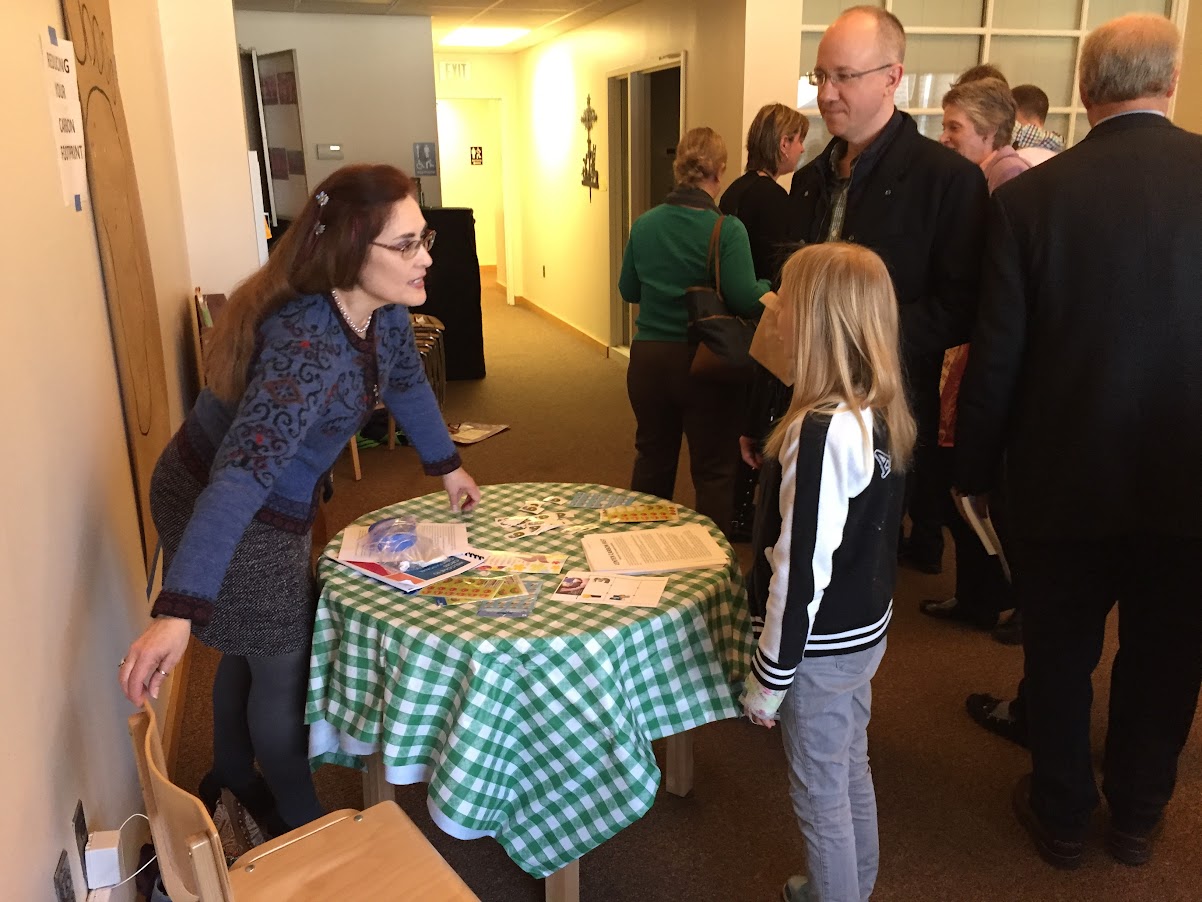
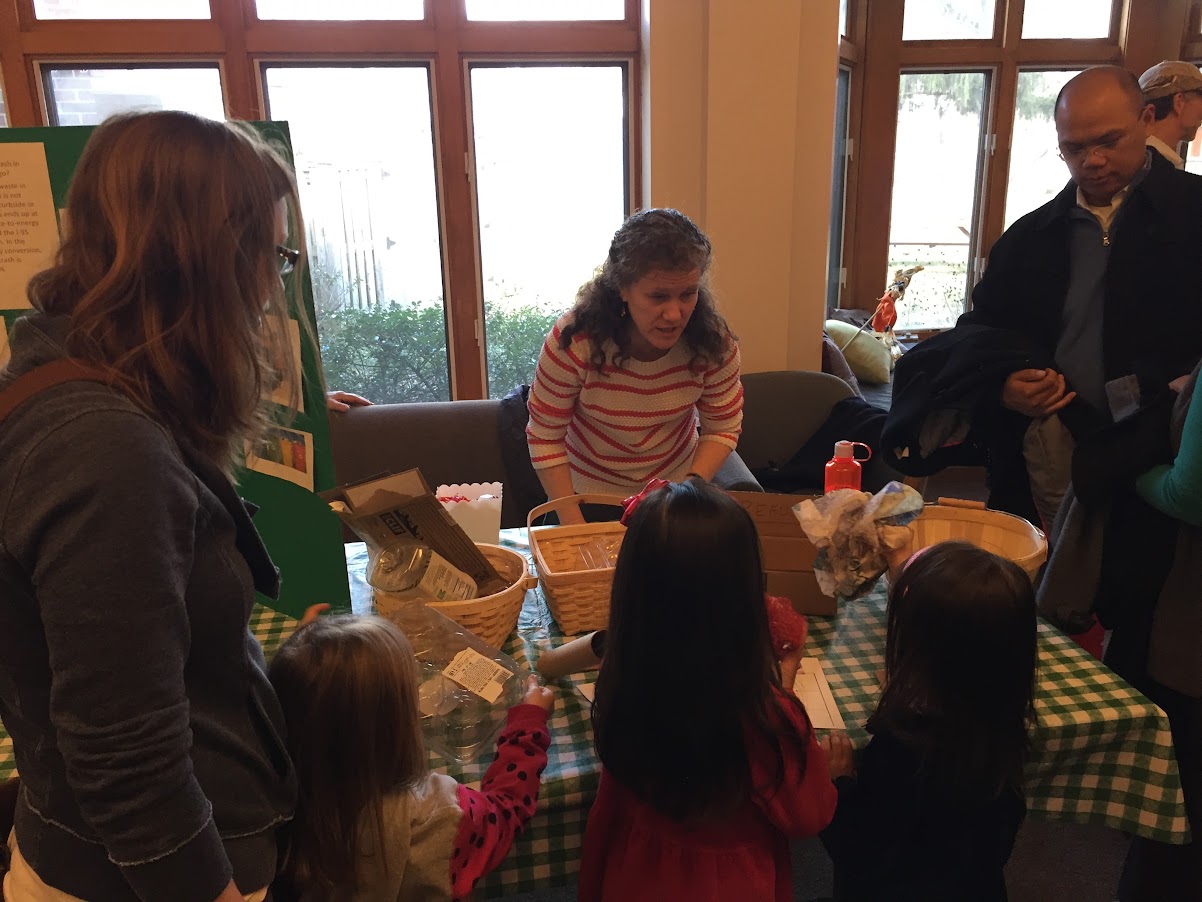
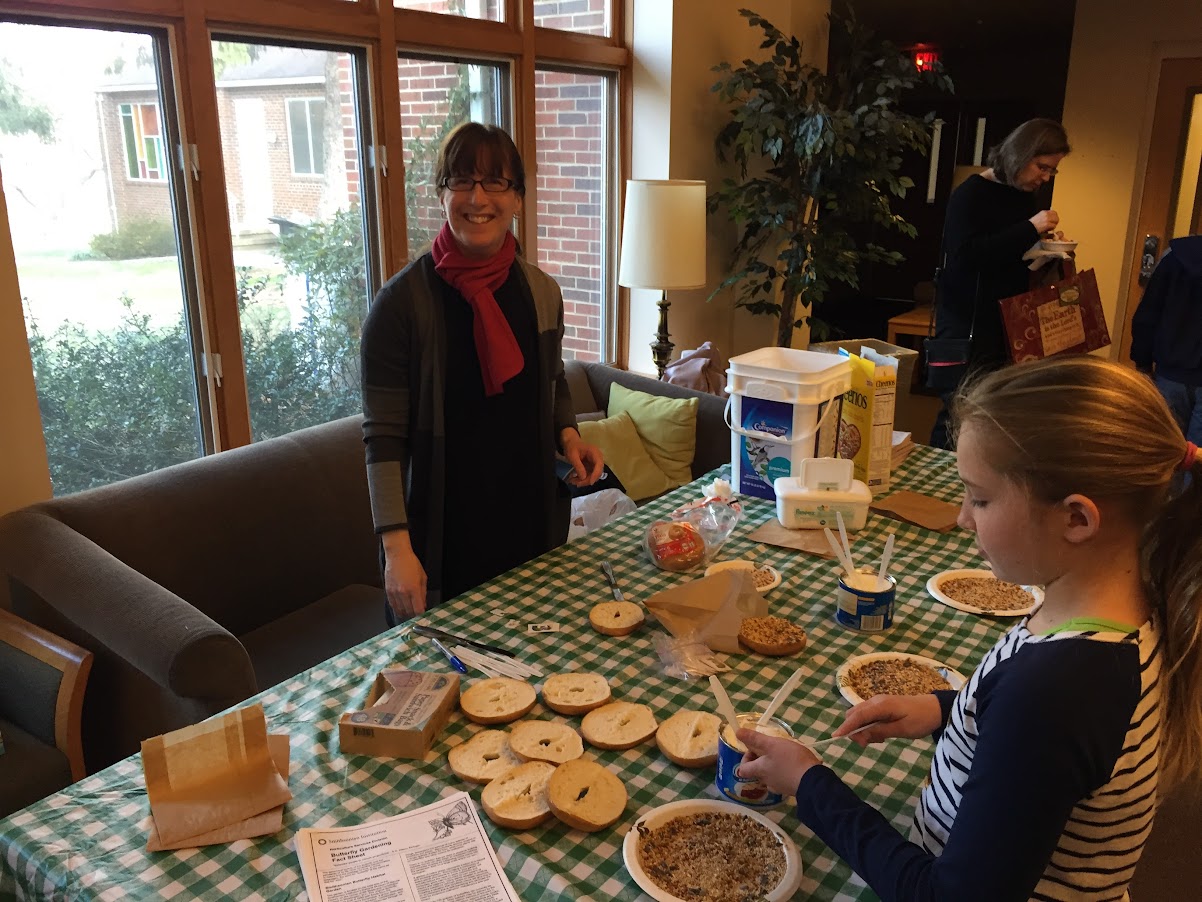
It's Lent!  In the past I've provided ideas for going green during Lent, and this year my entire church jumped in!  To kick things off, we hosted an event that included informative displays, games, crafts, and even a spot to remove your name from catalog lists.  And everyone received a calendar to guide them through a Lenten Carbon Fast.  Check it out -- it's full of great ideas.


Friday, March 3, 2017

In case you missed it -- EPA cuts

Image result for photo cuyahoga river burning


Did you know that, before we had robust environmental protections in this country, rivers caught on fire?  Google "Cuyahoga river fire" (photo:  Ohio History Central).  And check out Love Canal and Tom's River, too.  We've come a long way, but unfortunately we may be headed back to the bad old days.

The White House has proposed deep cuts to the EPA's budget for implementation of environmental protections.  Here's a summary of the cuts that have been proposed (from Washington Post, 3/2/17):

  • annual budget would drop from $8.2 billion to $6.1 billion, including grants to States for environmental protection
  • EPA staff would be cut from 15,000 to 12,000 employees nationwide
  • the Chesapeake Bay cleanup budget would be slashed from the current $73 million to $5 million in the next fiscal year
  • 38 programs will be eliminated including grants to clean up brownfields, environmental justice programs (yup, protections for our poorest citizens), climate change initiatives, and funding for native Alaskan villages
  • the Office of Research and Development could lose 42% of its funding
The Flint MI lead poisoning is an example of what happens when we don't enforce environmental protections; this disaster will have impacts for many decades to come.  The proposed EPA cuts will multiply the Flint MI disaster and affect folks around the country.   Time to let our representatives know that we don't support rolling back protections.

Thursday, March 2, 2017

Cutting EPA

As President Trump proposes a 20% cut in EPA employees and funding (more on that this weekend), I am re-posting this piece for those asking "what harm will this really cause?"

This has been a tough winter for me and my lungs.  It all started slowly back in October; I thought I’d keep things under control thanks to the recommendations of friends for various herbal and homeopathic treatments, with a little albuterol on the side.  Then things took off like wildfire.  snow stripesFor months now, I’ve been struggling to keep the asthma under control.  Despite being otherwise very healthy (training for a half-marathon with doctor’s approval), I still cough until I throw up and daily take a concoction of medicine that leaves my stomach burning and my head spinning.

So why mention this asthma issue on an environmental blog?  Asthma definitely has genetic links – some of us are just more prone to this condition, thanks to our DNA.  But asthma also has a very heavy environmental component.  A while back, I posted about asthma, its environmental sources, and what we can all do to help.  I thought I’d repost this information, since I’m guessing I’m not the only one coughing and wheezing my way through winter.  I hope you find this info helpful!

We are the 10%
It was about 2 am and there I sat, waiting, listening, and hoping that my son’s asthma medication would take effect quickly.  Our family has three of the approximately 34 million Americans with asthma.  That’s roughly 10% of the U.S. population, according to the American Lung Association.  Asthma is an inflammation of the airways, making it difficult to breathe.  Asthma has significant health and economic effects:  
  • the CDC National Center for Health Statistics estimates that asthma is the reason for approximately half a million hospitalizations per year
  • the Centers for Disease Control and Prevention estimate that medical expenses associated with asthma increased from $48.6 billion in 2002 to $50.1 billion in 2007.  About 2 in 5 (40%) uninsured people with asthma could not afford their prescription medicines and about 1 in 9 (11%) insured people with asthma could not afford their prescription medicines.
  • the CDC National Center for Health Statistics states that asthma accounts for about 10.1 missed work days per year
  • Females have a 23% higher occurrence of asthma than males (American Lung Association)
  • Between 2001 to 2003, the occurrence of asthma in the U.S. was highest in the Northeast region (CDC)
  • According to the American Lung Association, in 2006, asthma prevalence was 20.1% higher in African Americans than in whites
  • According to the CDC, from 2001-2003, asthma prevalence was higher in individuals living below the federal poverty level (10.3%) compared with those at or above the federal poverty level (6.4% to 7.9%)
And moms, take note:
  • The greatest rise in asthma rates was among black children(almost a 50% increase) from 2001 through 2009 (CDC Vital Signs, 5/11)
  • 185 children died of asthma attacks in 2007 (CDC Vital Signs, 5/11) and nearly 4 million children had asthma attacks last year (Akinbami LJ. The State of childhood asthma, United States, 1980–2005. Advance data from vital and health statistics; no 381, Hyattsville, MD: National Center for Health Statistics. 2006)
  • For children under 15, asthma is the 3rd leading cause of hospital stays (DeFrances CJ Cullen KA, Kozak LJ. National Hospital Discharge Survey: 2005 Annual Summary with Detailed Diagnosis and Procedure Data. National Center for Health Statistics. Vital Health Statistics 12 (165); 2007)
  • From 2001 to 2003, the CDC reports that the occurrence of asthma in children (8.5%) was higher than in adults (6.7%)
So what triggers asthma and asthma attacks?  First off, asthma is a family affair.  Children with parents who have asthma are more likely to have asthma themselves.  A predisposition for having asthma has been found to be passed down genetically.  Now, just because a person has a predisposition, that doesn’t mean they’ll actually get the disease.  But if they do, what might set off an asthma attack?  Allergies often lead to asthma (dust mites, molds, pollen, etc).  Virus and bacterial infections can lead to asthma symptoms (often, a person with asthma will begin to wheeze or cough if they get a cold).  Some people have exercise-induced asthma.  Others get asthma attacks due to certain foods or drugs.  But asthma can be triggered by something else.  Asthma can be triggered by pollution.  Pollutants such as particulate matter, sulfur dioxide (SO2), and ozone (ground-level ozone, that is) have been shown to increase the occurrence of asthma attacks, particularly in children. 

What types of activities produce these pollutants?  The small particles that might affect the lungs are produced from the chemical reaction of pollutants from power plants, industries, and automobiles.  Sulfur dioxide is most commonly produced from the burning of fossil fuels (coal and oil), as well as cement production.  Ozone isn’t usually emitted directly as a pollutant; it’s formed by the action of sunlight on NOwhich comes from car exhausts, fuel combustion, and industrial processes. 

Beginning to see a trend?  The pollutants that cause the most problems for asthmatics come from our cars and our power plants.   Limiting discharge of pollutants will protect children and other people affected by asthma.  Will it raise our fuel costs?  Possibly.  There’s some conflicting information as discussed by the Edison Electric Institute and the Congressional Research Service.  Full disclosure, my husband works for an energy company, so I’ve heard both sides of the argument.  But let’s look at it this way – someone has to pay.  Should we, the users of cars and power from fossil fuels, each pay a little more for a cleaner environment, or should we ask the payment to be made by the most vulnerable – our children, individuals living below the poverty level, the elderly?  My son’s asthma is controlled with medicine and attacks are infrequent, but others are not so lucky.

What can one person do?  Get educated about efforts to limit discharge of these pollutants to the environment.  Contact your legislators/local industries/power producers regarding this issue – let your opinion be known.

Friday, February 17, 2017

What's up with the Rusty Patched Bumblebee?


Meat-free Friday will return next week!

Darryl Fears reported in the Washington Post today about a Senate hearing to "modernize the Endangered Species Act."   Unfortunately, many legislators are aiming to gut or repeal the act, rather than make improvements to its implementation.  As we saw with this week's postponement of listing of the Rusty Patched Bumblebee, the Act is always under attack.  Since most scientists agree that we are currently in the 6th worldwide extinction event (think about what happened with the dinosaurs...), and this one is caused by humans, I thought we might want to take a look at some common misconceptions about endangered species.

Misconception #1 -- Species have always gone extinct, so we don’t need to worry right now.  True, species have always gone extinct.  Scientists are not concerned about the fact of extinction; it’s the rate of extinction that is a concern.  The USFWS,states “Biologists estimate that since the Pilgrims landed at Plymouth Rock in 1620, more than 500 species, subspecies, and varieties of our Nation’s plants and animals have become extinct.”  Wow!  Current estimates of the current rate of species extinctions are 100 to 1000 times the natural rate which is estimated to be between 1 every year to 100 years.  That means that we’re living in a time of mass species extinction, comparable to the extinction of the dinosaurs.

Misconception #2 -- Losing a species won’t affect humans.     Species diversity is a critical element in ecosystem health.  “Species diversity” is how many different species are found in a habitat and in what proportion they’re found.  Some habitats have greater species diversity than others – think rainforest – but all habitats are healthiest when they contain as many different species as they can sustain.  Think of a habitat as a fishing net, with each species being piece of rope that connects to other pieces to form the net.  If one of the pieces of rope breaks and leaves a small hole, the net can probably be fixed and reused.  But what if half the net is torn?  It won’t be very useable.  The same thing happens in a natural habitat; remove too many species and the habitat ceases to function.  How many species can be lost, before the habitat doesn’t function?  No one knows – is it an experiment we’re willing to try?  The habitats around us provide many services such as medicinal and agricultural resources, clean water and air, and recreation.  Healthy habitats benefit humans – they’re a necessity, not a luxury.

Misconception #3 – Once a species is on the endangered species list, it never comes off.   Incorrect!  Protections under the U.S. Endangered Species Act have led to the recovery of several species or populations of species, including the gray whale, the bald eagle, the brown pelican, and the gray wolf. Many more species have more stable populations due to the act.

Misconception #4 – Pollution is the greatest threat to biodiversity.  Actually, habitat loss is the greatest threat to biodiversity.  With 7 billion humans on the planet, we take up a lot of space and we’re changing a lot of habitat to new uses.

Misconception #5 – There’s nothing I can do to protect the Earth’s biodiversity.  In order to protect biodiversity and endangered species, we all have to make conscious choices about how we use resources.  Check out the “low hanging fruit” section as a start.  Visit www.myfootprint.org to discover new ways of decreasing your carbon footprint.  Get involved in deciding how our country produces energy – research the issue and write to your political representatives.  One final thought from famous biologist E.O. Wilson,  “The one process now going on that will take millions of years to correct is the loss of genetic and species diversity by the destruction of natural habitats. This is the folly our descendants are least likely to forgive us.” (From Brainy Quote. Web.  12/31/11.  <http://www.brainyquote.com/quotes/authors/e/e_o_wilson_2.html#ixzz1i9a6zlii>)


Saturday, February 11, 2017

6th Annual World Pangolin Day!

February 18 2017 is the 6th Annual World Pangolin Day!  This endangered species (photo from www.savepangolins.org) is a small (species range from 3 1/2 to 70 lbs), scaly mammal found in southeast Asia and parts of Africa.  Also known as scaly anteaters, pangolins use their thick, strong claws and incredible sense of smell to find their primary food of ants and termites.  They are nocturnal and secretive.   The eight species of pangolins live in many different habitats including forests, thick brush, grasslands, and even cultivated areas.  All eight species of pangolin are protected under national and international law, and two of the species are listed as endangered on the IUCN Red List of Threatened Species.  It’s unclear how long pangolins live in the wild, but they’ve been known to live up to 20 years in captivity.  The major threats to pangolins are habitat loss and illegal hunting for their meat and scales (used in Asian medicine). 

So pangolins live on the other side of the world and we’ve never even seen one – why should greenmomsters give a flying flit about these animals?  Well, other than the fact that they’re incredibly cute, particularly when the young ride around on their mother’s
 backs near the base of their tails (photo from www.savepangolins.org), these species play a vital role in the balance of nature in their ecosystems.  As stated inWildlife Heroes (Scardina and Flocken, 2011), “Pangolins play a critical role in natural insect control, especially ants and termites, saving humans millions of dollars to pest damage and reducing the need for harmful chemical pesticides.  Additionally, pangolin burrows provide shelter for many species, such as rodents and reptiles.”
Want to help with pangolin conservation?  Learn more by joining the Pangolin SSC Facebook page or make a donation toward conservation.  For more information on pangolins, check out www.savepangolins.org.

Ground pangolin - overview  BBC Natural History UnitBe sure to check out this video from ARKive.org:http://www.arkive.org/ground-pangolin/smutsia-temminckii/video-00.html
Sources:
Pangolin Conservation Support Initiative. 2012. Save Pangolins website. Accessed 10/7/12.
www.savepangolins.org.
Pangolin Species Survival Commission. 2012. Pangolin SSC website. Accessed 10/7/12.
http://www.pangolinsg.org/
Scardina, J. and J. Flocken. 2011. Wildlife Heroes. Running Press Book Publishers, Philadelphia PA. 264 pp.

Friday, February 10, 2017

Green chile stew!

Billy Joel might be in a New York state of mind, and James Taylor has Carolina on his mind, but I’m thinking about New Mexico today – easily one of my favorite places.  Here’s a recipe for green chile69790002 stew from Family Circle magazine that I’ve altered (rather significantly) to taste just the way I like it.  I hope it takes you to New Mexico in your mind!

Ingredients:

  • 6 cups vegetable broth
  • 1 jar tomatillo salsa (I like Frontera)
  • 1 large green pepper, diced
  • 1 large yellow onion, diced
  • 1 tbsp olive oil3 heaping tablespoons of minced garlic
  • 2 tsp cumin
  • 3, 4 oz. cans of hot diced green chilis (I like Hatch)
  • 1 tsp salt
  • 2 12 oz. packages of Quorn Chick’n Tenders
  • 2 15.5 oz cans of butter beans, drained and rinsed (use 3 cans if you want really thick stew, rather than soup)
  • 1/4 cup chopped fresh cilantro
  • sour cream, scallions

Instructions:

  1. In a large pot, saute onion, green pepper, and garlic in olive oil to slightly soften the peppers -- don't let the onions become transparent.  Add veggie broth, salsa, cumin, chilis, and salt. Add in quorn nuggets and simmer on low heat for at least 1/2 hour.
  2. Stir in beans and cilantro.
  3. Garnish with sour cream and scallions, if desired.  Serve with Phil's corn bread 69790001