Showing posts with label sustainability. Show all posts

Sunday, February 11, 2018

Home, green home

Our home is their home too....

I'm standing in front of a classroom of students, talking about the environmental benefits of organic agriculture or electric cars or fuel-efficient cars or vegetarian diets or recycling or even turning down the thermostat a few degrees, and the usual refrain begins -- "We can't do that!" "It costs too much money! "It won't work at my house" and my favorite, just because it's honest, "I don't want to!"  The students think I'm going to back down, but I'm thinking, "Now the fun begins!"

The conversation now gets realistic.  I explain that the goal isn't to green everything.  It's about taking a good, hard look at your lifestyle and figuring out which sustainable changes will work.  Start with the low-hanging fruit.  We can all bring reusable bags to the grocery store, recycle glass, paper and aluminum, drive a little less.  No problem.  Then choose one activity that's a little heavier lift, but still sustainable.  Can you eat one meat-free day per week?  Can you commute via carpool or public transit?  Can you purchase a hybrid or electric car?  Would you consider adopting a child when increasing your family size?  It's interesting to hear the changes students can and can't make as they try to reduce their environmental footprint.

That's why I really enjoyed Elizabeth Leamy's recent article, "How to be green without giving up life's luxuries."  She explains the pros and cons of various lifestyle changes and leaves it to the reader to decide what's doable long-term.  Check it out and post here about changes you've decided to make!

Tuesday, October 24, 2017

The last straw!

After my lecture today, I decided that I deserved a little treat.   I headed over to McDonald's to get myself a Coke (and yes, Coke does taste better from McDonald's than anywhere else).  Once I filled up my cup, I dug into my purse to pull out my reusable metal straw.  It's finally a habit!

The Washington Post today included a great article on disposable straws, calling them the "gateway plastic" that numbs us to the ubiquitous use of "disposable" plastic in our everyday lives.  Did you know that Americans dispose of 500 million straws each day?  Think about all of the other plastics we also use and throw away each day.  These plastics are made with fossil fuels and don't biodegrade.  So what's a greenmomster to do?
  • Read the Washington Post article for a little background on the topic
  • Check out greenmomster's post on my plastic challenge
  • Get yourself some reusable plastic straws (they're easy to find online!) and start using them.  Just say no to disposable straws, like the one above.  It'll become a habit before you know it.
Think of substituting reusable straws for disposable straws as your "gateway sustainability!"  Next stop -- meat-free Fridays, public transportation, and thrifting!

Wednesday, October 4, 2017

Act locally!


"Our class had just finished watching a video about plastics and their impact on the environment. The students enthusiastically debated the best ways to influence public behavior – how could we get people to decrease their purchases of single-use plastic bottles and disposable plastic bags? The answer that the students came up with is the same one they come up with every semester – education! If people just understand the impact of their actions, they will change their behavior.

Unfortunately, research strongly suggests this assumption is not accurate. Understanding environmental impacts doesn’t seem to lead directly to pro-environmental behavior. Research indicates that two of the tools that do seem to encourage pro-environmental behavior are:
  • the removal of barriers to pro-environmental behavior, and
  • modeling of pro-environmental behavior by role models."

Want to learn more?  I detail how we can promote environmentally sustainable behavior and provide an example of how this behavior is supported at the local government level on Virginia Tech's Center for Leadership in Global Sustainability blog -- check it out!

Wednesday, March 22, 2017

International Day of Forests


This week, the UN celebrates the International Day of Forests.  During this celebration, the UN encourages local communities to conserve forest resources.  The theme this year is "Forests and Energy" which was a little surprising to me.  2016 was "Forests and Water" and 2015 was "Forests and Climate Change".  2014 was "My Forest, Our Future," while the kick-off year was 2013.   The role of forests in sustainable energy is, I think, a unique idea that's going to be a challenge to sell -- that word "sustainable" is really critical to the theme.

I would have proposed "Forests and Biodiversity" as this year's theme.  Tropical forests cover 2% of the Earth's surface but house 50% of our terrestrial biodiversity.  Temperate deciduous forests are some of the most threatened ecosystems on the planet.  Forests can be used sustainably (there's lots to harvest in a sustainable way), but I don't think I would've focused on burning forests as a sustainable use.  I would have focused on other forest products such as cocoa, lumber, pharmaceuticals, coffee, syrup, even mushrooms and ginseng!  What do you think?


Wednesday, March 8, 2017

Going Green for Lent

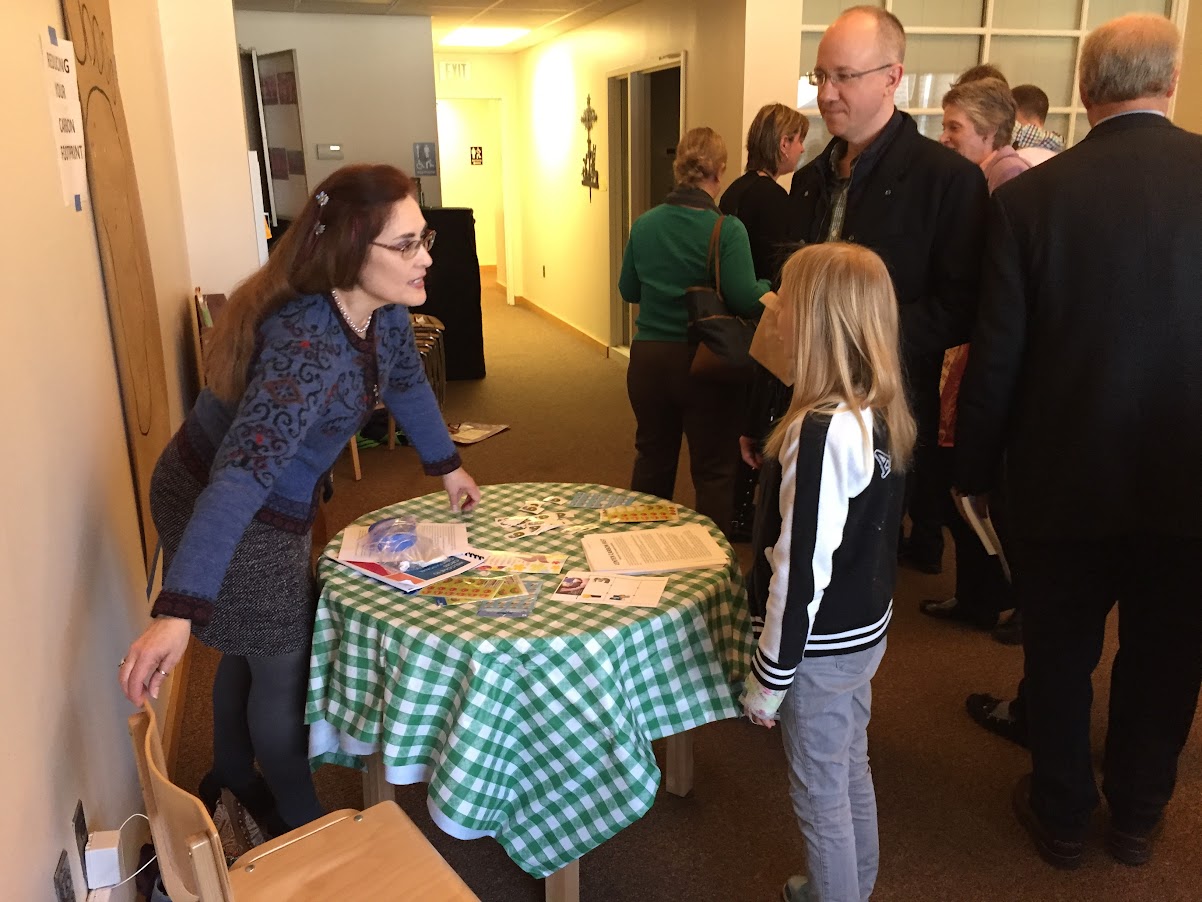
Checking out our carbon footprints
Reuseable bags!
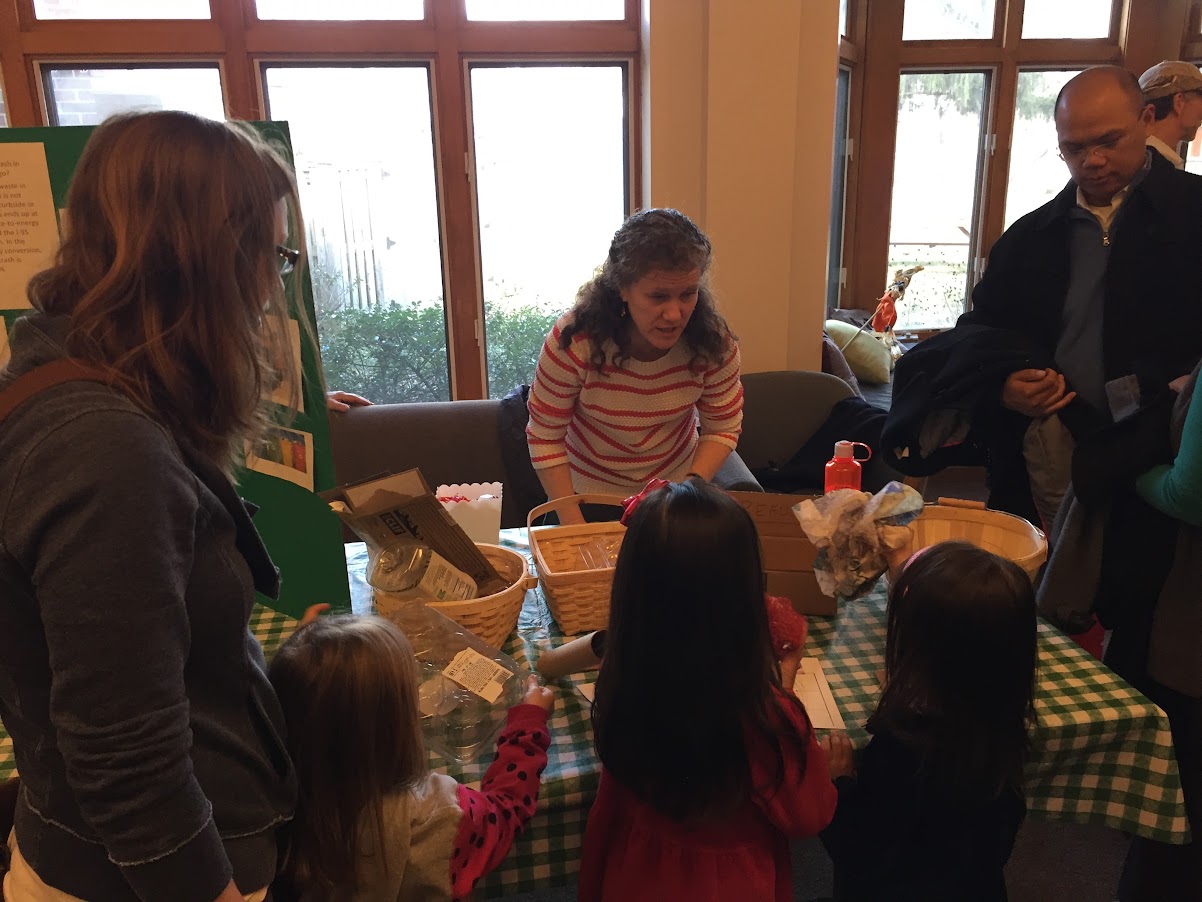
Playing the recycling game
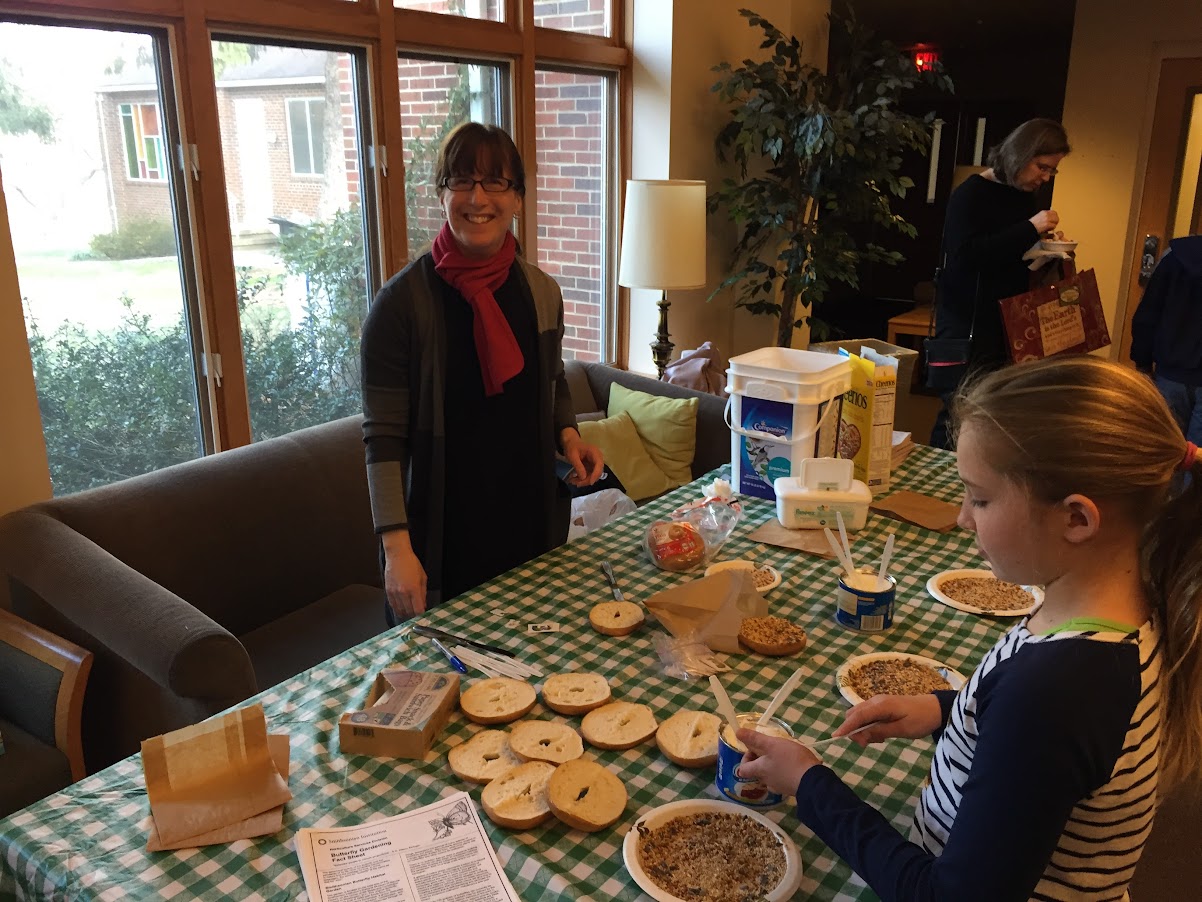
Making bird feeders
It's Lent!  In the past I've provided ideas for going green during Lent, and this year my entire church jumped in!  To kick things off, we hosted an event that included informative displays, games, crafts, and even a spot to remove your name from catalog lists.  And everyone received a calendar to guide them through a Lenten Carbon Fast.  Check it out -- it's full of great ideas.


Sunday, January 31, 2016

Are you ready for some FOOTBALL??!!


(photo:  arizonapopwarner.org)

Can a huge sporting event like the Superbowl possibly be green?  According to Neill Duffy, Sustainability Director of the Bay Area Superbowl 50 Host Committee, it can indeed be green!  In a recent interview with GreenSportsBlog, Mr. Duffy states that the goal of his organization is to host a Net Positive Superbowl.  The group has 4 pillars for greening the Superbowl:

  1. Reduce impact on climate change -- deliver a low-emissions event
  2. Responsibly use materials and resources (food/water/waste)
  3. Leave a positive and lasting legacy for the region
  4. Inspire fans to embrace sustainability
If you live in California, you're invited to take the Play Your Part pledge to help achieve these goals. If you don't live in California, you can still take the pledge and participate in sustainability as you watch the big game!  Nachos anyone?


Wednesday, November 11, 2015

More Island Getaways

Be sure to “like” Greenmomster on Facebook!

In keeping with last week’s post on island getaways, this week let’s take a look at trash islands! 

In both the Atlantic and Pacific we see HUGE islands or patches of garbage made up of small pieces of plastic and other waste.  The patches in the Pacific can be as big as the state of Texas!  Where does all this garbage come from?  The vast majority (80%) comes from land – it’s blown off beaches, washes through storm drains, or washes into rivers and streams.  The rest comes from cruise ships and cargo ships.  Be sure to watch this Discovery video to see what a garbage patch/island looks like.

How can you help?  There’s not a practical way to clean up these islands, yet.  Our best action is prevention:

  1. Never litter or throw trash into a storm drain
  2. Recycle whenever possible.  Yes, there is some dispute about the effectiveness of some methods of collecting and recycling plastic, but one thing’s for sure – recycled plastic doesn’t create trash islands
  3. Reduce and reuse!  The more trash you can keep out of the waste stream, the less chance of it ending up in the ocean!

What you do on the land affects our oceans!

edisto54

Source:  Miller, G.T. and S.E. Spoolman. 2015.  Living in the Environment, Eighteenth Edition.  Stamford CT, Cengage Learning.  pg. 560.

Thursday, July 17, 2014

TBT—Fish Tales

We just got back from a fun getaway to Block Island RI, so I’m re-posting this post about clamming and sustainable fisheries – enjoy!  And be sure to “Like” greenmomster on Facebook!

During our recent visit to Block Island, RI, our friend Thom took us clamming!  No one in the family had ever tried this activity before, so we really enjoyed the adventure.  First step, was getting a license to gather clams.  We paid our money and received small metalnewengland59 rectangles with which we had to measure our clams.  If the clam fit through, we had to bury it back in the sand; if it didn’t fit, we could keep it.  We explained to the kids how this was a way to ensure that there would be clams in Block Island the next time we visited.

When it comes to fishing, sustainability is an important topic.   You’ve probably read about many depleted fisheries and types of fish that you shouldn’t order at a restaurant.  Scientists spend much time trying to calculate the number of fish that can be taken from a population without causing the population to decline or crash.  Managers also work to decrease bycatch (non-target species inadvertently caught) and to forge international agreements (think Tragedy of the Commons by Garrett Hardin). 

But if you’re a greenmomster who’s not out clamming, how can you help these fisheries scientists and managers?  You can help by carefully researching your fish purchases.  Each time you avoid purchasing fish from non-sustainable fisheries, you’re helping the environment.  Check out the Monterey Bay Aquarium website or NOAA’s FishWatch website.  Both websites have background information on sustainable fisheries and instructions on how you can make eco-friendly fish choices.  Next time your family is hankerin’ for a fish fry or a little pasta with clam sauce, you’ll know you made a sustainable choice! 

Want to learn more about the impact of sustainable fisheries?  Check out this informative video on coral reefs from World Resources Institute:

Sunday, June 8, 2014

What ever happened after that oil spill?

bullisland8Did you know that over 1.3 million metric tons of petroleum enters the sea worldwide each year?  What’s the impact of these oil spills?  I wonder, after a year or two, what really happened?  The Xerces Society recently published a report that tries to answer that question with regard to marine invertebrates (including sea stars, mussels, oysters, snails, coral, crabs, lobsters, and shrimp).  Impacts to invertebrates are especially critical, because invertebrates make up the vast majority of marine biodiversity, and they form the base of the various food chains in marine ecosystems.  The report, Oil in Our Oceans, A Review of the Impacts of Oil Spills on Marine Invertebrates, by Michele Blackburn, Celeste Mazzacano, Candace Fallon, and Scott Hoffman Black, is available for download. 

Sunday, June 1, 2014

LEAPing into the future of energy conservation!

We’ve often written about climate change on this page, and many greenmomsters want to take concrete steps to decrease our carbon footprint.  One of the easiest and most effective ways an individual can change his or her carbon footprint is to try to conserve energy in the home. 

Since our house was built in the 1950s, my husband and I often wondered what updates might be useful in making our home more energy efficient.  We wanted to know what to do, as well as how to prioritize these activities – obviously, we want to address the low-hanging fruit first.  Lucky for us, there’s a community-based non-profit organization in our area that helps to answer those questions.  LEAP (the Local Energy Alliance Program) conducts home energy checkups that help to point out areas where improvements might be beneficial.  This evaluation doesn’t include blower door tests or safety evaluations, but after working with our LEAP representative for about 1 1/2 hours, we felt like we had a “road-map” for future home improvements.  Here’s how it worked:

  1. Our LEAP representative, Corey, arrived on-time and explained how the check-up would work.  He explained the goals of the check-up and what would be covered.
  2. We began looking around the house at common areas where folks tend to waste energy.  Our first stop was the fireplace.  20140520141853  Although we had tried to insulate the fireplace during past winters, Corey suggested using a “chimney balloon,” which is a highly effective way to prevent cold air from entering via the chimney – and you can remove it whenever you want to use the fireplace (pretty much never in our case…)
  3. Next, we moved on to the kitchen.  Our refrigerator is new, but proper settings for temperature always help to maximize efficiency.  20140520143704  Unfortunately, magnets don’t add to your refrigerator’s insulation Smile
  4. We then moved to the area of the house that should be a priority – the attic.  20140520142157  Corey advised that the r-value of our insulation should be R49.  Fortunately, we have some insulation in the attic and only need a couple more inches for maximum efficiency.  The area where we could decrease heat loss is in all of the air spaces around ducts and wires in the attic.  Sealing these air spaces could significantly decrease our heat loss, since heat rises through the house and escapes at the highest point.  Additionally, some polystyrene sheets on the attic doors could help decrease heat loss.
  5. Our final stop was the basement.  As with the attic, sealing various leaky areas, such as the crawl space, should be a priority in an older house.  Additionally, Corey showed us an easy fix to prevent leakage around our furnace – sealing tape.  20140520154608

All in all, we found that this energy check-up was a good use of our time, giving us a list of priorities as we try to make our home more energy efficient.  If you’d like to schedule a LEAP check-up and you live in northern VA, visit www.leap-va.org for more information. 

Friday, October 18, 2013

Meat free Friday–something’s fishy!

fishingpond8Although it’s meat-free Friday, I know many greenmomsters like to cook fish on Friday, so today’s post is a little different.  Thanks to a world population of 7 billion people and industrial fishing methods, many of the world’s fisheries are severely depleted (and under-regulated fish farming can lead to severe pollution).  So what’s a greenmomster with a hankering for fish supposed to do?  The Monterey Bay Aquarium has an app for that!  Here’s the link for a cool app that tells you which fish populations are currently severely depleted and which populations are currently relatively healthy.  You can head to the grocery store or fish market armed with your phone and make environmentally-friendly decisions as you choose tonight’s dinner.  Of course, greenmomster always encourages you to eat as low on the food chain as possible, but we know that once in a while you just feel like some fish!

So let’s say you find some sustainably raised and harvested shrimp – why not make a little citrus shrimp?  This recipe is adapted from a cookbook we bought during our annual visit to beautiful Edisto Island SC, ‘Pon Top Edisto, by the congregation of Trinity Episcopal Church.

'Pon Top Edisto: Cookin' `Tweenst the Rivers
Citrus Shrimp
Ingredients
2 lbs raw shrimp
1/4 cup butter
2 oranges, peeled and separated into slices
2 lemons, sliced

Instructions
  1. Preheat broiler to 500 degrees
  2. Clean shrimp and spread in a broiler pan.  Dot with butter, orange, and lemon slices
  3. Broil until the shrimp are pink, stirring often.

Monday, September 16, 2013

Learning from the neighbors

IMG_20130915_123500_951In Vienna VA yesterday, we had a great event called the Sustainability Home and Garden Tour – an opportunity for folks in town to tour neighbors’ homes and yards to learn about green improvements.  Local residents visited various homes in which the owners had added solar-powered attic fans, energy-efficient windows, upgraded insulation and other conservation improvements, geothermal heat, and solar panels.  Several neighbors (including our family) opened their yards and gardens to demonstrate native plantings, pollinator gardens, rainbarrels, walkways and garden houses made from recycled materials, composting, and organic vegetable gardens.  Our family tried to demonstrate that eco-friendly landscaping doesn’t require a lot of time and can be done by busy families (in fact, we were shuttling kids to soccer practice during the afternoon).  And it wasn’t just the visitors who learned new information – I got several helpful gardening tips from neighbors visiting our gardens!   Local businesses also demonstrated their “green cred” and some even gave out locally grown free samples! 

Does your community have a similar event?  Please share!

Thursday, July 4, 2013

4 lies we tell our children

Any parent knows that once in a while we aren’t completely honest.  Maybe we tell a little fib to save someone’s feelings, or we don’t tell the entire truth because the kids wouldn’t understand all the details. IMG_20130703_171958_273 But I’ve heard 4 whoppers that I just have to share:

  1. “If you work hard enough, you can accomplish anything!” -- Nope.  Not true.  I will never be an opera singer, no matter how many voice lessons I take.  My husband will never be a jockey in the Kentucky Derby (he’s 6’2” and over 200 pounds).  My son will never be an egg donor.  Success is 80% showing up and working hard, and 20% luck (do you have talent?  support?  money?  opportunity?)  When I was a kid, I wanted to be an Olympic long jumper.  Fortunately, I’ve always been a hard worker with lots of drive.  Unfortunately, I’m not a gifted long jumper.  I spent an entire summer jumping into a baby crib mattress, trying to “reach my dream.”  I ended up on crutches with torn cartilage in both knees, but not with a spot on the school track team.  We should encourage our kids to dream; encourage our kids to work hard.  But we also have to let them know that sometimes things don’t work out and that’s OK – they’re not failures if they gave it their best shot.
  2. “You can’t judge a book by its cover!”  -- Actually, a lot of times you can.
  3. “There’s no such thing as a stupid question!”  Oh yes there is.  Anyone who’s been a parent for 30 minutes or a teacher for 30 seconds has actually heard one of these stupid questions.  Example:  I’ve just explained to the class how to read the syllabus (which outlines test dates, etc) AND explained that the first test is on March 1.  The student in the back row, who’s been secretly (he thinks) checking his phone for texts from his girlfriend, raises his hand and asks, you guessed it, “when is the first test?”  Stupid.  stupidstupidstupid.
  4. “We can use technology to fix any environmental damage we create.”  And you were wondering when I’d get to the environmental stuff!  We can use technology to create many environmentally-friendly inventions that will make our current way of life more sustainable, including renewable energy and engineered wetlands that clean stream water.  But there are some issues that can only be addressed through conservation and preservation.  The biggest of these issues is biodiversity.  Only by actively protecting and preserving species, soil, and land can we hand these resources down to future generations.  Once soil is gone, it takes thousands and thousands of years to make more.  Once a species is extinct, it’s gone forever, despite what you saw on Jurassic Park.

Got any other lies you’d like to share?

Saturday, October 27, 2012

Got Pucks? The NHL is going green!

hockey1I’m a greenmomster, but I’m also a hockey mom.  Often, as I’m standing next to a rink, freezing my toes off, my mind wanders to the amount of energy used to freeze the rink, the gas needed to run the zambonis, and the landfill space needed to dispose of everyone’s garbage.  It seems that someone at the NHL has been wondering the same thing.  They’ve formed a partnership with the Natural Resources Defense Council (NRDC) to make hockey a more sustainable enterprise.  The league seems to be very focused on reduce, reuse, and recycle – definitely a step in the right direction.  There’s also the Gallons for Goals project.  As stated in their green platform, many NHL players learned to skate on outdoor rinks and ponds, and these frozen areas are becoming less common.  Hockey depends on cold weather, so the NHL is getting involved.   Check out their NHL Green website and NHL Green blog.

So what about the other popular, albeit less exciting, professional and college sports?  Well the NRDC has discovered that professional sports can have a major impact on the environment and environmental attitudes of sports fans.  As the NRDC states on their sports website, “The benefits for both professional and college sports leagues are robust, from saving thousands of dollars on energy, waste, and water bills to creating new sponsorship opportunities and enhancing brand value with corporate social responsibility--not to mention the environmental benefits.”  NRDC provides greening advisors to all teams in professional baseball, basketball, hockey, soccer, and tennis.  NRDC provides energy, waste, and water efficiency audits for stadiums and arenas, resulting in significant cost and energy savings.   An example from NRDC’s blog:  “Since first partnering with NRDC in 2008, each year the US Open has recycled 18,000 tennis ball cans and replaced 2.4 million virgin fiber-based napkins with 90% post-consumer recycled content napkins, along with many other initiatives.”  Not too shabby!

OK, since my son also has a mean backhand, here’s the USTA’s plug for green sports:

So hockey, soccer, tennis, and baseball greenmomsters, there is hope!  We can have sustainability and sports too!  Want more information?  Read Game Changer, How the Sports Industry is Saving the Environment from NRDC.
Be sure to “like” greenmomster on facebook to get all the latest updates!
Sources:
National Hockey League.  2012.  http://www.nhl.com/ice/eventhome.htm?location=/nhlgreen.  ND.  Accessed 10/23/2012.
Natural Resources Defense Council.  2012.  http://www.nrdc.org/greenbusiness/guides/sports/default.asp.  ND.  Accessed 10/23/2012.
NRDC is the nation's most effective environmental action organization. NRDC uses law, science, and the support of 1.3 million members and online activists to protect the planet's wildlife and wild places and to ensure a safe and healthy environment for all living things. NRDC's website provides a wealth of environmental information as well as state-of-the-art online activism tools.

Friday, September 21, 2012

Cat Eco-Warrior!

Earlier this summer, I wrote about the importance of buying fish from sustainably managed fisheries.  Well, it turns out that a grocery store chain in Canada is joining the party!  Check out its hilarious cat eco-warrior commercial and be sure to keep those kitties indoors!

Saturday, September 8, 2012

Fun in Vienna VA Next Weekend!

If you ‘re going to be in Vienna VA next weekend, be sure to check out the Native Plant Sale and Vienna Home and Garden Tour – Focus on Sustainability.  image

The plant sale will be held in the Community Center parking lot (120 Cherry St SE) on Saturday, 9/15 – rain or shine.  There will be a large selection of native plants for the fall planting season at great prices! Native plants are easy to care for, consume less water, and many are deer resistant. Fall is a great time to plant, as there is less heat stress for your new plants. To protect your trunk and to reduce the use of new plastic, please bring bags or boxes to carry your plants home.

On Sunday, be sure to check out the Vienna Home and Garden Tour -- Focus on Sustainability (from noon to 4pm).  Parking and maps will be available at the Vienna Community Center.  Visitors are encouraged to bike or walk the tour!  Your neighbors are opening their homes and gardens to you to show and discuss modifications that they have made to make Vienna a more sustainable community. Visit all or some of them to learn more about solar power generation, energy efficiency, geothermal heating and cooling,native plants and gardening with deer.  For an online list of the homes go to: http://www.viennava.gov/index.aspx?NID=955

Monday, July 30, 2012

Green Getaways–The New Bedford Whaling Museum

DSC_0045If you’re headed to New England this summer and you’d like to learn a little something about sustainable fisheries and whales, a visit to the New Bedford Whaling Museum is definitely in order!  I know, when you're thinking green getaways, whaling doesn't often come to mind, but this museum is very informative and really tells a very honest story of the history and impacts of whaling.  The museum, which is over 100 years old, sits next to the New Bedfordnewengland22 Whaling National Historic Park.  It’s filled with many exhibits on the local area and the history of whaling in the area.  The museum also includes fascinating displays giving information on various whale species (I especially like the comparison between a t-rex tooth and a whale tooth) and the impacts of overfishing and depletion of natural resources.  The museum has the world’s largest library of whaling logbooks, the world’s largest collection of scrimshaw (unbelievably detailed work!), and the world’s largest model ship, the Lagoda, a half-scale whale ship built in 1916.  Many of the exhibits are hands-on, which always makes a museum visit more fun.  A fascinating and honest look at the whaling industry, the New Bedford Whaling Museum is worth a visit!

Sunday, July 15, 2012

Fish Tales

During our recent visit to Block Island, RI, our friend Thom took us clamming!  No one in the family had ever tried this activity before, so we really enjoyed the adventure.  First step, was getting a license to gather clams.  We paid our money and received small metalnewengland59 rectangles with which we had to measure our clams.  If the clam fit through, we had to bury it back in the sand; if it didn’t fit, we could keep it.  We explained to the kids how this was a way to ensure that there would be clams in Block Island the next time we visited.

When it comes to fishing, sustainability is an important topic.   You’ve probably read about many depleted fisheries and types of fish that you shouldn’t order at a restaurant.  Scientists spend much time trying to calculate the number of fish that can be taken from a population without causing the population to decline or crash.  Managers also work to decrease bycatch (non-target species inadvertently caught) and to forge international agreements (think Tragedy of the Commons by Garrett Hardin). 

But if you’re a greenmomster who’s not out clamming, how can you help these fisheries scientists and managers?  You can help by carefully researching your fish purchases.  Each time you avoid purchasing fish from non-sustainable fisheries, you’re helping the environment.  Check out the Monterey Bay Aquarium website or NOAA’s FishWatch website.  Both websites have background information on sustainable fisheries and instructions on how you can make eco-friendly fish choices.  Next time your family is hankerin’ for a fish fry or a little pasta with clam sauce, you’ll know you made a sustainable choice! 

Want to learn more about the impact of sustainable fisheries?  Check out this informative video on coral reefs from World Resources Institute: