Thursday, May 22, 2014

TBT -- 5 reasons Przewalski’s horses are cooler than thoroughbreds

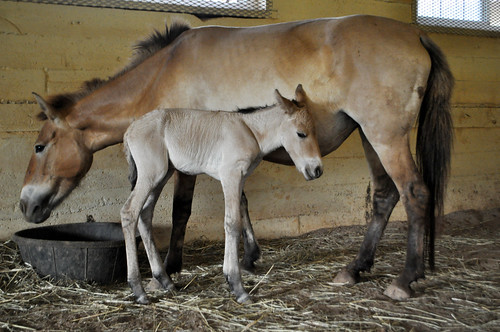
Przewalski’s horse filly

This week’s throwback Thursday post is in honor of the upcoming Belmont – will California Chrome earn the triple crown?  But wait, there’s an equally impressive creature out on the plains of Mongolia – the Przewalski’s horse!  (photo credit to National Zoo website)

The endangered species of the week is Przewalski’s Horse (pronounced “sheh-val-skee”). This horse is native to plains and grasslands of Mongolia, as well as other parts of Asia and eastern Europe, but I first saw one at the National Zoo’s Smithsonian Conservation Biology Institute in Front Royal, VA.  Although these horses are small (about 13 hands high and between 550 and 750 pounds), they’re impressive with tan fur on their bodies and a short, dark mane and tail.  They have evolved to survive the harsh winters in Mongolia, but in the 20th century the species had trouble surviving in the face of habitat loss, loss of water sources to domestic animals, and overhunting.  The Przewalski’s horse was declared extinct in the wild by the World Conservation Union in 1970.

Thanks to an active captive breeding program, Przewalski’s horses were reintroduced to the wild in 2008.  There are currently 1,500 horses in captivity worldwide, and approximately 400 horses in reintroduction sites in Mongolia, Kazahkstan, and China.  All of today’s current population of Przewalski’s horses come from 14 ancestors.  Thus, the gene pool for this horse is very narrow.  Scientists must very carefully coordinate breeding among the captive horses to try to maximize genetic diversity and make the population more able to withstand various stresses, such as disease.
So Przewalski’s horse is beautiful, but why should we care about its survival?  Because a species like this one tells us when we’re having too much of an impact on the ecosystem.  Humans are part of the natural world; we depend on natural resources for our survival.  But sometimes we take more than our share, and the ecosystem on which we depend begins to suffer.  Species like Przewalski’s horse tell us when our agricultural or hunting practices are unsustainable.
And if you needed more reasons to protect the Przewalski’s horse, here are 5 Reasons Przewalski’s Horses are cooler than thoroughbreds:

  1. It is the only truly wild horse remaining in the world (it’s never been tamed for riding).
  2. I’ve never fallen off a Prezwalski’s horse (I’ve definitely fallen off a thoroughbred)
  3. Prezwalski’s horses can make it through winter in Mongolia without a horse blanket.
  4. The Mongolian name for these horses is “takhi,” which means “spirit.”   That’s way cooler than names like Chicken Lips or Buck Naked.
  5. Przewalski’s horses have 2 more chromosomes than domestic horses(66 vs. 64).

Oh, and did you know that horse vasectomies can be reversed?  Greenmomster’s always here for you with fun facts:


Be sure to “Like” greenmomster on Facebook!

Sunday, May 18, 2014

What’s your environmental IQ?

skymeadows spring 2014 1Many of us think we know a lot about environmental issues, but how much do we really know?  Here’s a great quiz, posted by the City of Tulsa OK , that can give you an idea of your “environmental IQ”. 

Here’s an additional little quiz to help you figure out what’s in your backyard and become more aware of your local environment.  Unfortunately, I can’t provide the answers for every locale --if you don’t know the answers, I guess you know what you’ve got for homework!

  1. In which watershed do you live?  A watershed is a topographical area that drains to one body of water.  So where does your stormwater drain – what’s the name of your local creek?
  2. What’s the source of your drinking water?  (groundwater, surface water (which body of water?))
  3. What happens to your garbage when it leaves your house?  Does it go to a landfill, incinerator, etc?
  4. Name two bird species that live in your area year-round.winter cardinal
  5. Name two bird species that migrate in and out of your area every year.
  6. What’s the source of your electric power?  (coal, natural gas, nuclear, solar?)
  7. Where’s your local wastewater treatment plant? (usually, it’s pretty easy to Google this one!)

Want to try some “big picture” (rather than local) environmental quizzes?  Check out the ABC News Environmental IQ test and The Wall Street Journal.

Friday, May 16, 2014

Green Chili Stew

Billy Joel might be in a New York state of mind, and James Taylor has Carolina on his mind, but I’m thinking about dry New Mexico today (easily one of my favorite places) as flood warnings rage here in VA.  Here’s a recipe for green chili 69790002stew from Family Circle magazine that I’ve altered (rather significantly) to taste just the way I like it.  I hope it takes you to New Mexico in your mind! (and be sure to Like greenmomster on Facebook for your weekly recipes!)

Ingredients:

6 cups vegetable broth
1 jar tomatillo salsa (I like Frontera)
1 large green pepper, diced
1 large yellow onion, diced
1 tbsp olive oil
3 heaping tablespoons of minced garlic
2 tsp cumin
3, 4 oz. cans of hot diced green chilis (I like Hatch)
1 tsp salt
2 12 oz. packages of Quorn Chick’n Tenders
2 15.5 oz cans of butter beans, drained and rinsed (use 3 cans if you want really thick stew, rather than soup)
1/4 cup chopped fresh cilantro
sour cream, scallions


Instructions:
1) In a large pot, saute onion, green pepper, and garlic in olive oil to slightly soften the peppers -- don't let the onions become transparent.  Add veggie broth, salsa, cumin, chilis, and salt. Add in quorn nuggets and simmer on low heat for at least 1/2 hour.
2) Stir in beans and cilantro.
697900013) Garnish with sour cream and scallions, if desired.  Serve with Phil's corn bread

Thursday, May 15, 2014

TBT–We are the 10%

It’s allergy season, which means those of us with asthma are huffing and puffing.  Here’s the perfect Throwback Thursday post from a couple of years ago.  To see all the latest posts and more info, be sure to “like” greenmomster on Facebook.

It was about 2 am and there I sat, waiting, listening, and hoping that my son’s asthma medication would take effect quickly.  Our family has three of the approximately 34 million Americans with asthma.  That’s roughly 10% of the U.S. population, according to the American Lung Association.  Asthma is an iA mother helps her daughter with an asthma inhaler.nflammation of the airways, making it difficult to breathe.  Asthma has significant health and economic effects:  

  • the CDC National Center for Health Statistics estimates that asthma is the reason for approximately half a million hospitalizations per year
  • the Centers for Disease Control and Prevention estimate that medical expenses associated with asthma increased from $48.6 billion in 2002 to $50.1 billion in 2007.  About 2 in 5 (40%) uninsured people with asthma could not afford their prescription medicines and about 1 in 9 (11%) insured people with asthma could not afford their prescription medicines.
  • the CDC National Center for Health Statistics states that asthma accounts for about 10.1 missed work days per year
  • Females have a 23% higher occurrence of asthma than males (American Lung Association)
  • Between 2001 to 2003, the occurrence of asthma in the U.S. was highest in the Northeast region (CDC)
  • According to the American Lung Association, in 2006, asthma prevalence was 20.1% higher in African Americans than in whites
  • According to the CDC, from 2001-2003, asthma prevalence was higher in individuals living below the federal poverty level (10.3%) compared with those at or above the federal poverty level (6.4% to 7.9%)
And moms, take note:
  • The greatest rise in asthma rates was among black children(almost a 50% increase) from 2001 through 2009 (CDC Vital Signs, 5/11)
  • 185 children died of asthma attacks in 2007 (CDC Vital Signs, 5/11) and nearly 4 million children had asthma attacks last year (Akinbami LJ. The State of childhood asthma, United States, 1980–2005. Advance data from vital and health statistics; no 381, Hyattsville, MD: National Center for Health Statistics. 2006)
  • For children under 15, asthma is the 3rd leading cause of hospital stays (DeFrances CJ Cullen KA, Kozak LJ. National Hospital Discharge Survey: 2005 Annual Summary with Detailed Diagnosis and Procedure Data. National Center for Health Statistics. Vital Health Statistics 12 (165); 2007)
  • From 2001 to 2003, the CDC reports that the occurrence of asthma in children (8.5%) was higher than in adults (6.7%)

So what triggers asthma and asthma attacks?  First off, asthma is a family affair.  Children with parents who have asthma are more likely to have asthma themselves.  A predisposition for having asthma has been found to be passed down genetically.  Now, just because a person has a predisposition, that doesn’t mean they’ll actually get the disease.  But if they do, what might set off an asthma attack?  Allergies often lead to asthma (dust mites, molds, pollen, etc).  Virus and bacterial infections can lead to asthma symptoms (often, a person with asthma will begin to wheeze or cough if they get a cold).  Some people have exercise-induced asthma.  Others get asthma attacks due to certain foods or drugs.  But asthma can be triggered by something else. 

Asthma can be triggered by pollution.  Pollutants such as particulate matter, sulfur dioxide (SO2), and ozone (ground-level ozone, that is) have been shown to increase the occurrence of asthma attacks, particularly in children.  What types of activities produce these pollutants?  The small particles that might affect the lungs are produced from the chemical reaction of pollutants from power plants, industries, and automobiles.  Sulfur dioxide is most commonly produced from the burning of fossil fuels (coal and oil), as well as cement production.  Ozone isn’t usually emitted directly as a pollutant; it’s formed by the action of sunlight on NOx which comes from car exhausts, fuel combustion, and industrial processes.  Beginning to see a trend?  The pollutants that cause the most problems for asthmatics come from our cars and our power plants.   Limiting discharge of pollutants will protect children and other people affected by asthma.  Will it raise our fuel costs?  Possibly.  There’s some conflicting information as discussed by the Edison Electric Institute and the Congressional Research Service.  Full disclosure, my husband works for an energy company, so I’ve heard both sides of the argument.  But let’s look at it this way – someone has to pay.  Should we, the users of cars and power from fossil fuels, each pay a little more for a cleaner environment, or should we ask the payment to be made by the most vulnerable – our children, individuals living below the poverty level, the elderly?  My son’s asthma is controlled with medicine and attacks are infrequent, but others are not so lucky.


What can one person do?  Get educated about efforts to limit discharge of these pollutants to the environment.  Contact your legislators/local industries/power producers regarding this issue – let your opinion be known.

Saturday, May 10, 2014

Global Day of Action to Cut Conflict Palm Oil

Today, we have a guest post from Harriet Shugarman, Executive Director of Climate Mama.  Harriet is an inspirational leader guiding us all as we try to stop climate change. I encourage you to check out her website and her blog.  Please take a little time this Mother’s Day to learn about a Global Day of Action to Cut Conflict Palm Oil!

may20DoAWhen problems seem overwhelming for our children, we remind them to take things “one day at time.” Amazingly, their problems often don’t seem so big or so overwhelming anymore.  On May 20, 2014, you and your family can join me and my family and thousands of other folks around the world as we take one day and create thousands and thousands of actions around ONE ask: PepsiCo The Power to Cut Conflict Palm Oil is #InYourPalm.

For most of us, making a difference and creating change around huge global problems like the destruction of the world’s rainforests and climate change seems way too big and too hard to imagine taking on. As parents, between work in and outside our homes, getting to and from lacrosse games, music and dance classes, putting nutritional meals on the table, arranging play dates for our kids, and finding time for the occasional play date of our own, our lives are full, busy, and regularly frenetic and hectic.  Yet as parents, our job is to create a safe, secure and sustainable future for our children, so taking on huge challenges like climate change is definitely in our job description. By “connecting the dots” between palm oil production, climate change, orangutan habitats, snack foods and our purchasing habits, we will be doing our job and protecting our children and the planet.

Join me and The Rainforest Action Network (RAN) on May 20,th for a Global Day of Action to cut Conflict Palm Oil. Together we are demanding that PepsiCo stop using Conflict Palm Oil in its snack food brands and start helping us tackle and create solutions that will fight huge problems like climate change and deforestation. Join us as we show our children how powerful they can be and how solutions to seemingly overwhelming global problems can be positive, fun and sometimes, frankly, pretty simple when we tackle them together.

There are three easy steps: 

  • First, check out our Day of Action Toolkit and come up with a vision for your photo action.
  • Second, add the details of your photo action to the event map.
  • Once you get your image, upload it to RAN’s Smug Mug Gallery and post it to Pepsi’s Facebook Wall with this message: #PepsiCo, the power to Cut Conflict Palm Oil is #InYourPalm.

Grab the kids in your life and watch and listen as Ashley Schaeffer Yildiz, a new mom and RAN Palm Oil Campaigner, shows us “how it’s done” by giving us some great ideas we can use to persuade some of the biggest companies in the world, the Snack Food 20, to join us and do the right thing. By changing where they source their palm oil these global companies can stop the production of Conflict Palm Oil which will help save important rainforests, slow down climate change and also protect the homes of some of the world’s last remaining orangutans.

These companies know that we are carefully watching what they do. In fact several of the major Snack Food 20 companies, including Mars, Kellogg, General Mills, Unilever and Nestle have recently responded to consumer outrage by announcing new commitments and the strengthening of their palm oil purchasing policies or sourcing practices. PepsiCo however, remains a key laggard.

Just as the Snack Food 20 have sourcing choices for their products we have choices too. We can choose to support brands and buy snack foods that don’t contain Conflict Palm Oil. And the good news… the power is #InYourPalm!  Call a family meeting today, and come up with your own family plan for the Global Day of Action. These actions can be big or small, in parks, on college campuses, at home, or even at Pepsi branded locations around the world. The beauty of the day of action is that each of our actions will be unique, but they'll have two things in common: they will include the words #InYourPalm in some way, shape or form and will connect our families to folks around the globe who are united in our efforts to end rainforest destruction caused by the production of Conflict Palm Oil.

Whether you are 8 or 80, the New York Times, The Union of Concerned Scientists, or even Ashley’s new baby boy, together we can “change the world” by taking on big problems one day at a time! Please join us and invite your family, friends and neighbors to take part in the May 20th Global Day of Action to Cut Conflict Palm Oil, the power really is, #InYourPalm! Ashleyinyourpalm

For more info, be sure to “Like” Greenmomster on Facebook!

Friday, May 9, 2014

Asparagus season!

For all the latest meat-free Friday recipes, plus environmental news, be sure to "Like" us on Facebook!


It’s almost asparagus season (photo from vegkitchen.com)!  My favorite way to prepare asparagus is very simple.  First I wash the asparagus, use a potato peeler to peel the stems a little, and snap off the hard ends.  I then place the asparagus on a baking sheet, spray with olive oil, sprinkle with salt, and broil at about 450 degrees for about 15 minutes – delicious!


Feeling a little more ambitious?  Then try this recipe for Lemony Vegetable Risotto that I’ve adapted from Family Circle (July 2012):


Ingredients
32 oz. vegetable broth
1 bag frozen asparagus, cut into 1 inch pieces (or the equivalent of fresh asparagus)
1 bag frozen peas (or the equivalent of fresh peas)
1 tblsp olive oil
1 tblsp unsalted butter
1/3 cup diced shallots
1 cup arborio rice
1/2 cup white wine
3 tblsp lemon juice
1/2 cup grated parmesan cheese
1/4 tsp salt


Instructions
1)  Boil the broth and 1/2 cup water.  Add asparagus and peas for about 3 minutes.  Remove veggies with a slotted spoon and set aside, but keep the water/broth.
2)  Heat oil and butter in a large pan, and add shallots, cooking for about 2 minutes.  Stir in the rice and cook for another minute.  Pour in wine and cook until the liquid is almost gone.
3)  To the rice mixture, add 1/2 cup of the reserved water/broth, stirring well, and cook until the broth is almost gone.  Repeat this step with additional 1/2 cups of water/broth until the rice is tender (it will probably take about 25 minutes).
4)  Stir in lemon juice, parmesan, peas and asparagus.  Enjoy immediately!

Thursday, May 8, 2014

TBT–Why military personnel (and those who love them) should care about climate change

Since the U.S. climate change report came out this week, I thought we’d stick with climate change for this week’s TBT post.  Enjoy!

I come from a military family.  My dad is a prior-enlisted, West Point grad who served 32 years, including two tours in Vietnam.  My brother served in the Army reserves and my husband in the Coast GuardDSC_0087 (where we met!)  I worked as a civilian with the Coast Guard for seven years.  I even had a grandfather in the German navy!  I may be a tree-huggin’, birkenstock wearin’, environmental blogger, but I’m also well aware of the service of our military personnel.  I believe that climate change is an issue about which military personnel should educate themselves and become active.  Here’s why:

  • Your chain of command – DOD has stated very clearly that climate change is an issue of concern to the military.  A recent report by the Defense Science Board Task Force outlined recommended steps that DOD and other federal agencies should take to address climate change and its global impacts.  The report “recognizes that changes already underway are having, and will continue to have, major consequences for the political, economic, and geographic world as we know it.”  The report included a special focus on Africa and stated that DOD needs a strong climate change information database, a government-wide approach to mitigating climate change impacts, and engagement with international leaders to work toward a global solution. 
  • Climate refugees – Several recent reports (Stern 2006;  Bierman and Boas 2010; UN website ) have estimated that by 2050 100-200 million people worldwide could be displaced due to direct effects of climate change (flooding).   Most of the refugees will come from Asia and Africa.  As these people move, they will need to find new homes.  Often, our military is called upon to provide peace-keeping activities during these types of events. 
  • Climate conflict – Not everyone will move on from flooding in a peaceful way.  Additionally, the secondary effects of climate change include drought, inland flooding, and storms which could affect food supplies.  Countries often go to war when resources get tight.
  • Taxes – The military pays taxes too!  As we see more “weird weather” throughout the U.S., we’ll also see more people whose homes and towns were destroyed by floods, hurricanes, and tornadoes.  We’ve already seen lower lobster harvests in Maine(due to higher sea temperatures),and lower water levels in Lake Erie leading to altered port and shore infrastucture.  These adjustments and rebuilds cost money, lots of money.  “But hey, so does stopping climate change!” you say.  Well, I’d rather have my tax dollars go toward proactive change that could prevent problems down the road, as opposed to spending millions to close the barn door after the horse is gone. (Take a look at theChesapeake Bay Foundation’s report regarding jobs and environmental protection, too).

Climate change is real; it’s happening.   And frankly, our military personnel will be some of the first folks to deal with the results.  Need a quick primer on climate change?  Check out the series of videos on the topic, “Don’t Just Sit There, Do Something.”  Here’s the latest edition

    The others can be found at www.facebook.org/greenmomster.  Now is the time for military personnel, and those who love them, to get educated and get active to slow the effects of climate change!

Be sure to "like" greenmomster on facebook for the latest updates.


Sources:
Biello, D.  2009.  “Can Climate Change Cause Conflict? Recent History Suggests So” in Scientific American, November 23, 2009.  Accessed online 10/8/2012.
Bierman, F. and I. Boas.  2010. 
Preparing for a Warmer World: Towards a Global Governance System to ProtectClimate Refugees. Global Environmental Politics. Feb2010, Vol. 10 Issue 1, p60-88, 29p, 1 Chart.
Defense Science Board Task Force.  2011.  Trends and Implications of Climate Change for National and International Security.  Office of the Undersecretary of Defense for Acquisition, Technology, and Logistics, October 2011.
Stern, N.  2006.  Stern Review on the Economics of Climate Change.  Accessed via web on 10/8/2012.
http://webarchive.nationalarchives.gov.uk/+/http:/www.hm-treasury.gov.uk/sternreview_index.htm  Last updated 7/4/2010.
United Nations. 2012. 
http://www.unhcr.org/pages/49e4a5096.html.  Accessed via web on 10/8/2012.