Monday, April 4, 2016
Mammal Monday -- Black Footed Ferrets!
A common myth about the Endangered Species Act is that, once they're listed, species never come off the list. Thanks to the efforts of folks at the U.S. Fish and Wildlife Service and the Smithsonian Institution, the black footed ferret may someday prove the myth wrong, just like the brown pelican, bald eagle, and American alligator have done before! Black footed ferrets are a top predator in the North American prairie that feeds on prairie dogs. Check out this video to learn more about black footed ferret recovery and reintroduction:

Friday, April 1, 2016
Foolish Things I've Done to Be Green!
It’s April Fools Day, so it's time for my annual compilation of Foolish Things I've Done to be Green! It's my look back at some of the really foolish, yet very earnest, things I’ve tried in the name of planet protection. I'll just keep adding to the list each year, and I’m sure I’ll have some new items for 2017!
Freezing my behind off at a "global warming" event -- I'll never figure out why people schedule climate change rallies in February. Sure, those of us who understand climate change also understand there's a difference between "weather" (what happens in February) and "climate" (what happens in a decade of Februarys). But planning climate change rallies in the middle of winter seems to play into the hands of climate change deniers. Wouldn't it be better to plan these events in August?

The Invertebrate Shuffle - One of our family traditions is stream monitoring (my kids told me that "spring break in the Bahamas" would be a much better tradition). Fortunately, I've been training for this activity for over 30 years. Stream monitoring requires doing the "invertebrate shuffle", which means twisting in the mud for a minute to loosen up all those invertebrates. I excel at this activity! I can even add an interpretive touch to the dance! Sort of like these peacock spiders:
Earth shoes -- OK, they’re not really an environmental item, but this is where it all started for me in the ‘70s. That “negative heel” was supposed to make me feel close to the earth, but it just gave me muscle strain. If you really want to wear ugly shoes that scream “I’m crunchy!” just wear Birkenstocks like all of the other greenmomsters out there.
 Environmental mascot – this is foolish, yet fun! During all of my years of dancing, I was always a good technician, yet a lackluster performer. This situation was due to the fact that I found being in front of an audience to be a little embarrassing. A good mascot costume solves that problem – all of the fun of performing, with absolutely none of the recognition! When I was asked to be the EPA “water drop” during 25th anniversary Earth Day celebrations on the Washington DC mall, I couldn’t turn them down. Then came the pinnacle of my mascot career – Woodsy Owl! So foolish, yet so much fun! As Woodsy, I spread the environmental message AND joined in an aerobics demonstration, entertained little kids and the Secretary of Transportation, and danced with abandon in my yellow birdy feet at yet another Earth Day celebration. To prove my mascot-prowess, I have an official photo of myself (Woodsy). This April, I'll be adding to my mascot resume -- Ranger Rick! Look for me at Vienna VA's "Walk on the Hill!"
Coconut oil – I decided to decrease my body’s exposure to harmful chemicals found in cosmetics by substituting coconut oil for my usual face cream. I looked absolutely fabulous, until every pore on my face became clogged, leaving me looking significantly younger. And by significantly younger I mean I looked like the acne-plagued teenager I once was.
Natural deodorant – Again, trying to lessen my chemical load. Been there, done that, got the pit-stained t-shirt.
Visiting the Dismal Swamp after a major flood in August – I’m often referred to as the Julie McCoy of our family, planning all sorts of activities and trips. One type of trip I love planning is the outdoorsy, environmentally-educational trip. But there was one time when I ran the family’s Love Boat aground. I read that the Dismal Swamp in southern Virginia was an absolutely beautiful place – I’ve seen pictures since our fateful trip, and indeed, it is a memorable spot. But timing is everything in life. I ignored our friends who mentioned that maybe “dismal” wasn’t a good name for a family vacation spot, maybe right after a major flood wasn’t the right timing, and maybe the mosquito population would be booming in the middle of August. “Pshaw!” I said. This was a natural area just waiting to be discovered by me and my family! We loaded up my then 2 year old son in the hiking backpack and headed into the swamp! Approximately 30 minutes later, we emerged with our tails between our legs, sweaty and swollen from mosquito bites. Fortunately, we didn’t catch malaria, I didn’t turn our Love Boat excursion into Gilligan’s 3-hour tour, and there was a nearby reggae festival to help us forget our swamp sorrows.
Vegetarian dog food – Although eating lower on the food chain is better for the environment, my dogs do not care. They were willing to starve themselves rather than help the environment. They told me that it’s ok to eat meat for every meal, that we should always DRIVE to the dog park, and that climate change is a totally natural phenomenon.
Using a first-generation recycled plastic garbage bag – OK, the technology has gotten much better, and I do use these bags regularly now. But sometimes it’s best not to be an “early adopter.” I learned this lesson when the bag I was using while changing the guinea pig cage exploded all over the rec room.
Indoor composting – Need I say more? Just because it says it’s a good idea on the internet, doesn’t mean it’s a good idea. I bought my composting bin, filled it with newspaper shreds and my worms that I’d bought off the internet, filled the compost bin with scraps and waited for my worms to work their magic! Well, the magic was the appearance of hundreds of fruit flies filling my entire basement in a blinding cloud. Just say no to indoor composting.
I just saw a combination bicycle/push mower that’s definitely going to be on someone’s foolish list next year. 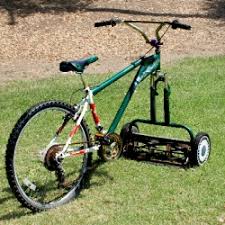
Anyone else have any foolish green adventures you’d like to share?
Monday, March 28, 2016
Mammal Monday -- Pangolins!
For this week's Mammal Monday, let's check out the pangolin! This endangered species (photo from www.savepangolins.org) is a small (species range from 3 1/2 to 70 lbs), scaly mammal found in southeast Asia and parts of Africa. Also known as scaly anteaters, pangolins use their thick, strong claws and incredible sense of smell to find their primary food of ants and termites. They are nocturnal and secretive. The eight species of pangolins live in many different habitats including forests, thick brush, grasslands, and even cultivated areas. All eight species of pangolin are protected under national and international law, and two of the species are listed as endangered on the IUCN Red List of Threatened Species. It’s unclear how long pangolins live in the wild, but they’ve been known to live up to 20 years in captivity. The major threats to pangolins are habitat loss and illegal hunting for their meat and scales (used in Asian medicine).
So pangolins live on the other side of the world and we’ve never even seen one – why should greenmomsters give a flying flit about these animals? Well, other than the fact that they’re incredibly cute, particularly when the young ride around on their mother’s
 backs near the base of their tails (photo from www.savepangolins.org), these species play a vital role in the balance of nature in their ecosystems. As stated inWildlife Heroes (Scardina and Flocken, 2011), “Pangolins play a critical role in natural insect control, especially ants and termites, saving humans millions of dollars to pest damage and reducing the need for harmful chemical pesticides. Additionally, pangolin burrows provide shelter for many species, such as rodents and reptiles.”
Want to help with pangolin conservation? Learn more by joining the Pangolin SSC Facebook page at https://www.facebook.com/pages/IUCN-SSC-Pangolin-Specialist-Group/279294488845768, or make a donation toward conservation at http://www.pangolinsg.org/. For more information on pangolins, check out www.savepangolins.org.
 Be sure to check out this video from ARKive.org:http://www.arkive.org/ground-pangolin/smutsia-temminckii/video-00.html
Sources:
Pangolin Conservation Support Initiative. 2012. Save Pangolins website. Accessed 10/7/12.www.savepangolins.org.
Pangolin Species Survival Commission. 2012. Pangolin SSC website. Accessed 10/7/12.http://www.pangolinsg.org/
Scardina, J. and J. Flocken. 2011. Wildlife Heroes. Running Press Book Publishers, Philadelphia PA. 264 pp.
Friday, March 25, 2016
Meat-free Friday -- something's fishy!
 It's springtime! The cherry blossoms are blooming and the shad are starting to run up the Potomac. So although it’s meat-free Friday, I know many greenmomsters like to cook fish on Friday (and today's Good Friday....), so today’s post is a little different. Thanks to a world population of 7 billion people and industrial fishing methods, many of the world’s fisheries are severely depleted (and under-regulated fish farming can lead to severe pollution). So what’s a greenmomster with a hankering for fish supposed to do? The Monterey Bay Aquarium has an app for that! Here’s the link for a cool app that tells you which fish populations are currently severely depleted and which populations are currently relatively healthy. You can head to the grocery store or fish market armed with your phone and make environmentally-friendly decisions as you choose tonight’s dinner. Of course, greenmomster always encourages you to eat as low on the food chain as possible, but we know that once in a while you just feel like some fish!
So let’s say you find some sustainably raised and harvested shrimp – why not make a little citrus shrimp? This recipe is adapted from a cookbook we bought during our annual visit to beautiful Edisto Island SC, ‘Pon Top Edisto, by the congregation of Trinity Episcopal Church.

Citrus Shrimp
Ingredients
2 lbs raw shrimp
1/4 cup butter
2 oranges, peeled and separated into slices
2 lemons, sliced
Instructions
- Preheat broiler to 500 degrees
- Clean shrimp and spread in a broiler pan. Dot with butter, orange, and lemon slices
- Broil until the shrimp are pink, stirring often.
Monday, March 21, 2016
Mammal Monday -- sea otters!
I was born in Carmel, California, and the Monterey Bay area is always a favorite of mine. This week's mammal comes from beautiful Monterey Bay -- it's the sea otter! Did you know,
- sea otters are the only marine mammal that doesn't use blubber to stay warm in the icy waters of the Pacific -- to stay warm, they have incredibly thick fur that traps air
- sea otters are a keystone species in their habitat -- the role that they play impacts all the other species in the area
- sea otter populations seem to be spreading (that's good news!) -- there was a recent sighting in southern California
- sea otter mothers tie their babies into floating seaweed while they go looking for food, but there's always a plan B:
Friday, March 18, 2016
Veggie stew with polenta

It's almost spring, but we still like stew around here! I adapted this recipe from one I found many moons ago on the back of a can of Furmano’s Italian Style Diced Tomatoes. Nice and hearty for a late winter Friday.
Ingredients:
- 32 oz. vegetable broth
- 2 cups chopped carrots
- 2 cups chopped celery
- 2 cups chopped onion
- 1 28 oz. can diced tomatoes (drained)
- 1 tblsp basil
- 1 tblsp oregano
- 1 tsp red pepper
- 4 tblsp cornstarch
- 1 15 oz. can cannellini (white kidney) beans (drained)
- 1 package polenta – prepared as directed on the package
- 2 cups shredded cheddar cheese
1) Preheat oven to 350 degrees.
2) Combine broth, carrots, celery and onion. Bring to a boil and simmer for about 10 minutes.
3) Stir cornstarch, basil, oregano, and red pepper into tomatoes.
4) Add tomatoes and beans to simmering vegetable mixture and stir until thickened.
5) Grease a 2 quart baking pan and spoon the vegetable mixture in. Layer polenta over vegetable mixture and top with cheese.
6) Bake for about 40 minutes.
Enjoy!
Tuesday, March 15, 2016
Celebrities Doing Green Stuff -- Matt Damon
In our occasional series, Celebrities Doing Green Stuff, we take a look at the environmental causes and activities that celebrities have decided to champion. Today's celebrity is Matt Damon. His cause -- water! Water management is a growing concern throughout the world, from drought-stricken California to water-poor Yemen and polluted water in Brazil. Water is a resource that, when polluted or simply missing, causes widespread suffering and environmental refugees. Did you know that over 600 million people in India alone (that's double the U.S. population) don't have access to a toilet? Did you know that the mosquitoes that carry the Zika virus breed in polluted areas and fly during the day (very different from malaria mosquitoes)? Did you know that the nation of Yemen doesn't have any rivers, so they take all of their water from groundwater -- a source that can be quickly depleted? Take a look at what Matt Damon is doing and how you can help.
Subscribe to:
Posts (Atom)