Sunday, July 12, 2015

Endangered species, fossil fuels, and cool lizards

A repost from January 2012 – enjoy! And be sure to “like” greenmomster on Facebook!

Just this past week, the Endangered Species Coalition published a report on the 10 U.S. species most threatened by fossil fuel production and use. Included in the list are well-known species such as polar bears and whooping cranes, little known species such as tan riffleshell and Kentucky arrow darter, and some of my favorites like the Kemp’s Ridley sea turtle, dunes sagebrush lizard, and Wyoming pocket gopher.  Assuming that we care about these species and their roles in the ecosystem (see post "A few misconceptions about endangered species" 12/31/11), what’s a person to do?  I’m not able to make national decisions about our country’s energy sources (although in a “Desocracy” we’d concentrate heavily on renewables and conservation).  But remembering that our country makes up approximately 5% of the world’s population, but uses over 20% of the world’s oil, we each have an important role to play in protecting the listed endangered species.

Start by figuring out your contribution to global warming (produced by your use of fossil fuels) and where you might be able to cut back.  Take the Ecological Footprint quiz --you’ll find out how many Earths would be needed to sustain your lifestyle if everyone on Earth lived as you do.  Next, check out the “Low Hanging Fruit” tab.  There you’ll find tips on reducing your fossil fuel use by reducing plastics, eating less meat, driving less, conserving heat and air conditioning, using reusable bags (yes, those plastic bags are made of oil), and using your microwave.  For more tips and fun facts, check out this great list of energy saving tips.  To educate yourself more about “big picture” ideas on cutting oil use (mostly transportation) check out the suggestions from the Council on Foreign Relations and National Resources Defense Council.  It may seem a topic that is too big to deal with, but we all have to do something, big or small – even DOD is wrestling with energy security and conservation.

So let’s each pick one thing this week that will reduce use of oil.  I’m going to walk a little more this week, because I think those sagebrush lizards are worth saving.

Coconut Lime Pancakes

Time for breakfast for dinner!  This delicious recipe is the perfect tropical breakfast for dinner. Serve with a side of Morningstar farm breakfast soysage and top with mangoes and whip cream for a sweet treat!

The recipe comes from Bonnie S. Benwick in the Washington Post. Since I made no revisions to the recipe, I’m including the link to the recipe.  So tasty!  Enjoy!

CameraAwesomePhoto (47)

Another peek at the piping plover

Be sure to "Like" us on Facebook for all the latest greenmomster news!

This week, we revisit an endangered species we’ve discussed before – the piping plover (Charadrius melodus).   There’s good news about these little shorebirds.  Thanks to several cooperative efforts between wildlife management agencies and organizations, the population of the piping plover has increased from 790 pairs when listed under the Endangered Species Act in 1986, to nearly 1800 pairs today (getting ever closer to the recovery goal of 2000 pairs).  One of the innovative methods of conservation includes protecting wintering grounds, rather than just focusing on breeding grounds (Pover 2013).

When I worked for the U.S. Coast Guard (CG), one of my responsibilities was to encourage protection of endangered species on CG property.  One of the most memorable animals we encountered was the Piping Plover at the CG facility in Cape May NJ.  The staff atpiping plover with chick the facility really worked hard to protect these little birds, which wasn’t always easy.  Piping plovers scratch nests into beach sand and lay their camouflaged eggs in these scrapes.  The eggs are particularly vulnerable to predators, such as gulls, foxes, raccoons, and domestic cats.  Another danger for the eggs and hatchlings is nest abandonment by the adult birds, due to disturbance.  Thus, protection of the plovers is not always popular, because some beaches must be closed during nesting season.  The folks at Cape May did a great job of public education to encourage protection of these little birds – they even held a plover 5K run!
Here are some interesting facts about piping plovers:

  • Plovers eat insects, spiders, and crustaceans
  • Piping plovers are migratory birds.  For the Atlantic coast population, adults lay eggs all along the Atlantic coast during the spring and summer.  Two other populations lay eggs on the shores of the Great Lakes area and on the shores of rivers and lakes in the northern Great Plains.  The piping plovers spend the winter on the Gulf coast or more southern regions.
  • Adults lay 4 eggs in April or May, and the eggs hatch in about 25 days.
  • The first decline in the plover population was due to excessive hunting for the millinery trade during the early 1900s.  After the population recovered to a peak population in the 1940s, beach development and human disturbance again threaten the population.
  • The little plover chicks are so cute!  As you can see from the above picture, they look like little dust balls on long legs!
As we’re in the middle of the summer beach season, what can you do to protect piping plovers?  From the U.S. FWS:
  • Respect all areas fenced or posted for protection of wildlife.
  • Do not approach or linger near piping plovers or their nests.
  • If pets are permitted on beaches used by plovers, keep your pets leashed. Keep cats indoors.
  • Don't leave or bury trash or food scraps on beaches. Garbage attracts predators which may prey upon piping plover eggs or chicks.
  • Write to your congressional representative regarding a bill reintroduced by Rep. Jones (R-NC) (H.R. 819).  The goal of this bill is to block implementation of a National Park Service plan that protects beach-nesting piping plovers and sea turtles from vehicles at Cape Hatteras. High vehicle traffic on Cape Hatteras beaches interrupts nesting and feeding patterns and can kill plovers and turtles.  (Pepper, 2013)

Sources:
Pepper, Elly.  2013.  “January/February 2013 Threats to the Endangered Species Act.”  NRDC Switchboard.  Accessed 3/4/2013. 
http://switchboard.nrdc.org/blogs/epepper/januaryfebruary_2013_legislati.html?utm_source=feedburner&utm_medium=feed&utm_campaign=Feed%3A+switchboard_epepper+%28Switchboard%3A+Elly+Pepper%27s+Blog%29

Pover, Todd. "Partnering for piping plover: a conservation success story."Endangered Species Bulletin Summer 2012. Gale Science In Context. Web. 8 Feb. 2013.

U.S. Fish and Wildlife Service.  2012.  “Piping Plover, Atlantic Coast Population.”  Accessed online: http://www.fws.gov/northeast/pipingplover/overview.html

Friday, July 10, 2015

Got Zucchini?

Be sure to “like” greenmomster on Facebook!

Since we have several gardens, plus we’re part of a CSA, we have a lot of zucchini at our house.  A lot.  So much zucchini that my family has been finding creative uses for zucchini:

image

image (1)image (2)

We’ve had zucchini fritters, fried zucchini, zucchini pasta, zucchini and chocolate chip bread, zucchini soup.  Friends and neighbors run when they see us coming with zucchini.  We’ve donated to the local food bank.  You name it, we’ve done it.

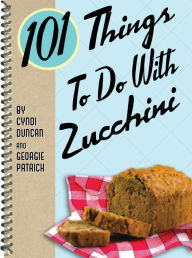
Thank goodness for this handy little book:

101 Things to Do with Zucchini

I’ve got a lot of zucchini recipes, but this book is definitely a welcome addition!  This week’s recipe is adapted from one I found in 101 Things To Do with Zucchini.

Mexican Zucchini Soup

Ingredients

  • 1 small chopped onion
  • 2 tsp butter
  • 28 – 32 oz. veg broth
  • 3 cups unpeeled chopped zucchini (peel it if it’s as big as our zucchini)
  • 1 1/2 cups frozen corn
  • 1 can hot Hatch chiles, chopped
  • salt and pepper to taste
  • 1 tblsp cumin
  • 1 1/2 cup milk
  • 3/4 cup grated pepper jack cheese
  • 1/4 cup sliced green onions for garnish

Instructions

  1. In a pan, saute the onion in butter until soft (2 or 3 minutes)
  2. Stir in broth, zucchini, corn, chiles, cumin, salt, and pepper.  Bring to a boil, then reduce to a simmer and cook until zucchini is tender.
  3. Add milk and heat the soup back up, but don’t boil it.
  4. Serve garnished with pepper jack cheese and green onions

Enjoy!

Thursday, July 9, 2015

Greenmomster’s official raptor

Since this is an environmental blog, I’ve decided that we need an official raptor, so the red-tailed hawk it is!  Take that New Hampshire!

Check out this video from Last Week Tonight!

sk30bday41

Monday, July 6, 2015

How much water does your quarter-pounder need?

Be sure to “like” greenmomster on Facebook!

So you take short showers and you just bought a high-efficiency washer – good for you!  These are important steps in water conservation.  But there’s an even bigger water user in your life – your diet!

CameraAwesomePhoto (46)

We’ve posted several times about the environmental advantages of “eating low on the food chain.”  Now you can add conserving water to the list of good things that come from eating less meat.  According to When the Rivers Run Dry by Fred Pearce,

“Get your head around a few of these numbers, if you can.  They are mind-boggling.  It takes between 250 and 650 gallons of water to grow a pound of rice.  That is more water than many households use in a week.  For just a bag of rice.  Keep going.  It takes 130 gallons to grow a pound of wheat and 65 gallons for a pound of potatoes.  And when you start feeding grain to livestock for animal products such as meat and milk, the numbers become yet more startling.  It takes 3000 gallons to grow the feed for enough cow to make a quarter-pound hamburger, and between 500 and 1000 gallons for that cow to fill its udders with a quart of milk.  Cheese?  That takes about 650 gallons for a pound of cheddar or brie or camembert.”

So what’s the take-home?

  1. Eat low on the food chain to reduce water use
  2. Avoid wasting food.  According to the World Food Day website:
      • “In the USA, 30-40% of the food supply is wasted, equaling more than 20 pounds of food per person per month”
      • “In the USA, organic waste is the second highest component of landfills, which are the largest source of methane emissions”
      • “Every year, consumers in industrialized countries waste almost as much food as the entire net food production of sub-Saharan Africa (222 million vs. 230 million tons)”

Here are some ideas from World Food Day:

Think. Be a smart shopper and think about what you are buying and when it will be eaten. Wasting food is often a subconscious act – become aware of how much food you throw away. Plan meals and use shopping lists. Bring your leftovers home from restaurants in reusable containers.

Eat. Become a more mindful eater.  Eyes bigger than your stomach? Request smaller portions and become a leftovers guru.

Save. Save your food, save your money and save the environment. Donate to food banks and become a conscious consumer.

If you want to read more about the Think.Eat.Save food waste campaign, follow this link and get involved!

Sources:

Pearce, F. 2006.  When the Rivers Run Dry.  Boston, MA:  Beacon Press.  324 pp.

World Food Day – October 16.  Food Waste:  The Facts.  nd.  5 July 2015.  <http://www.worldfooddayusa.org/food_waste_the_facts>

Wednesday, July 1, 2015

Species of the week–Giraffes!

Be sure to “like” greenmomster on Facebook!

One of my favorite memories from the zoo is feeding giraffes!  These huge animals, with their incredibly strong legs and large hooves (as big as dinner plates!), can be so gentle.  Feeding giraffes gives you an up-close look at these beautiful creatures – those 18-20 inch prehensile tongues (designed to work around the thorns of Acacia trees) are pretty impressive!

DSC_0098

DSC_0101

DSC_0108

Check out this video to see that prehensile tongue in action!  And did you know that giraffes have the same number of cervical vertebrae (neck bones) as humans – 7?

Here are some more fun facts about giraffes, provided by the Giraffe Conservation Foundation:

  1. Giraffe gestation is about 15 months!  The calves will nurse for 9-12 months, but they can also eat solid food after about 4 months.
  2. Giraffes are ruminants, like cows – they can get nutrients from the cellulose in plants.
  3. No two giraffes have the same coat pattern – they’re like our fingerprints!
  4. Although giraffes can live to 25 years in the wild (longer in captivity), life isn’t a walk in the park for them. 50% of calves don’t survive their first year, due to predation by lions, hyenas, leopards, and wild dogs
  5. Giraffes only have to drink every few days.
  6. Giraffes have the biggest hearts of any land mammal!

Unfortunately, the current conservation news about giraffes isn’t all rosy.  An article in Scientific American reported that populations of giraffes have decreased by 40% in just the last 15 years.  This decline hasn’t been publicized in the news as much as the loss of other big mammals (think African elephant).  The IUCN Giraffe and Okapi Specialist Group will be pulling together data in the next few years in order to quantify the giraffe’s status and make conservation recommendations.  Want to get involved?  Check out the Giraffe Conservation Foundation’s website for ways to help.

Sources:

Giraffe Conservation Foundation website.  Giraffe – the Facts. 2014. Web. July 1 2015 <http://www.giraffeconservation.org/giraffe_facts.php?pgid=40>

J. Platt. Giraffes under threat: Populations down 40% in just 15 years.  Scientific American.  November 24, 2014.  Web.  1 July 2015.  <http://blogs.scientificamerican.com/extinction-countdown/giraffes-under-threat-populations-down-40-percent-in-just-15-years/>