Sunday, August 18, 2013

Go West Greenmomsters–Part 3!

Next stop on our Utah adventure was Zion National Park!  This park, settled over the last 12,000 years by the Anasazi, the Paiute, and European settlers, is Utah’s first national park.  The scenery is very different from what we found at Bryce and the Red Canyon.Zion20   This park is filled with towering cliffs Zion10and slot canyons.  In order to avoid the traffic problems of the past, transport through the park is either on foot, by bike, or via shuttle bus.  Since the buses run very frequently, the driving restriction really isn’t inconvenient. 

We really enjoyed the hike to the Emerald Pools,zionemeraldpools2 as well as the challenging Angel’s Landing hike.  I was a little shocked by the danger of the last half mile of Angel’s Landing Zion7and much preferred the hike leading to a higher viewpoint overlooking Angel’s landing.    We also enjoyed an interesting introduction to all things condor at the top of the hike – that’s my daughter holding a condor feather.  Zion1Another great area of the park is Kolob canyon – undeveloped and stunning!  Although we didn’t hike it, we heard that the Narrows Trail is definitely worth the effort.  The high point of our visit to Zion was a half-day horseback ride through the park.  Cowboy Bob made our trip memorable! (photo credit:  Zion Rides)  zion rides 10 - Copy

Wednesday, August 14, 2013

The amazing shrinking lawn!

A recent study in Landscape and Urban Planning (reported on by the University of Washington), stated that smaller lawns use less water and save homeowners and cities significant funds through water conservation.  But what to do if you've already bought your house?  Consider transforming your lawn into native plant/butterfly gardens!  Want some ideas to get started?  Check out these ideas from an earlier post this summer.


Butterfly gardens are easy to plant and maintain, and they help to support pollinator populations (like butterflies, bees, and flies) in your local area.  You can design your butterfly garden to surround your home or lawn, thus removing grass that you’d have to mow – it’s a win-win!  Even if you don’t have much space, many butterfly nectar and larval plants can be grown in containers – there’s nothing holding you back!
Here’s a photo of one of our butterfly gardens – still plenty of room for a pick-up soccer game.
IMG_20130617_134355_320
When you plant a butterfly garden, remember that you’ll need to plant two different types of plants:  1) nectar plants that supply adult pollinators with nectar for energy, and 2) larval plants which pollinators eat when they’re larvae (many pollinators have specific larval plants and can only eat these particular plants when they are in the caterpillar stage – think monarchs and milkweed).    Here are a few examples of nectar and larval plants that grow well in the mid-Atlantic region:
Bee balm (red blooms), Joe-pye weed, lavender, and butterfly bush (but think twice on the butterfly bush, unless you’re good about dead-heading the flowers) are nectar plants that return each year – cost effective and easy to maintain!
IMG_20130617_134603_896  IMG_20130617_134404_633
Really, Joe-pye weed can be a busy gardener’s best friend!
IMG_20130617_134429_269
Coreopsis (yellow flower) and sedum are terrific nectar plants which bloom from early summer to late fall:
IMG_20130617_134449_704
Liatris (shown here before blooming into gorgeous purple spikes – see photo below for liatris in full bloom) is both a larval and nectar plant:
IMG_20130617_134529_385 
Planting goldenrod and yarrow provides pollinators with nectar from spring through fall, AND you almost never have to water these two plants:
IMG_20130617_134511_107
Bronze fennel is a great larval plant for the black swallowtail, but it spreads, so consider dill instead.
IMG_20130617_134458_098
Hops is a great larval plant for anglewing butterflies like commas and question marks – and if you’re really creative, I guess you could brew your own beer too!
IMG_20130617_134318_609
Don’t forget to plant milkweed to help the monarchs as they make their North American journey!
IMG_20130617_134415_336
Butterfly gardening is great for the environment, beautiful around your home, and saves time and money you could spend elsewhere on your home.  If you’d like to learn more, check out the National Wildlife Federation’s information page. 

bee on liatris

Sunday, August 11, 2013

Green Getaways -- Bull Island SC!

Hoping to fit in one more summer getaway?  Why not head to a beach that's a little less populated than the usual spots?  Here's a re-post from one of our favorite getaways in SC -- Bull Island!

I’m known in my family as “Julie McCoy the Cruise Director.”  I’m always looking for something fun and maybe a little unusual for our family trips.  Our latest trip to Bull Island SC did not disappoint!  Bull Island is a barrier island within the beautiful DSC_004962,000 acre Cape Romain National Wildlife refuge (a class 1 wilderness area).  

The only way to get to the island is by boat, and we took the Coastal Expeditions ferry to get there.  We boarded the ferry at 9 am and enjoyed a 30-minute ride through the pristine coastal estuary.  As we cruised along, our captain provided us with lots of interesting details regarding the plants and wildlife we were seeing.  We now know the difference between a whelk and a conch, thanks to our crew.  We can also identify a lightning whelk.  We got a great look at some oystercatchers.  Once we got to the island, we unloaded our bikes (no cars are allowed on the island) and began our adventure!

Now, I’m guessing that conditions change on the island during the year, but I’m going to write about conditions in August, the month we visited, after a relatively rainy spring.  A visit to Bull Island in August is not for the fainthearted.  You’ll need to bring several items with you to ensure a pleasant day:  bug repellent for your time in the interior of the island, LOTS of water, stronger bug repellent, sunscreen, “definitely not natural ingredients” bug repellent, a nice lunch to enjoy on the boneyard beach, bug repellent you can use in the Amazon, your camera for the stunning scenery, and 1 extra can of bug repellent.  Thus, if you can’t take a few bug bites, you shouldn’t visit Bull Island in August.
That said, if you’re the intrepid type, your toughness will DEFINITELY pay off.

After our ferry ride to the island, we biked from the dock side of the island to the beach.  Grassy bike paths are wide and well-maintained with only a few areas too sandy for biking.  Along the way, we were treated to a view of an alligator in the water along the trail!  Once we hit the beach, it was as if we owned our own private island.  My family and I walked for several hours, enjoying the sea breeze, playing in the water, and finding dozens of sea stars, whelks, and sand dollars.  At the north end of the beach, we discovered a beautiful “boneyard” of trees stranded in the surf – the perfect spot for a little lunch!  After lunch, three members of the family continued to walk on the beach, while my son and I decided to see if we could find more alligators in the interior of the island.  We enjoyed biking the wide trails (moving at a brisk pace to try to outrun the mosquitos) and saw a stunning buck as it bounded by us.

DSC_0071At the end of the day, we returned to the ferry with many stories of all we had experienced on Bull Island.  After our day on this beautiful barrier island, every other beach seemed incredibly crowded!  DSC_0115The crew of the ferry happily answered any questions we had about the things we’d seen on the island and continued to teach us new facts about horseshoe crabs, oysters, spartina, and even pluff mud! 

If you’re looking for a chance to see what the South Carolina coast looked like before the changes that humans bring, be sure to visit Bull Island!

Friday, August 9, 2013

Watermelon and Feta–a repost!

OK, I know this recipe sounds a little odd, but it’s really tasty!  It comes to us from our friends Howard and Trish – Howard’s my husband’s biking buddy and time-trial coach.  The recipe doesn’t have specific amounts, so just use your greenmomster kitchen skillsDSC_0072 and keep tasting as you cook.

Ingredients:
1 watermelon, cut into bite-sized chunks
1 sweet onion, sliced
about 1 cup crumbled feta cheese
about 1/4 cup balsamic vinegar

Instructions:
1)  Combine watermelon, onion, and cheese.
2)  Toss with balsamic vinegar and enjoy!

Tuesday, August 6, 2013

Go West Greenmomsters–Part 2!

Enjoy reading about green getaways and other green issues?  Be sure to "Like" greenmomster on Facebook!

In the Dixie National Forest in Utah, we found a gem called the Red Canyon.  The area is accessible by car, bike, or foot.  We found several easy hikes around the canyon that led to beautiful views of red cliffs and hoodoos.  Additionally, the friendly folks at the visitor’s center were more than willing to help us learn about the canyon and its wildlife.  Words don’t really do this place justice, so take a look at some of the incredible beauty we found.
redcanyon16  redcanyon11 redcanyon2    redcanyon6  redcanyon8

Friday, August 2, 2013

I can’t believe I ate the whole thing….

This quote from an old Alka Seltzer commercial is what I was thinking when I tried today’s meat-free Friday concoction.  IMG_20130728_134118_071Diane’s Dad’s Summer Sandwich won the NPR taste of summer contest, and it’s my choice for tonight’s dinner.  So weird, yet so tasty.  Here’s how you make it:

  • toast two slices of any bread you like
  • layer the following IN ORDER onto the bread, starting at the bottom
    • crunchy peanut butter
    • a slice of vidalia onion
    • cucumber slices
    • tomato slices
    • a slice of white cheddar cheese

Now that’s a tasty sandwich!

Thursday, August 1, 2013

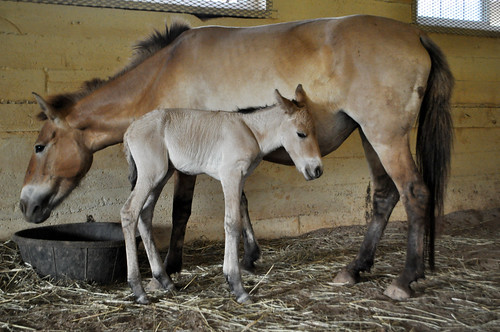
Przewalski’s Horse update!

Przewalski’s horse fillyBig news for Przewalski’s horse conservation (photo from the National Zoo website) – the National Zoo just announced the birth of the first foal born via artificial insemination!  These wild horses are found in Mongolia, Kazahkstan, and China, as well as in captive breeding programs.  Want to learn more?  Check out our earlier post on these beautiful horses.