Now there's something more I can try -- I can go garamond! It turns out that some fonts use less ink than others, saving significant ink and money in the long run. I think I'm going to mention this item to the next meeting of the high school's environmental club!
Showing posts with label reduce. Show all posts
Showing posts with label reduce. Show all posts
Monday, October 8, 2018
Go Garamond!
I print a lot. Unfortunately, my job as a teacher requires printing various materials for my students, because not all of my students have access to a computer outside of school. So I always print double-sided, and I try to recycling as much as possible. Not the best solution, but the best I can do....
Now there's something more I can try -- I can go garamond! It turns out that some fonts use less ink than others, saving significant ink and money in the long run. I think I'm going to mention this item to the next meeting of the high school's environmental club!
Now there's something more I can try -- I can go garamond! It turns out that some fonts use less ink than others, saving significant ink and money in the long run. I think I'm going to mention this item to the next meeting of the high school's environmental club!

Sunday, September 9, 2018
Food for Thought on a Sunday

Wednesday, November 11, 2015
More Island Getaways
Be sure to “like” Greenmomster on Facebook!
In keeping with last week’s post on island getaways, this week let’s take a look at trash islands!
In both the Atlantic and Pacific we see HUGE islands or patches of garbage made up of small pieces of plastic and other waste. The patches in the Pacific can be as big as the state of Texas! Where does all this garbage come from? The vast majority (80%) comes from land – it’s blown off beaches, washes through storm drains, or washes into rivers and streams. The rest comes from cruise ships and cargo ships. Be sure to watch this Discovery video to see what a garbage patch/island looks like.

How can you help? There’s not a practical way to clean up these islands, yet. Our best action is prevention:
- Never litter or throw trash into a storm drain
- Recycle whenever possible. Yes, there is some dispute about the effectiveness of some methods of collecting and recycling plastic, but one thing’s for sure – recycled plastic doesn’t create trash islands
- Reduce and reuse! The more trash you can keep out of the waste stream, the less chance of it ending up in the ocean!
What you do on the land affects our oceans!

Source: Miller, G.T. and S.E. Spoolman. 2015. Living in the Environment, Eighteenth Edition. Stamford CT, Cengage Learning. pg. 560.
Tuesday, February 3, 2015
Plastic, plastic everywhere
Want to keep up on the latest environmental news? Be sure to “Like” greenmomster on Facebook!
Have you ever lamented the numerous plastic baggies that end up in the trash at your house? Just one brown bag lunch can produce 2 or 3 dirty baggies that end up in the trash. What’s a greenmomster to do? You can’t really switch everything to washable glass or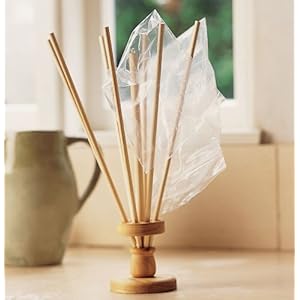 plastic containers; they could break and they take up too much space in the lunch box. Why not try washing out those plastic baggies and reusing them? I’ve been using this cool baggie drying rack for quite some time and it really comes in handy. I just wash the baggies out like I would dishes, and they can be used many times before they wear out. Check out amazon.com to find several manufacturers of the baggie drying racks.
My husband says the fact that I use this drying rack proves that I’m either crazy,or cheap, or both (he says this in the most loving way…), but I say that the simple fact that these racks exist proves that there are a lot of greenmomsters out there!
Mother Nature News recently issued 16 more ways for you to reduce your plastic consumption – check them out! (photo from Mother Nature News)

Interested in a substitution for those produce bags mentioned by Mother Nature News? Check out Marna’s easy solution!
![[clip_image001%255B26%255D%255B4%255D.jpg]](https://blogger.googleusercontent.com/img/b/R29vZ2xl/AVvXsEhfWec6y6XT4a7-BPBrRGrkERpD3riTuk5LxDHcGy9I5rFbbr5gs6XLBWHS-eSZq-fj_lOSV5wet2Tu7qSdsA8wOR26fgWGZpfJGPOqkwvODhYZGFKTsw_5HOWYfIoHu_m_BA1dIyy7a59J/s1600/clip_image001%25255B26%25255D%25255B4%25255D.jpg)
Tuesday, September 2, 2014
A letter from college!
A friend of mine from back in my days at William and Mary recently dropped me a line about a very green (in more than one way) university – the University of Vermont. Marna Ashburn provided guest posts (reuseable fruit bags and 3 for 1 meat-free Friday) here in the past, and she now updates us on how green our students can be! Be sure to check out her blog too!
Dear Desiree,

You look through life with the lens of a scientist, while I look through the lens of a writer, so it’s only appropriate that I start by talking about the use of strategic language at the university. In the large tent where we ate our meals, they had three receptacles for clean up. “Compost” was where we placed our leftover food, cups, and plates (we used compostable plates and cups rather than Styrofoam). The second was “Recycle” where the plastic flatware and napkins went. The third one, interestingly, was not labeled “Trash” but “Landfill,” an in-your-face reminder of the end state of its contents. Needless to say, we were loathe to put anything in there. 
The academic buildings and residence halls have a similar three-tier waste system. On every floor-- usually in just one location to manage critters--they have a compost container. The food scraps then get turned into compost at Green Mountain Compost facility and distributed to local farms, many of whom provide food to the university, so it's a nice circle of sustainability. I also noticed many Tech Dropoff locations where you can recycle items like burned-out light bulbs, dead batteries, and CDs. It’s nice to have them so accessible because I often carry a bag of “tech trash” in my car for weeks until I find an appropriate transfer point.
Dining Services at UVM offer only “trayless dining.” The students carry a plate in one hand and a drink in the other to their tables. This technique reduces food waste by over 40% and eliminates the need to clean trays in the dishwasher, saving water. If, like my son, you're still hungry after the first plateful, you can always go back for seconds or thirds.
Every week, the dining halls feature Meatless Mondays where they offer a vegetarian entree at a reduced price to encourage students to eat meat-free. The university has also signed on to the Real Food Challenge which is designed to increase the procurement of food that is local, ecologically sound, fair trade, or humane. To this end, they have partnerships with many of the local farms, producers, and orchards.
Bottled water is verboten at UVM, so none of the vending machines or retail outlets sell it. Instead, they offer refilling stations at water fountains and encourage students and faculty to bring their own reusable bottles. This change was introduced by students who advocated for a more sustainable beverage system on campus. (Read the full story here http://www.uvm.edu/~uvmpr/?Page=news&storyID=13129) 
UVM is definitely bike-friendly and prominent bike racks are part of the infrastructure. There's also a bike share program where you can borrow designated bikes at the bright yellow hubs around campus. The program is free for the first four hours, with a minimal fee after that. All you have to do is register and sign a waiver. Also, to encourage bicycle commuting, there are showers conveniently located in the student union. 
While there’s a bus system powered by natural gas, it’s definitely a walking campus. As Steve says, “Everywhere you look, there’s a beautiful view—mountains, valley, lake. Why would you want to miss it?”
I’m so happy that the habits he learned while growing up are reinforced on a macro-scale now. His education includes daily reminders to tread lightly on the earth, and I’m certain these lessons will be second nature to him beyond the college years.
My Best,
Marna
Marna Ashburn is the author of three books about military family life, available at HouseholdBaggage.com. She also blogs about language and culture at TheHangingIndent.com
Monday, June 23, 2014
Carpets, dogs, and recycling
This greenmomster is updating her living room this summer – yippee! One of the items we’ll be updating is the rug – thanks to three dogs and three kids, it’s a little (ok, a lot) worn. Here’s one of my dogs showing off the hole one of the other dogs (as she explained it….) dug in the carpet under the couch. 
Wednesday, March 5, 2014
No more dryer sheets!
I f you’ve been wishing you could get rid of all those dryer sheets, but you absolutely hate static in your clothes, here’s a neat product to try. I tested out the Method dryer-activated fabric softener and it works like a charm! A few spritzes into the clothes in the dryer and no more static – yay! Method is a company that tries to go a little greener with its cleaning products. I have good luck with many of the products, but was especially pleased with this fabric softener. Greenmomster’s disclaimer: I received zip, nada, zilch for this endorsement. I just liked the product and thought you might want to remove a few dryer sheets from the planet.
Be sure to "Like" greenmomster on Facebook for lots of great green info!
f you’ve been wishing you could get rid of all those dryer sheets, but you absolutely hate static in your clothes, here’s a neat product to try. I tested out the Method dryer-activated fabric softener and it works like a charm! A few spritzes into the clothes in the dryer and no more static – yay! Method is a company that tries to go a little greener with its cleaning products. I have good luck with many of the products, but was especially pleased with this fabric softener. Greenmomster’s disclaimer: I received zip, nada, zilch for this endorsement. I just liked the product and thought you might want to remove a few dryer sheets from the planet.Be sure to "Like" greenmomster on Facebook for lots of great green info!
Monday, December 23, 2013
To shop or not to shop, that is the question

- the distance travelled by delivery trucks was shorter than the total of individual trips delivering the same groceries
- despite the fact that delivery trucks are less fuel efficient than cars, because of the trip consolidation, delivery trucks still emitted less greenhouse gas for the same amount of groceries
- delivery companies could reduce greenhouse gases by up to 95% when compared to individual cars, if they grouped deliveries (rather than allowing customers to choose delivery date and time)
- even shoppers in rural areas cut greenhouse gases by using these services
Truth be told, I really don’t like grocery shopping, so I’ve tried the grocery delivery trucks. I didn’t like the system, not one little bit. The company I used never delivered on time, left me waiting for literally hours beyond the delivery time (and yes, I had to be home), and delivered using at least 20 plastic bags per trip. Since I live within a mile of several grocery stores, it would take a lot to get me to try delivery again. But, as I said in the info page of this blog, there are different methods of reducing one’s environmental footprint – the key is choosing what works for you. Perhaps this type of service would be a green alternative for other greenmomsters. For those greenmomsters wanting to give this method of grocery shopping a try, it may really pay off environmentally! See if they’ll let you return bags for reuse to make the service really green!
Source:
Tyler, D. 2013. “How Green is Grocery Delivery?” in Conservation, Fall 2013. p. 7. from original journal article: Wygonik, E. And A. Goodchild. 2012. Journal of the Transportation Research Forum 51(2): 111-126.
Saturday, October 27, 2012
Got Pucks? The NHL is going green!
 I’m a greenmomster, but I’m also a hockey mom. Often, as I’m standing next to a rink, freezing my toes off, my mind wanders to the amount of energy used to freeze the rink, the gas needed to run the zambonis, and the landfill space needed to dispose of everyone’s garbage. It seems that someone at the NHL has been wondering the same thing. They’ve formed a partnership with the Natural Resources Defense Council (NRDC) to make hockey a more sustainable enterprise. The league seems to be very focused on reduce, reuse, and recycle – definitely a step in the right direction. There’s also the Gallons for Goals project. As stated in their green platform, many NHL players learned to skate on outdoor rinks and ponds, and these frozen areas are becoming less common. Hockey depends on cold weather, so the NHL is getting involved. Check out their NHL Green website and NHL Green blog.
So what about the other popular, albeit less exciting, professional and college sports? Well the NRDC has discovered that professional sports can have a major impact on the environment and environmental attitudes of sports fans. As the NRDC states on their sports website, “The benefits for both professional and college sports leagues are robust, from saving thousands of dollars on energy, waste, and water bills to creating new sponsorship opportunities and enhancing brand value with corporate social responsibility--not to mention the environmental benefits.” NRDC provides greening advisors to all teams in professional baseball, basketball, hockey, soccer, and tennis. NRDC provides energy, waste, and water efficiency audits for stadiums and arenas, resulting in significant cost and energy savings. An example from NRDC’s blog: “Since first partnering with NRDC in 2008, each year the US Open has recycled 18,000 tennis ball cans and replaced 2.4 million virgin fiber-based napkins with 90% post-consumer recycled content napkins, along with many other initiatives.” Not too shabby!
OK, since my son also has a mean backhand, here’s the USTA’s plug for green sports:
So hockey, soccer, tennis, and baseball greenmomsters, there is hope! We can have sustainability and sports too! Want more information? Read Game Changer, How the Sports Industry is Saving the Environment from NRDC.
Be sure to “like” greenmomster on facebook to get all the latest updates!
Sources:
National Hockey League. 2012. http://www.nhl.com/ice/eventhome.htm?location=/nhlgreen. ND. Accessed 10/23/2012.
Natural Resources Defense Council. 2012. http://www.nrdc.org/greenbusiness/guides/sports/default.asp. ND. Accessed 10/23/2012.
NRDC is the nation's most effective environmental action organization. NRDC uses law, science, and the support of 1.3 million members and online activists to protect the planet's wildlife and wild places and to ensure a safe and healthy environment for all living things. NRDC's website provides a wealth of environmental information as well as state-of-the-art online activism tools.
Saturday, June 2, 2012
Greening those Plastic Baggies!
Have you ever lamented the numerous plastic baggies that end up in the trash at your house? Just one brown bag lunch can produce 2 or 3 dirty baggies that end up in the trash. What’s a greenmomster to do? You can’t really switch everything to washable glass or plastic containers; they could break and they take up too much space in the lunch box. Why not try washing out those plastic baggies and reusing them? I’ve been using this cool baggie drying rack for quite some time and it really comes in handy. I just wash the baggies out like I would dishes, and they can be used many times before they wear out. Check out amazon.com to find several manufacturers of the baggie drying racks.
My husband says the fact that I use this drying rack proves that I’m either crazy,or cheap, or both (he says this in the most loving way…), but I say that the simple fact that these racks exist proves that there are a lot of greenmomsters out there!
plastic containers; they could break and they take up too much space in the lunch box. Why not try washing out those plastic baggies and reusing them? I’ve been using this cool baggie drying rack for quite some time and it really comes in handy. I just wash the baggies out like I would dishes, and they can be used many times before they wear out. Check out amazon.com to find several manufacturers of the baggie drying racks.My husband says the fact that I use this drying rack proves that I’m either crazy,or cheap, or both (he says this in the most loving way…), but I say that the simple fact that these racks exist proves that there are a lot of greenmomsters out there!
Saturday, April 21, 2012
Guest Blogger–Marna Ashburn Krajeski!
Happy Earth Day! Today we’ve got a guest blogger with a great idea – reuseable produce bags! This is a terrific idea, because I often find myself at the grocery store trying to balance one dozen apples on the checkout conveyer belt and annoying the checker who’s helping me. No more wet puddles on the conveyor belt because I didn’t use a plastic bag for the lettuce! Many thanks to our guest blogger, Marna Ashburn Krajeski – fellow W&M alum and writer extraordinaire! Marna Ashburn Krajeski lives and writes in Rhode Island, where she and her two teenagers enjoy sailing, kayaking, and surfing. She’s the author of three books for military families and blogs at www.HouseholdBaggage.com and www.TheHangingIndent.com.

![clip_image001[5]](https://blogger.googleusercontent.com/img/b/R29vZ2xl/AVvXsEgvHAyvPBwiaQIw2n5UE5O4TfG-biMcyZg6jYRRc2YymPyHHMiX-vrw1qO4zOym8_4EB7R6dmSbd7m2-0mwilPEjX-0UyYL7QGs2RYVTypoVti3HA4iRljdKE6mrpibrRZ_cjd3JPVb5cce/s1600-h/clip_image001%25255B5%25255D%25255B7%25255D.jpg "clip_image001[5]")
![clip_image001[7]](https://blogger.googleusercontent.com/img/b/R29vZ2xl/AVvXsEjS9eJ_4S3hWzivcC8ZhNuCkfRx0DC5HKFirdquY2gzRCvK97hIMLN0t2iajM3YAhaZN8rA2XRyfetJEiv6596noFXm0fDHfTmle6nPPL77VVBLSX0T4vNL1o5M1bmGCOKGlsqEqSMX796T/s1600-h/clip_image001%25255B7%25255D%25255B4%25255D.jpg "clip_image001[7]")
![clip_image001[10]](https://blogger.googleusercontent.com/img/b/R29vZ2xl/AVvXsEgBSyc3BtT64w5U5RrQg5rDi9dq6AlrbVcKARGCImQKwOY2yRQNCeovrGoJ2zBckAVMZ8uLNNrIoxBuj46Y4pe6Rqt0sWbAl7jX7IKY9TnijYb7kMHcfTFwsZjFC3l9Nld7u4iI5Ei2QdBH/s1600-h/clip_image001%25255B10%25255D%25255B6%25255D.jpg "clip_image001[10]")
![clip_image001[12]](https://blogger.googleusercontent.com/img/b/R29vZ2xl/AVvXsEg_NOoIqoYEToqjn_cbJEtz_pcBqsePGNa5wO0xhMA9edbjx_pKkq05UmSSdlN2vdi9ZQAp-dhOxHKi-2XgO4MjT9xcgy5l-ya2puQJKgkTX1leoxNX-VtL_KZMGLs1LIhcl4RlVStA-oSs/s1600-h/clip_image001%25255B12%25255D%25255B5%25255D.jpg "clip_image001[12]")
![clip_image001[14]](https://blogger.googleusercontent.com/img/b/R29vZ2xl/AVvXsEjEkl1N0XMS6JKIVh4G5qeXx_ZK7CyitxEKLNMU4sVC2Ku5xqME1zPsd576mZitkb1tau4UWDp8mAaz6tBPH66Ni93HDDLe8S6Qk_rmQZBacBDG-Rqt8aSlWCPZMfxQffLIhs57Z9cISXeR/s1600-h/clip_image001%25255B14%25255D%25255B7%25255D.jpg "clip_image001[14]")
![clip_image001[16]](https://blogger.googleusercontent.com/img/b/R29vZ2xl/AVvXsEjycQ9RmLZK5P_vyrAGAvY54uAfRv8DeBZ3xAHTPSxSVxb_Yg8sGx6VTsZezhlGwO-XQyvXpOf8_zmavbm3v2GOitVwwoisUpGbecy-W5G8qERd1c172_BHjq00mn9nWFvhh53pGOHt-Kbr/s1600-h/clip_image001%25255B16%25255D%25255B5%25255D.jpg "clip_image001[16]")
![clip_image001[18]](https://blogger.googleusercontent.com/img/b/R29vZ2xl/AVvXsEgs0fabZlP_m6vHhJFXLCOyBHSV2ARD4E21ZAteZ3VwxIdXsJIOgj-rpe3q__uaDdGrpFHwATPuzxf4RxbknrkwxZkTMyH-nCX_CoAY-uk_9YgbQ3G9SbiN9Ino1PBdJQl50Z7sSZPf6-lP/s1600-h/clip_image001%25255B18%25255D%25255B6%25255D.jpg "clip_image001[18]")
![clip_image001[20]](https://blogger.googleusercontent.com/img/b/R29vZ2xl/AVvXsEiIFHZEFgck8JJ4RsOZetmzgToA2q6j-6dNm0Dt2u6MidKTYmBHegiCfwQiYgCgplaatWDp9_Gc_MApQ-X_zALdedExpZ8s3pPDdFDoSJ94Z0209SJKEBacvPemi39nVo1nU7aWc83YSFR_/s1600-h/clip_image001%25255B20%25255D%25255B5%25255D.jpg "clip_image001[20]")
![clip_image001[22]](https://blogger.googleusercontent.com/img/b/R29vZ2xl/AVvXsEilcW8sQjQkGkfwhvzen8BFuH1Jo0A-eowHW7ee6O0v-_6lY6ZT2rDj_ujCfxNgPFaUxPqT7nP-G30HF6inTcKrEsfsVLHHM4-Vp7Nhty3g5IF-x_k4ghSFJpMe8X5wR4riMmxCJRSuXEUg/s1600-h/clip_image001%25255B22%25255D%25255B4%25255D.jpg "clip_image001[22]")
![clip_image001[24]](https://blogger.googleusercontent.com/img/b/R29vZ2xl/AVvXsEiDzRHy63HGghRaHeyExkkBZdBIyAw4w_fPfYcRmMGwc_eAmwA27zEbyDqaHsKqAEzKgleSNUFowmjpa0KnyKQMbTCgsx-0eIIeLITahItO4RVb2tF6HWT0YKCoIFJSzDgpzD1Q4JKIPTGV/s1600-h/clip_image001%25255B24%25255D%25255B4%25255D.jpg "clip_image001[24]")
![clip_image001[26]](https://blogger.googleusercontent.com/img/b/R29vZ2xl/AVvXsEhfWec6y6XT4a7-BPBrRGrkERpD3riTuk5LxDHcGy9I5rFbbr5gs6XLBWHS-eSZq-fj_lOSV5wet2Tu7qSdsA8wOR26fgWGZpfJGPOqkwvODhYZGFKTsw_5HOWYfIoHu_m_BA1dIyy7a59J/s1600-h/clip_image001%25255B26%25255D%25255B4%25255D.jpg "clip_image001[26]")
![clip_image001[28]](https://blogger.googleusercontent.com/img/b/R29vZ2xl/AVvXsEjBQVDzWR4Lwj-1bnyLq8FoIrKhVCv7YEDlFATJtHKn9OMq2V96ov6PDh6peH6jL_gR_SP7fdGGJ0uo36JXiWF21rjqvYpSRPeXCGyV3dHxrnSBIL_gI7niJiMjSQJd1ZNSf_v2FT2wTIEw/s1600-h/clip_image001%25255B28%25255D%25255B6%25255D.jpg "clip_image001[28]")
Monday, March 5, 2012
Update on "reduce, reuse, recycle"

Anyone else have ideas for items to rent?
Saturday, March 3, 2012
Thinking about the Lorax
Being the best Greenmomster in the whole, wide world, I took my kids out to dinner and The Lorax movie on the day it opened (check out the kid’s page with enviro-tips and activities). Based on my movie preferences, I knew I’d like it – it’s less than 90 minutes and has talking animals (see my earlier movie reviews). The movie expands on the book, The Lorax, by Dr. Seuss. Since the book is relatively short, the movie makers added a future to the story – we find out who received the truffula seed, why he received it, and what he did with it. The movie’s got it all, environmental message, budding romance, and the obligatory chase scene. It’s even got a few musical numbers! I would’ve liked to hear a bit more of Seuss’ poetry in the movie, but all in all, I liked this flick.
As I was watching The Lorax, the old phrase “reduce, reuse, recycle” came to mind. At one point, one of the characters, the Once-ler, did a musical number about his invention, the Thneed. Totally forgetting the “reduce, reuse, recycle” ethos, the Once-ler produces thousands of Thneeds. What’s a Thneed? According to the original book, “A Thneed’s a Fine-Something-That-All-People-Need! It’s a shirt. It’s a sock. It’s a glove. It’s a hat. But it has other uses. Yes, far beyond that. You can use it for carpets. For pillows! For sheets! Or curtains! Or covers for bicycles seats!” Yes, the Once-ler was convinced that he was making something that people needed and wanted. And the movie shows thousands of people clamoring for this invention, convinced that they needed it.
But then my son made an interesting observation. He noticed that no one was wearing or using a Thneed later in the movie. Obviously, this thing that everyone HAD to have, wasn’t really so necessary. This one little point from the movie got me thinking about all the things that we HAVE to have; all of the things we use precious natural resources to produce that end up in a closet, garage, or landfill somewhere. How many times have we replaced a phone, to get a newer, smarter one? How many times have we thrown away food that rotted before we got around to eating it? Got the latest exercise equipment gathering dust in your basement? What about taking an unnecessary bag at the store? Ever grabbed too many mustard packets at a restaurant (to avoid having to get up and get more), and then thrown them away at the end of the meal? It’s the “reduce” portion of the pollution prevention puzzle that’s the most important, but also seems to be the most difficult to achieve. Take a quick look at many of the “environmental” websites and blogs out there – how many are simply selling “green” products? Rather than reducing the constant consumption that affects our environment, we fool ourselves into thinking that “green” consumption is somehow innocuous. It may be better than other consumption, but even “green” consumption is consumption.
So should we simply stop buying stuff? I think we all know that’s not an option for most of us. We all need food, clothing, housing, and some of the fun stuff too (I personally enjoy printing my photographs and wearing decent running shoes). What we need to do is become more conscious of our decisions, trying to focus heavily on the “reduce” part of pollution prevention. When you do want to make a purchase, think twice. You’re not just deciding whether you can afford it, but deciding whether the planet can afford it – are you using resources wisely? For my fellow greenmomsters, I know this is a tricky time in life to reduce. I recently saw a photo project of Swedish students posing for photos with all of their belongings made into a sculpture. Who doesn’t remember the days when we could fit everything we owned into the back of a station wagon? Back then, “reduce” was a pretty easy goal – just one person to fend for, a relatively low starting salary, roommates from whom we could borrow what we needed. But now that we’re greenmomsters, the stuff really can pile up. The key for us is being conscious of our decisions. Resources that we choose to use now, may not be available for our kids later.
At this point, I hear my other son saying, “But Mom, if we don’t use the resources, then someone else will. What can one person’s decisions really do?” At that point, I head back to the wisdom of The Lorax – “UNLESS someone like you cares a whole awful lot, nothing is going to get better. It’s not.”
talking animals (see my earlier movie reviews). The movie expands on the book, The Lorax, by Dr. Seuss. Since the book is relatively short, the movie makers added a future to the story – we find out who received the truffula seed, why he received it, and what he did with it. The movie’s got it all, environmental message, budding romance, and the obligatory chase scene. It’s even got a few musical numbers! I would’ve liked to hear a bit more of Seuss’ poetry in the movie, but all in all, I liked this flick. As I was watching The Lorax, the old phrase “reduce, reuse, recycle” came to mind. At one point, one of the characters, the Once-ler, did a musical number about his invention, the Thneed. Totally forgetting the “reduce, reuse, recycle” ethos, the Once-ler produces thousands of Thneeds. What’s a Thneed? According to the original book, “A Thneed’s a Fine-Something-That-All-People-Need! It’s a shirt. It’s a sock. It’s a glove. It’s a hat. But it has other uses. Yes, far beyond that. You can use it for carpets. For pillows! For sheets! Or curtains! Or covers for bicycles seats!” Yes, the Once-ler was convinced that he was making something that people needed and wanted. And the movie shows thousands of people clamoring for this invention, convinced that they needed it.
But then my son made an interesting observation. He noticed that no one was wearing or using a Thneed later in the movie. Obviously, this thing that everyone HAD to have, wasn’t really so necessary. This one little point from the movie got me thinking about all the things that we HAVE to have; all of the things we use precious natural resources to produce that end up in a closet, garage, or landfill somewhere. How many times have we replaced a phone, to get a newer, smarter one? How many times have we thrown away food that rotted before we got around to eating it? Got the latest exercise equipment gathering dust in your basement? What about taking an unnecessary bag at the store? Ever grabbed too many mustard packets at a restaurant (to avoid having to get up and get more), and then thrown them away at the end of the meal? It’s the “reduce” portion of the pollution prevention puzzle that’s the most important, but also seems to be the most difficult to achieve. Take a quick look at many of the “environmental” websites and blogs out there – how many are simply selling “green” products? Rather than reducing the constant consumption that affects our environment, we fool ourselves into thinking that “green” consumption is somehow innocuous. It may be better than other consumption, but even “green” consumption is consumption.
So should we simply stop buying stuff? I think we all know that’s not an option for most of us. We all need food, clothing, housing, and some of the fun stuff too (I personally enjoy printing my photographs and wearing decent running shoes). What we need to do is become more conscious of our decisions, trying to focus heavily on the “reduce” part of pollution prevention. When you do want to make a purchase, think twice. You’re not just deciding whether you can afford it, but deciding whether the planet can afford it – are you using resources wisely? For my fellow greenmomsters, I know this is a tricky time in life to reduce. I recently saw a photo project of Swedish students posing for photos with all of their belongings made into a sculpture. Who doesn’t remember the days when we could fit everything we owned into the back of a station wagon? Back then, “reduce” was a pretty easy goal – just one person to fend for, a relatively low starting salary, roommates from whom we could borrow what we needed. But now that we’re greenmomsters, the stuff really can pile up. The key for us is being conscious of our decisions. Resources that we choose to use now, may not be available for our kids later.
At this point, I hear my other son saying, “But Mom, if we don’t use the resources, then someone else will. What can one person’s decisions really do?” At that point, I head back to the wisdom of The Lorax – “UNLESS someone like you cares a whole awful lot, nothing is going to get better. It’s not.”
Subscribe to:
Posts (Atom)