Showing posts with label fossil fuels. Show all posts

Monday, February 5, 2018

Mammal Monday -- 10 fun polar bear facts!

I watched a few political talk shows yesterday, listening as the Republican pundits encouraged us to pay attention to the administration's accomplishments.  I agree completely!  One of this administration's "accomplishments" is the opening of public lands to oil and gas exploration via "streamlining" of permitting processes, including the reduction of time that the U.S. taxpayers have to comment on finalized leases.  Another accomplishment is the opening of the Arctic National Wildlife Refuge to oil and gas drilling to pay for the tax reform.  And we should definitely remember the accomplishment of pulling the U.S. out of the Paris Climate accords.  For today's Mammal Monday, let's take a look at a repost about a species that will be affected by the current administration's accomplishments -- the polar bear!

It’s winter, so let’s look at the polar bear (Ursus maritimus)(photo from http://worldwildlife.org/species/polar-bear).   Here are 10 things to know about polar bears:
  1. These powerful symbols of the arctic weigh between 500 and 1000 lbs (and even up to 1400 lbs!),
  2. Polar bears feed primarily on ringed seals (U.S. FWS 2009).
  3. Polar bears are extremely strong swimmers
  4. Polar bears can live from 25 to 30 years in the Polar Bear Familywild. 
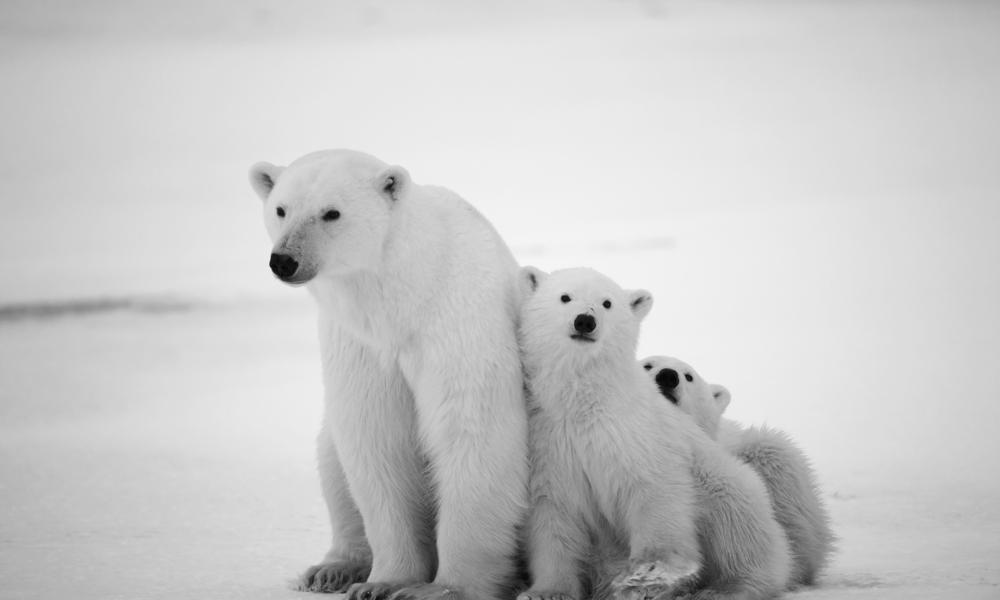
  5. To live in the harsh arctic climate, they have evolved several different adaptations to stay warm – they’ve got a thick layer of blubber and are covered in a thick layer of insulating fur.  Although the fur is white (providing camouflage in their white, icy environment), the skin underneath is actually black, allowing it to absorb the sun’s rays.  Even the soles of the polar bear’s feet are covered in fur (National Geographic ND).
  6. At around 3-5 years of age, polar bears are ready to reproduce (U.S. FWS 2009).  Females dig dens in the arctic ice and give birth during the winter, usually to twins. 
  7. Polar bear cubs stay with their mothers for over two years, in order to learn survival skills.  All parental care is given by the female; in fact, the females must protect the young from the males who have been known to kill the cubs (National Geographic ND).
  8. The polar bear population is currently estimated at 20,000-25,000 (U.S. FWS 2009).
  9. Polar bears are listed under the Endangered Species Act as threatened (U.S. FWS 2013) and listed on Appendix II of CITES, with primary threats to the population being the loss of sea ice, due to climate change.  Several international agreements are in place to try to protect the polar bear and its habitat.
  10. Canada is the only nation with polar bears that currently allows sports hunting of this species (Washington Post 2013). 
Why should we care about the polar bear?  As stated on the World Wildlife Federation’s website:  “Polar bears are at the top of the food chain and have an important role in the overall health of the marine environment. Over thousands of years, polar bears have also been an important part of the cultures and economies of Arctic peoples. Polar bears depend on sea ice for their existence and are directly impacted by climate change—serving as important indicator species.”   To learn more about the polar bear and what you can do to help, be sure to visit:  http://worldwildlife.org/species/polar-bear
Sources:
Eilperin, J.. 2013. “U.S. Proposal to Protect Polar Bears Fails.” Washington Post, March 8, 2013.
National Geographic.  ND.  “Polar Bear Ursus maritimus”  Accessed online 3/8/2013. http://animals.nationalgeographic.com/animals/mammals/polar-bear/
U.S. Fish and Wildlife Service.  2013.  “Species Profile.  Polar Bear (Ursus Maritimus)”  Last updated 3/8/2013.  Accessed online 3/8/2012.  http://ecos.fws.gov/speciesProfile/profile/speciesProfile.action?spcode=A0IJ
U.S. Fish and Wildlife Service. 2009.  “Polar Bear Ursus maritimus”  Last updated October 2009.  Accessed online 3/8/2013.  http://www.fws.gov/endangered/esa-library/pdf/polar_bear.pdf
World Wildlife Fund.  2013.  “Polar Bear”  Accessed online 3/8/2013. http://worldwildlife.org/species/polar-bear

Tuesday, December 5, 2017

Pipeline palooza!


This week and next, the VA Water Control Board is conducting its final review of the Mountain Valley Pipeline and the Atlantic Coast Pipeline, which transport natural gas from WV through VA and into NC.  While many experts agree that natural gas can serve as a "bridge fuel" as we move our economy toward reliance on renewable energy sources, there is much disagreement about the need for these two pipelines, their safety, and the effects on ratepayer fees and development of renewable energy sources in Virginia.  It's always good to take a look at what both sides are saying, so here's the rundown:

First, let's take a look at the procedure that DEQ has used for review of the project, with regard to water resources.

Next, let's review Dominion Power's Atlantic Coast Pipeline Factbook -- the main arguments are that the pipeline provides cleaner energy and lower costs.

Finally we'll look at the information that is presented by citizen groups, namely that the building of natural gas pipelines through Virginia will stall development of renewable energy sources, endanger water resources (think possible spills), destroy private and public lands including the George Washington National Forest , and raise energy prices for Virginians.  Here are summaries from the Sierra Club, and Wild Virginia.

Where do I come down on this issue? Although I understand the need for "bridge fuels", I also feel that we need to keep our eye on the ball -- 100% renewable energy should be our goal.  We should not be investing in infrastructure that will delay implementation of that goal.  Additionally, I'm not convinced that Virginia needs these pipelines -- Dominion has already stated that the two new natural gas generating stations in southern VA can be serviced by existing pipelines for the foreseeable future.  Combine these concerns with the possible environmental impacts outlined in the project's Final Environmental Impact Statement (FEIS), and we have two projects that the VA Water Control Board should not approve.


.

Wednesday, November 15, 2017

Drilling in ANWR -- raising its ugly head again

This week, Senate Energy and Natural Resources Committee Chairman LIsa Murkowski (AK -- R), introduced a bill that would open the Arctic National Wildlife Refuge (ANWR) to oil and gas drilling.  There are so many reasons that this legislation is a lousy idea:

  • ANWR is considered by many "the Serengeti of the Arctic", where large herds of herbivores roam, similar in size to those found in Africa
  • we don't need to be drilling for more fossil fuels; we need to develop renewable energy sources (not an easy goal, so everyone needs to be on board -- I'll post about that later)
  • we're exploiting our valuable natural environment to pay for the proposed tax cuts -- the ones that will make businesses and the rich richer
Just when we thought ANWR was off the table (it's been off the table for at least 20 years), here they come again.  Be sure to contact your Senator to tell them that this legislation is a step backward.  And now let's take a look at a re-post of a species that will be negatively impacted by this legislative mistake:


This week’s endangered species is the polar bear (Ursus maritimus)(photo from http://worldwildlife.org/species/polar-bear).   These powerful symbols of the arctic weigh between 500 and 1000 lbs (and even up to 1400 lbs!), feeding primarily on ringed seals (U.S. FWS 2009).  Polar bears are extremely strong swimmers and can live from 25 to 30 years in the Polar Bear Familywild.  To live in the harsh arctic climate, they have evolved several different adaptations to stay warm – they’ve got a thick layer of blubber and are covered in a thick layer of insulating fur.  Although the fur is white (providing camouflage in their white, icy environment), the skin underneath is actually black, allowing it to absorb the sun’s rays.  Even the soles of the polar bear’s feet are covered in fur (National Geographic ND).

At around 3-5 years of age, polar bears are ready to reproduce (U.S. FWS 2009).  Females dig dens in the arctic ice and give birth during the winter, usually to twins.  The young stay with the female for over two years, in order to learn survival skills.  All parental care is given by the female; in fact, the females must protect the young from the males who have been known to kill the cubs (National Geographic ND).

The polar bear population is currently estimated at 20,000-25,000 (U.S. FWS 2009).  Polar bears are listed under the Endangered Species Act as threatened (U.S. FWS 2013) and listed on Appendix II of CITES, with primary threats to the population being the loss of sea ice, due to climate change.  Several international agreements are in place to try to protect the polar bear and its habitat; Canada is the only nation with polar bears that currently allows sports hunting of this species (Washington Post 2013).  Unfortunately, there was recently a set-back for polar bear protection at the international meeting of the Convention on International Trade in Endangered Species (CITES) of Wild Fauna and Flora.  The group rejected a U.S. proposal to ban the global trade of polar bear parts.  Canadian Inuits led the opposition (citing the need for international trade to protect their economy); 42 countries opposed the U.S. proposal, 38 voted in favor, and 46 members, including the 27 members of the European Union, abstained.  Truly a disappointing day in the history of polar bear conservation. 

Why should we care about the polar bear?  As stated on the World Wildlife Federation’s website:  “Polar bears are at the top of the food chain and have an important role in the overall health of the marine environment. Over thousands of years, polar bears have also been an important part of the cultures and economies of Arctic peoples. Polar bears depend on sea ice for their existence and are directly impacted by climate change—serving as important indicator species.”   To learn more about the polar bear and what you can do to help, be sure to visit:  http://worldwildlife.org/species/polar-bear
Sources:
Eilperin, J.. 2013. “U.S. Proposal to Protect Polar Bears Fails.” Washington Post, March 8, 2013.
National Geographic.  ND.  “Polar Bear Ursus maritimus”  Accessed online 3/8/2013.  http://animals.nationalgeographic.com/animals/mammals/polar-bear/
U.S. Fish and Wildlife Service.  2013.  “Species Profile.  Polar Bear (Ursus Maritimus)”  Last updated 3/8/2013.  Accessed online 3/8/2012.  http://ecos.fws.gov/speciesProfile/profile/speciesProfile.action?spcode=A0IJ
U.S. Fish and Wildlife Service. 2009.  “Polar Bear Ursus maritimus”  Last updated October 2009.  Accessed online 3/8/2013.  http://www.fws.gov/endangered/esa-library/pdf/polar_bear.pdf
World Wildlife Fund.  2013.  “Polar Bear”  Accessed online 3/8/2013.  http://worldwildlife.org/species/polar-bear

Thursday, March 2, 2017

Cutting EPA

As President Trump proposes a 20% cut in EPA employees and funding (more on that this weekend), I am re-posting this piece for those asking "what harm will this really cause?"

This has been a tough winter for me and my lungs.  It all started slowly back in October; I thought I’d keep things under control thanks to the recommendations of friends for various herbal and homeopathic treatments, with a little albuterol on the side.  Then things took off like wildfire.  snow stripesFor months now, I’ve been struggling to keep the asthma under control.  Despite being otherwise very healthy (training for a half-marathon with doctor’s approval), I still cough until I throw up and daily take a concoction of medicine that leaves my stomach burning and my head spinning.

So why mention this asthma issue on an environmental blog?  Asthma definitely has genetic links – some of us are just more prone to this condition, thanks to our DNA.  But asthma also has a very heavy environmental component.  A while back, I posted about asthma, its environmental sources, and what we can all do to help.  I thought I’d repost this information, since I’m guessing I’m not the only one coughing and wheezing my way through winter.  I hope you find this info helpful!

We are the 10%
It was about 2 am and there I sat, waiting, listening, and hoping that my son’s asthma medication would take effect quickly.  Our family has three of the approximately 34 million Americans with asthma.  That’s roughly 10% of the U.S. population, according to the American Lung Association.  Asthma is an inflammation of the airways, making it difficult to breathe.  Asthma has significant health and economic effects:  
  • the CDC National Center for Health Statistics estimates that asthma is the reason for approximately half a million hospitalizations per year
  • the Centers for Disease Control and Prevention estimate that medical expenses associated with asthma increased from $48.6 billion in 2002 to $50.1 billion in 2007.  About 2 in 5 (40%) uninsured people with asthma could not afford their prescription medicines and about 1 in 9 (11%) insured people with asthma could not afford their prescription medicines.
  • the CDC National Center for Health Statistics states that asthma accounts for about 10.1 missed work days per year
  • Females have a 23% higher occurrence of asthma than males (American Lung Association)
  • Between 2001 to 2003, the occurrence of asthma in the U.S. was highest in the Northeast region (CDC)
  • According to the American Lung Association, in 2006, asthma prevalence was 20.1% higher in African Americans than in whites
  • According to the CDC, from 2001-2003, asthma prevalence was higher in individuals living below the federal poverty level (10.3%) compared with those at or above the federal poverty level (6.4% to 7.9%)
And moms, take note:
  • The greatest rise in asthma rates was among black children(almost a 50% increase) from 2001 through 2009 (CDC Vital Signs, 5/11)
  • 185 children died of asthma attacks in 2007 (CDC Vital Signs, 5/11) and nearly 4 million children had asthma attacks last year (Akinbami LJ. The State of childhood asthma, United States, 1980–2005. Advance data from vital and health statistics; no 381, Hyattsville, MD: National Center for Health Statistics. 2006)
  • For children under 15, asthma is the 3rd leading cause of hospital stays (DeFrances CJ Cullen KA, Kozak LJ. National Hospital Discharge Survey: 2005 Annual Summary with Detailed Diagnosis and Procedure Data. National Center for Health Statistics. Vital Health Statistics 12 (165); 2007)
  • From 2001 to 2003, the CDC reports that the occurrence of asthma in children (8.5%) was higher than in adults (6.7%)
So what triggers asthma and asthma attacks?  First off, asthma is a family affair.  Children with parents who have asthma are more likely to have asthma themselves.  A predisposition for having asthma has been found to be passed down genetically.  Now, just because a person has a predisposition, that doesn’t mean they’ll actually get the disease.  But if they do, what might set off an asthma attack?  Allergies often lead to asthma (dust mites, molds, pollen, etc).  Virus and bacterial infections can lead to asthma symptoms (often, a person with asthma will begin to wheeze or cough if they get a cold).  Some people have exercise-induced asthma.  Others get asthma attacks due to certain foods or drugs.  But asthma can be triggered by something else.  Asthma can be triggered by pollution.  Pollutants such as particulate matter, sulfur dioxide (SO2), and ozone (ground-level ozone, that is) have been shown to increase the occurrence of asthma attacks, particularly in children. 

What types of activities produce these pollutants?  The small particles that might affect the lungs are produced from the chemical reaction of pollutants from power plants, industries, and automobiles.  Sulfur dioxide is most commonly produced from the burning of fossil fuels (coal and oil), as well as cement production.  Ozone isn’t usually emitted directly as a pollutant; it’s formed by the action of sunlight on NOx which comes from car exhausts, fuel combustion, and industrial processes. 

Beginning to see a trend?  The pollutants that cause the most problems for asthmatics come from our cars and our power plants.   Limiting discharge of pollutants will protect children and other people affected by asthma.  Will it raise our fuel costs?  Possibly.  There’s some conflicting information as discussed by the Edison Electric Institute and the Congressional Research Service.  Full disclosure, my husband works for an energy company, so I’ve heard both sides of the argument.  But let’s look at it this way – someone has to pay.  Should we, the users of cars and power from fossil fuels, each pay a little more for a cleaner environment, or should we ask the payment to be made by the most vulnerable – our children, individuals living below the poverty level, the elderly?  My son’s asthma is controlled with medicine and attacks are infrequent, but others are not so lucky.

What can one person do?  Get educated about efforts to limit discharge of these pollutants to the environment.  Contact your legislators/local industries/power producers regarding this issue – let your opinion be known.

Sunday, January 29, 2017

Keep winter cold!


This weekend, I joined many hearty souls in the Chesapeake Climate Action Network's (CCAN) annual Polar Plunge.  We plunged (OK, I waded carefully) into the Potomac to raise money for CCAN.  And raise money we did -- nearly $100K!  There were folks from all walks of life who care deeply about fighting climate change.  We had Protestants and Catholics:


highly creative folks:


and, of course my favorite, the dancers:


Next comes the important work of educating, contacting public officials, and greening our lifestyles!

Tuesday, October 4, 2016

More questions I'd like to ask the candidates

Early in 2015, I wrote about 6 questions I'd like to ask the candidates:


IMG_20150322_154242_493
  1. What is your plan to move the U.S. economy toward a sustainable energy supply that decreases our carbon footprint significantly?
  2. How do you plan to work with other nations, particularly India and China, to decrease the global use of non-renewable energy?
  3. How do you plan to support and encourage U.S. industry to innovate to become a world supplier of green energy technology?
  4. Now that we're in what many scientists consider to be the 6th global extinction event (the "Anthropocene"), what's your plan for protecting global biodiversity?
  5. What is your "national water strategy", including maintaining supplies of freshwater in the U.S. and abroad, and dealing with refugees from areas affected by sea level rise or drought conditions?
  6. Are you actually planning to support the crazy idea of drilling for oil off the southern U.S. Atlantic coast, particularly off the coast of Virginia?
Fortunately, the candidates' websites cover a few of these questions, particularly those dealing with climate change.  So today is another debate and World Animal Day, and I've got a few follow-up questions:
  1. Once you are elected Vice President, how would you recommend we handle the controversy over the Dakota Access pipeline?  
  2. Do you have a freshwater/drinking water plan that addresses acute problems such as Flint MI, while planning for future water management?  Do you plan to address the fracking loophole in the Safe Drinking Water Act?
  3. As you deal with the current refugee crisis, what is your plan for identifying and assisting "environmental refugees"?
Any other questions you would add, greenmomsters?


Monday, November 30, 2015

COP21 Begins!

Be sure to "like" greenmomster on Facebook!

The 21st U.N. Conference of Parties (COP 21), or the big climate change conference, begins today!  President Obama and other world leaders are meeting to chart a course for a cleaner-energy future.  Many experts say that this is really the last chance we have to avoid major and irreversible climate impacts.  (photo:  hotelroomsearch.net)


Work toward this conference has been going on for over a year.  The Washington Post reported on Sunday that:
  • more than 160 countries have put forward climate action plans,
  • eight of the largest world economies have pledged to double their renewable energy supply by 2030,
  • Brazil will be the first LDC to reduce its absolute greenhouse gas emissions,
  • and China is introducing a nation-wide cap-and-trade system to encourage green energy.
Be sure to follow the events in Paris, and don’t forget to write your elected representatives to say that you want to see action on climate change!

Monday, August 10, 2015

Questions I’d still like to ask the candidates

Well, the first Republican debate has come and gone, and not a single question about climate change.  Thus, I’m reposting from earlier this year – maybe we can get a few of these questions included in the next debate? 

Be sure to "Like" greenmomster on Facebook!


Everyone has issues that he or she hopes the candidates will address. IMG_20150322_154242_493I’m hoping that the candidates for President/Senate/Congress can put down their single smart phones (with only one email address), drop the snowballs, and stop decorating their offices “Downton Abbey” style long enough to answer my questions.

  1. What is your plan to move the U.S. economy toward a sustainable energy supply that decreases our carbon footprint significantly?
  2. How do you plan to work with other nations, particularly India and China, to decrease the global use of non-renewable energy?
  3. How do you plan to support and encourage U.S. industry to innovate to become a world supplier of green energy technology?
  4. Now that we’re in the middle of what scientists consider to be the 6th global extinction event, what’s your plan for protecting global biodiversity?
  5. What is your “national water strategy”, including maintaining supplies of freshwater in the U.S. and abroad, and dealing with refugees from areas affected by sea level rise or drought conditions?
  6. Are you actually planning to support the crazy idea of drilling for oil off the southern U.S. Atlantic coast, particularly off the coast of Virginia?

Monday, August 3, 2015

The Clean Power Plan–and that’s no bull!

CA_07251516350969

Congratulations to President Obama for grabbing the bull by the horns on the issue of climate change! (yes, I know it’s a cow……)

The White House and EPA today announced new regulations to combat climate change called “the Clean Power Plan.”  Check out this short video introducing the plan.  The Washington Post published a great article summarizing the ins and outs of the new plan.  Be sure to read this short article by Chris Mooney to learn about the costs and benefits of this plan that’s centered around EPA enforcement.  You might be wondering what happened to the carbon tax or cap and trade?  Well, we can thank congressional gridlock for the loss of those two strategies.  As stated in the Washington Post article:

“These proposals might be more popular than an EPA-centered approach — and they might also be harder to challenge legally (everyone expects lawsuits over the final Clean Power Plan). But gridlock in Congress has prevented the passage of legislation to curb climate change.”

This plan is a welcome step in the right direction, hopefully preparing us for the climate talks in Paris this fall. It shows the world that we’re “acting locally and thinking globally.”  Many folks say the plan will be too expensive, but they’re not taking into account the cost of doing nothing – the costs of increased sea level rise (talk to folks on Smith Island, Kiribati, Miami, or Bangladesh if you think it’s not important), higher rates of infectious disease, and increased losses of biodiversity.  Renewable energy is a worthwhile and attainable goal.  Did you know that the tiny state of Bavaria in Germany has more solar energy generation capacity than the entire U.S.?  Yes, the Bavaria that’s known for the snowy Alps – if they can do it, so can we!

CA_07251516293866

CA_07251516352502

  The Bavarians – their  beer is better than ours and now they’re beating us when it comes to solar?!  We’ve got to catch up!

Be sure to “like” greenmomster on Facebook!

Sunday, July 12, 2015

Endangered species, fossil fuels, and cool lizards

A repost from January 2012 – enjoy! And be sure to “like” greenmomster on Facebook!

Just this past week, the Endangered Species Coalition published a report on the 10 U.S. species most threatened by fossil fuel production and use. Included in the list are well-known species such as polar bears and whooping cranes, little known species such as tan riffleshell and Kentucky arrow darter, and some of my favorites like the Kemp’s Ridley sea turtle, dunes sagebrush lizard, and Wyoming pocket gopher.  Assuming that we care about these species and their roles in the ecosystem (see post "A few misconceptions about endangered species" 12/31/11), what’s a person to do?  I’m not able to make national decisions about our country’s energy sources (although in a “Desocracy” we’d concentrate heavily on renewables and conservation).  But remembering that our country makes up approximately 5% of the world’s population, but uses over 20% of the world’s oil, we each have an important role to play in protecting the listed endangered species.
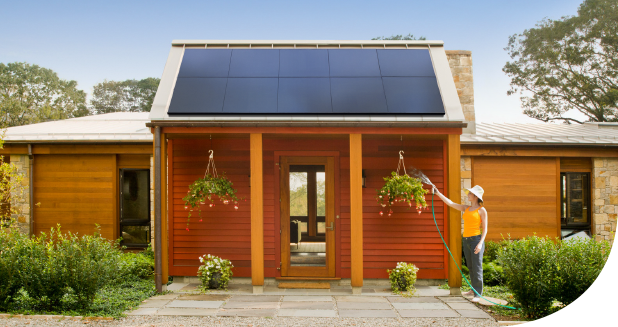
Start by figuring out your contribution to global warming (produced by your use of fossil fuels) and where you might be able to cut back.  Take the Ecological Footprint quiz --you’ll find out how many Earths would be needed to sustain your lifestyle if everyone on Earth lived as you do.  Next, check out the “Low Hanging Fruit” tab.  There you’ll find tips on reducing your fossil fuel use by reducing plastics, eating less meat, driving less, conserving heat and air conditioning, using reusable bags (yes, those plastic bags are made of oil), and using your microwave.  For more tips and fun facts, check out this great list of energy saving tips.  To educate yourself more about “big picture” ideas on cutting oil use (mostly transportation) check out the suggestions from the Council on Foreign Relations and National Resources Defense Council.  It may seem a topic that is too big to deal with, but we all have to do something, big or small – even DOD is wrestling with energy security and conservation.

So let’s each pick one thing this week that will reduce use of oil.  I’m going to walk a little more this week, because I think those sagebrush lizards are worth saving.

Tuesday, May 19, 2015

Go Solar!

SunPower

(photo from solar.sunpower.com)

Our town of Vienna VA is currently participating in a program called Solarize Vienna.  It’s an innovative program that allows folks to put solar panels on their homes, at a reduced price (due to a group purchase), installed by local companies.  The households that participate are also eligible for a federal tax deduction! 

trust

Since we’re paying a lot of attention to solar around here these days, we noticed this editorial from the Roanoke Times – lots of interesting information about solar power!

Our view: Some amazing facts

Posted: Sunday, May 17, 2015 2:15 am

The world is full of amazing facts.

Here’s one of them:

There are now more solar energy installers in the country than there are coal miners — 97,000 compared to 80,396.

Whether that’s a good thing or a bad thing depends, in part, on how you feel about coal.

Another amazing fact: Coal production in the U.S. is actually not far from its historic high, which came in 2008 when the nation’s coalfields were made 1.17 billion tons lighter.

Whether you want to blame or credit the decline on coal-mining since then on the Obama administration and its “war on coal” (which, admittedly, is a sexier slogan than “war on carbon emissions”) or the economy or other factors, take your pick.

Still, there’s this: The 97 million tons of coal mined in the U.S. last year means coal production has dropped to levels not seen since . . . 1994. If coal production drops further, then coal under Obama might fall to where it was during, say, the Reagan administration.

If you’re concerned about carbon emissions, this might indeed be “the moment when the rise of the oceans began to slow and our planet began to heal,” as Barack Obama so grandly put it back during his 2008 campaign.

Context: Even though coal production is up 40 percent from where it stood at the end of World War II, the number of miners required to produce that coal is down, way down.

In fact, the number of coal miners in the U.S. peaked in 1920 and has been going down in fits and starts ever since as technology has made the job less labor-intensive. From 725,030 miners then to 80,396 now, according to the Department of Energy. (That’s still a bit higher than the historic low of 71,552 in 2000, but there’s no mistaking the general direction of the trend line.)

In Virginia, the employment commission tells us we now have only about 3,500 coal miners left — or fewer than work in the Roanoke Valley school systems. Or, if you prefer, about double the 1,800 people estimated to be working in the solar energy field in Virginia.

Yet we still refer to the six counties in Virginia’s southwestern tip as “coal counties,” and politicians will spend much time this fall decrying the “war on coal.” True, looking just at miners is a narrow view of the impact of the coal industry. Those figures don’t count, for instance, the railroad workers who haul the black stuff to port. We don’t see trainloads of sunshine rumbling through Roanoke, so that’s one reason why coal has the political impact it does and solar sometimes still gets laughed at.

When Obama recently announced a program to train returning military veterans to work in the solar energy field, the conservative Daily Caller jeered: “This Is How Obama Is Going To Reward Veterans . . . With Solar Industry Jobs.”

Actually, that’s not a bad idea. Solar energy is a growth industry. Forbes says the number of solar jobs has increased by 20 percent two years in a row now. And there’s this: The average wage for installers is said to be $23.63 per hour.

It’s a mystery why many of those who celebrate the joys of blasting the tops off mountains to dig for coal or fracking natural gas out of the ground scoff at solar energy, when it shares essentially the same attribute: It’s domestic energy that no foreign dictator or unstable regime is ever going to cut off.

Critics contend solar is not particularly cheap, propped up only by tax credits — or, if you prefer, tax giveaways. On the other hand, Virginia has given away $573 million in tax credits to coal since 1988, and has only seen the industry decline.

More amazing facts: Germany, not exactly the sunniest spot in the world but certainly one of the most industrialized, produces more solar energy than any other country. At one point last summer, more than 50 percent of its energy was coming from the sun.

What do the Germans know that we don’t? Rather than push big “solar farms,” Germany has encouraged people to install solar panels on their homes. Interestingly, the Erneuerbare Energien Gesetz or German Renewable Energy Act that set up the regulatory framework to make solar energy cheap enough for people to install was championed by a coalition that included both liberals and conservatives — the of kind bipartisanship we don’t see much of in this country.

By contrast, California made headlines this spring when it became the first state to generate more than 5 percent of its energy from solar. Five versus 50? Hmm. Nevada and Arizona are tied at 2.8 percent. But guess who’s fourth and fifth? New Jersey at 1 percent and North Carolina at 0.7 percent.

Virginia’s solar output basically isn’t even on the charts. That’s slowly changing. As part of the bill the General Assembly passed this winter to loosen regulation of the state’s two biggest utilities, Gov. Terry McAuliffe insisted on getting some solar as part of the deal. Dominion Resources was already looking at some solar projects; now it’s committed to investing $700 million to produce 400 megawatts of solar by 2020. That would still put solar at barely a quarter the size of hydroelectric power, which generates about 2.1 percent of the state’s total. So Virginia still wouldn’t rival North Carolina, much less Germany.

Dominion’s first solar farm is slated to start construction in January in Fauquier County. Closer to home, Roanoke, Blacksburg and now Montgomery County have stolen a page from the German energy playbook, using their recent “Solarize Roanoke” and “Solarize Blacksburg” and the ongoing “Solarize Montgomery” campaigns to encourage people to install solar panels on their homes.

The key there: A bulk buying program that reduced the cost. Plus, some tax breaks. Roanoke had offered a property tax abatement for solar projects since 2007 but no one — literally, no one — took advantage of it until the Solarize campaign. Out of that, 18 people signed contracts to install solar systems. In Blacksburg, 59 did. Montgomery’s campaign runs through July 22.

Nell Boyle, sustainability and outreach coordinator for Roanoke, says most of these solar installations are big enough that the users can generate about 20-25 percent of their power from the sun.

A final amazing fact: You know what industry now employs just as many people as coal mines and is soon set to surpass mining if it hasn’t already? The wind industry.

Sunday, March 22, 2015

6 questions I’d like to ask the candidates

Be sure to "Like" greenmomster on Facebook!

Everyone has issues that he or she hopes the candidates will address. IMG_20150322_154242_493 I’m hoping that the candidates for President/Senate/Congress can put down their single smart phones (with only one email address), drop the snowballs, and stop decorating their offices “Downton Abbey” style long enough to answer my questions.
  1. What is your plan to move the U.S. economy toward a sustainable energy supply that decreases our carbon footprint significantly?
  2. How do you plan to work with other nations, particularly India and China, to decrease the global use of non-renewable energy?
  3. How do you plan to support and encourage U.S. industry to innovate to become a world supplier of green energy technology?
  4. Now that we’re in the middle of what scientists consider to be the 6th global extinction event, what’s your plan for protecting global biodiversity?
  5. What is your “national water strategy”, including maintaining supplies of freshwater in the U.S. and abroad, and dealing with refugees from areas affected by sea level rise or drought conditions?
  6. Are you actually planning to support the crazy idea of drilling for oil off the southern U.S. Atlantic coast, particularly off the coast of Virginia?

Wednesday, March 18, 2015

12369


What’s 12369?  That’s the phone number you’re supposed to call to report environmental noncompliance in China.  I learned it by watching “Under the Dome,” a Chinese documentary about China’s air pollution and energy industry.  It’s a little tough to keep up with the subtitles, but it’s worth watching this 1 hour and 45 minute film.  The Chinese government blocked the film on the internet in China, but lucky you! here it is:

impressionist pandaSo why spend almost two hours learning about pollution in China?  Because China is the most populous nation in the world with a huge and growing economy.  The country’s main source of power is coal.  Not only is China a player in global warming and other air pollution issues, the country also has a large impact on wildlife issues, like elephant poaching.

Just like every other country in the world, they’re trying to balance economic growth and environmental health.  Just like every other country in the world, politics, money, human nature, and even corruption influence how these two goals are achieved.  Since China is so big, we really should be paying attention.  The Washington Post recently ran an article by Simon Denyer that provided a nice summary of the issue.  A little bedtime reading for the greenmomsters . 

Tuesday, December 9, 2014

Coal in your Christmas stocking

I’m guessing that most greenmomsters understand the effects of climate change and one of our biggest producers of CO2 – coal.  Here’s some background info, in case you need a review.  But what about our friends and acquaintances who still don’t “believe in” the man-made causes of climate change?  Is there any other reason to quit coal?  Here are three good reasons to cut our coal consumption and support EPA’s attempts at regulation.  I understand it won’t be easy; I get my electricity from a coal-fired power plant.  But just because it’s difficult, doesn’t mean it shouldn’t be our goal.

  1. Coal ash – This bi-product of energy production has been the cause of several devastating spills around the country.  It’s a complicated issue, since there’s a lot of it, and we use it in building materials.  Here’s a quick rundown of the issue and why some think it should be handled as a hazardous waste. 

Cerulean Blues: A Personal Search for a Vanishing Songbird2.  Loss of biodiversity and contamination of watersheds – Have you heard of mountaintop removal coal mining?  It’s exactly what it sounds like.  We remove the tops of mountains to access the coal.  It’s efficient, but the impacts on water and biodiversity are devastating.  Check out Cerulean Blues by Katie Fallon for a look at the effects on one small migratory bird – the cerulean warbler.  (photo:  latimesblogs.latimes.com)

3.  The personal cost – From Clean Technica, “ Though solar power is still far from surpassing coal as America’s primary energy source, the number of people employed by the solar industry has surpassed the number of coal miners. The non-profit Solar Foundation estimates that The Price of Justice: A True Story of Greed and Corruptionthere are about 142,000 people in the U.S. workforce who spend “at least 50% of their time supporting solar-related activities,” according to Business Insider.” 

Coal mining is dangerous and dirty. Although it has been a way of life for many families for many generations, maybe it’s time to consider alternative jobs and job training. If you haven’t yet read it, you might want to check out this fascinating book on one player in the WV coal industry, The Price of Justice by Laurence Leamer.  For an in-depth look at some of the effects of coal mining on folks in West Virginia, consider watching Burning The Future:  Coal in America: 

Thursday, July 24, 2014

TBT–Where are our climate change marchers?

There are several big climate change rallies/hearings happening across the nation next week – and you can get involved!  This week’s TBT is a post I wrote last summer after some of the other rallies I’ve attended.  Be sure to get updates on all the greenest news -- "Like" greenmomster on Facebook!


DSC_0087This week our nation celebrates the 50th anniversary of the March on Washington, a revolutionary event in American history that helped to encourage racial equality in this country -- truly a great event to celebrate.  But as I looked at the front page of the newspaper today, I couldn’t help but think, “Where are the climate change marchers?  Where are the hundreds of thousands of citizens, willing to march today to change policies that affect not just every American, but every person on the planet?”


On this page, I’ve written about my family’s experiences, marching against the current lack of fracking regulations and for the need for alternatives to fossil fuels.  When the crowds got to 30,000, we were thrilled!  But as millions of people are threatened with permanent loss of their homes due to sea level rise or due to ever-increasing natural disasters caused by climate fluctuations, shouldn’t the climate change crowds be bigger?  As oceans become more acidic, due to man-made input of CO2, shouldn’t our congressional representatives’ phones be ringing off the hook?  As species go extinct because they can’t move quickly enough to adjust to climate change, shouldn’t the outcry be deafening?


I usually try to stay upbeat and positive about environmental issues and challenges, but today’s news for some reason affected me differently.  After over 20 years of scientists warning us of the dire affects of climate change, I just have to ask, “where are our marchers?”

Thursday, June 19, 2014

Dump the Pump!

NoahintoycarToday is National Dump the Pump Day!  The American Public Transportation Association (APTA) encourages you to ride public transportation today and try to make it a part of daily life.  A few interesting facts from the APTA fact sheet:

  • a two-person household can save, on average, over $10,000 per year by downsizing to one car
  • the U.S. reduces its dependence on foreign oil by 4.2 billion gallons of gas a year by using public transportation AND we save 37 million metric tons of carbon emissions annually
  • you save time and money -- U.S. riders of public transportation saved 856 million hours in travel time, 450 million gallons of fuel, and $21 billion in congestion costs in 498 urban areas

Public transportation is great for the economy ($57 billion industry that employs over 400,000 folks!), your wallet, your schedule, and the environment!  Why not hop on your local public transportation today and celebrate Dump the Pump Day – it may just become a habit!

Sunday, June 8, 2014

What ever happened after that oil spill?

bullisland8Did you know that over 1.3 million metric tons of petroleum enters the sea worldwide each year?  What’s the impact of these oil spills?  I wonder, after a year or two, what really happened?  The Xerces Society recently published a report that tries to answer that question with regard to marine invertebrates (including sea stars, mussels, oysters, snails, coral, crabs, lobsters, and shrimp).  Impacts to invertebrates are especially critical, because invertebrates make up the vast majority of marine biodiversity, and they form the base of the various food chains in marine ecosystems.  The report, Oil in Our Oceans, A Review of the Impacts of Oil Spills on Marine Invertebrates, by Michele Blackburn, Celeste Mazzacano, Candace Fallon, and Scott Hoffman Black, is available for download. 

Sunday, June 1, 2014

LEAPing into the future of energy conservation!

We’ve often written about climate change on this page, and many greenmomsters want to take concrete steps to decrease our carbon footprint.  One of the easiest and most effective ways an individual can change his or her carbon footprint is to try to conserve energy in the home. 

Since our house was built in the 1950s, my husband and I often wondered what updates might be useful in making our home more energy efficient.  We wanted to know what to do, as well as how to prioritize these activities – obviously, we want to address the low-hanging fruit first.  Lucky for us, there’s a community-based non-profit organization in our area that helps to answer those questions.  LEAP (the Local Energy Alliance Program) conducts home energy checkups that help to point out areas where improvements might be beneficial.  This evaluation doesn’t include blower door tests or safety evaluations, but after working with our LEAP representative for about 1 1/2 hours, we felt like we had a “road-map” for future home improvements.  Here’s how it worked:

  1. Our LEAP representative, Corey, arrived on-time and explained how the check-up would work.  He explained the goals of the check-up and what would be covered.
  2. We began looking around the house at common areas where folks tend to waste energy.  Our first stop was the fireplace.  20140520141853  Although we had tried to insulate the fireplace during past winters, Corey suggested using a “chimney balloon,” which is a highly effective way to prevent cold air from entering via the chimney – and you can remove it whenever you want to use the fireplace (pretty much never in our case…)
  3. Next, we moved on to the kitchen.  Our refrigerator is new, but proper settings for temperature always help to maximize efficiency.  20140520143704  Unfortunately, magnets don’t add to your refrigerator’s insulation Smile
  4. We then moved to the area of the house that should be a priority – the attic.  20140520142157  Corey advised that the r-value of our insulation should be R49.  Fortunately, we have some insulation in the attic and only need a couple more inches for maximum efficiency.  The area where we could decrease heat loss is in all of the air spaces around ducts and wires in the attic.  Sealing these air spaces could significantly decrease our heat loss, since heat rises through the house and escapes at the highest point.  Additionally, some polystyrene sheets on the attic doors could help decrease heat loss.
  5. Our final stop was the basement.  As with the attic, sealing various leaky areas, such as the crawl space, should be a priority in an older house.  Additionally, Corey showed us an easy fix to prevent leakage around our furnace – sealing tape.  20140520154608

All in all, we found that this energy check-up was a good use of our time, giving us a list of priorities as we try to make our home more energy efficient.  If you’d like to schedule a LEAP check-up and you live in northern VA, visit www.leap-va.org for more information. 

Sunday, May 18, 2014

What’s your environmental IQ?

skymeadows spring 2014 1Many of us think we know a lot about environmental issues, but how much do we really know?  Here’s a great quiz, posted by the City of Tulsa OK , that can give you an idea of your “environmental IQ”. 

Here’s an additional little quiz to help you figure out what’s in your backyard and become more aware of your local environment.  Unfortunately, I can’t provide the answers for every locale --if you don’t know the answers, I guess you know what you’ve got for homework!

  1. In which watershed do you live?  A watershed is a topographical area that drains to one body of water.  So where does your stormwater drain – what’s the name of your local creek?
  2. What’s the source of your drinking water?  (groundwater, surface water (which body of water?))
  3. What happens to your garbage when it leaves your house?  Does it go to a landfill, incinerator, etc?
  4. Name two bird species that live in your area year-round.winter cardinal
  5. Name two bird species that migrate in and out of your area every year.
  6. What’s the source of your electric power?  (coal, natural gas, nuclear, solar?)
  7. Where’s your local wastewater treatment plant? (usually, it’s pretty easy to Google this one!)

Want to try some “big picture” (rather than local) environmental quizzes?  Check out the ABC News Environmental IQ test and The Wall Street Journal.

Thursday, May 15, 2014

TBT–We are the 10%

It’s allergy season, which means those of us with asthma are huffing and puffing.  Here’s the perfect Throwback Thursday post from a couple of years ago.  To see all the latest posts and more info, be sure to “like” greenmomster on Facebook.

It was about 2 am and there I sat, waiting, listening, and hoping that my son’s asthma medication would take effect quickly.  Our family has three of the approximately 34 million Americans with asthma.  That’s roughly 10% of the U.S. population, according to the American Lung Association.  Asthma is an iA mother helps her daughter with an asthma inhaler.nflammation of the airways, making it difficult to breathe.  Asthma has significant health and economic effects:  

  • the CDC National Center for Health Statistics estimates that asthma is the reason for approximately half a million hospitalizations per year
  • the Centers for Disease Control and Prevention estimate that medical expenses associated with asthma increased from $48.6 billion in 2002 to $50.1 billion in 2007.  About 2 in 5 (40%) uninsured people with asthma could not afford their prescription medicines and about 1 in 9 (11%) insured people with asthma could not afford their prescription medicines.
  • the CDC National Center for Health Statistics states that asthma accounts for about 10.1 missed work days per year
  • Females have a 23% higher occurrence of asthma than males (American Lung Association)
  • Between 2001 to 2003, the occurrence of asthma in the U.S. was highest in the Northeast region (CDC)
  • According to the American Lung Association, in 2006, asthma prevalence was 20.1% higher in African Americans than in whites
  • According to the CDC, from 2001-2003, asthma prevalence was higher in individuals living below the federal poverty level (10.3%) compared with those at or above the federal poverty level (6.4% to 7.9%)
And moms, take note:
  • The greatest rise in asthma rates was among black children(almost a 50% increase) from 2001 through 2009 (CDC Vital Signs, 5/11)
  • 185 children died of asthma attacks in 2007 (CDC Vital Signs, 5/11) and nearly 4 million children had asthma attacks last year (Akinbami LJ. The State of childhood asthma, United States, 1980–2005. Advance data from vital and health statistics; no 381, Hyattsville, MD: National Center for Health Statistics. 2006)
  • For children under 15, asthma is the 3rd leading cause of hospital stays (DeFrances CJ Cullen KA, Kozak LJ. National Hospital Discharge Survey: 2005 Annual Summary with Detailed Diagnosis and Procedure Data. National Center for Health Statistics. Vital Health Statistics 12 (165); 2007)
  • From 2001 to 2003, the CDC reports that the occurrence of asthma in children (8.5%) was higher than in adults (6.7%)

So what triggers asthma and asthma attacks?  First off, asthma is a family affair.  Children with parents who have asthma are more likely to have asthma themselves.  A predisposition for having asthma has been found to be passed down genetically.  Now, just because a person has a predisposition, that doesn’t mean they’ll actually get the disease.  But if they do, what might set off an asthma attack?  Allergies often lead to asthma (dust mites, molds, pollen, etc).  Virus and bacterial infections can lead to asthma symptoms (often, a person with asthma will begin to wheeze or cough if they get a cold).  Some people have exercise-induced asthma.  Others get asthma attacks due to certain foods or drugs.  But asthma can be triggered by something else. 

Asthma can be triggered by pollution.  Pollutants such as particulate matter, sulfur dioxide (SO2), and ozone (ground-level ozone, that is) have been shown to increase the occurrence of asthma attacks, particularly in children.  What types of activities produce these pollutants?  The small particles that might affect the lungs are produced from the chemical reaction of pollutants from power plants, industries, and automobiles.  Sulfur dioxide is most commonly produced from the burning of fossil fuels (coal and oil), as well as cement production.  Ozone isn’t usually emitted directly as a pollutant; it’s formed by the action of sunlight on NOx which comes from car exhausts, fuel combustion, and industrial processes.  Beginning to see a trend?  The pollutants that cause the most problems for asthmatics come from our cars and our power plants.   Limiting discharge of pollutants will protect children and other people affected by asthma.  Will it raise our fuel costs?  Possibly.  There’s some conflicting information as discussed by the Edison Electric Institute and the Congressional Research Service.  Full disclosure, my husband works for an energy company, so I’ve heard both sides of the argument.  But let’s look at it this way – someone has to pay.  Should we, the users of cars and power from fossil fuels, each pay a little more for a cleaner environment, or should we ask the payment to be made by the most vulnerable – our children, individuals living below the poverty level, the elderly?  My son’s asthma is controlled with medicine and attacks are infrequent, but others are not so lucky.


What can one person do?  Get educated about efforts to limit discharge of these pollutants to the environment.  Contact your legislators/local industries/power producers regarding this issue – let your opinion be known.