Showing posts with label wildlife corridors. Show all posts
Showing posts with label wildlife corridors. Show all posts
Saturday, September 29, 2018
Hedgehog highway
This new little film about how to help hedgehogs thrive in the U.K. reminds us of things we need to do here in North America too -- most notably, providing free access to habitat and not creating barriers such as walls and fences. Conservation managers call these free access areas "wildlife corridors" -- you may have seen them near highways. I've written about the proposed wall along the U.S./Mexico border is an environmental disaster, but removing wildlife barriers is also something we can tackle in our own backyards. And those hedgehogs really are cute!

Tuesday, April 7, 2015
So you slept through science class–What’s “habitat fragmentation”?
Be sure to “like” greenmomster on Facebook!

What do you think is the greatest threat to wildlife biodiversity?
- pollution?
- overhunting/overharvesting?
- wildlife poaching?
- habitat destruction?
If you guessed habitat destruction, you were right! Often, when we think of habitat destruction, we think of clearcutting of forests or mountaintop removal for coal mines, but there’s a much more common type of habitat destruction. It’s called “habitat fragmentation” or breaking large tracts of habitat into smaller chunks. Examples include when we divide forest habitat into 5 acre lots for housing development, or when we build roads through wild areas.
Many species can coexist with humans without too much disruption – think of squirrels, crows, robins, hawks, even coyotes. Some species, such as deer, thrive on “edge habitat” – the area where forests meet fields. But there are many other creatures that need large tracts of undisturbed habitat (often woodlands, but not always) in order to successfully feed and breed. We often think of large animals, such as bears or wolves, when we think of this type of creature, but many birds only thrive deep in forested areas.
Although setting aside small chunks of habitat is helpful for some creatures, others need much, much more space. There’s an exciting effort going on right now called Y2Y or Yellowstone to Yukon. Their vision: “An interconnected system of wild lands and waters stretching from Yellowstone to Yukon, harmonizing the needs of people with those of nature.” (photo from the Y2Y website). Although this effort is a huge one, you can do the same where you live – be aware of fragmentation of habitat and encourage preservation of wildlife corridors and large areas of habitat.

Wednesday, March 13, 2013
So you slept through science class, part 6–Wildlife Corridors
During our last science class, we talked about biodiversity and why it matters for the health of ecosystems. So what’s the real-world application? Well, it turns out that in order to maintain diversity, we not only want to maintain it at a species level, we also want to maintain diversity at a genetic level. Within a population of individuals of a species, scientists and wildlife managers hope to see LOTS of diversity at a genetic level, in the individuals’ genes. Think about it – if every plant or animal in an ecosystem has the exact same genetic make-up, that ecosystem will be pretty vulnerable if a disease sweeps through. If the individuals in a population have some diversity in their genetic make-up, though, perhaps a few of them will have the genetic where-with-all to survive a disease outbreak.
The problem in today’s world of over 7 billion people is that humans are encroaching on most natural populations of plants and animals and locking them into specific geographic areas. Animals and plants need to be able to breed with many other individuals in order to keep the genetic diversity of a population rich. Think about it – where would you expect to see more genetic diversity in humans:
“Wildlife corridors” are one possible solution to this problem. By preserving large or small (depending on the size of the animal) swaths of wild lands, conservation managers hope to help populations interbreed and remain healthier. One example you might have seen in the news is the Yellowstone to Yukon corridor (Y2Y). This project is an ambitious attempt on the part of environmentalists, state and federal officials, and private landowners to maintain corridors to allow interbreeding for species large (grizzlies) and small (ocelot). The project is not complete, but is a fascinating example of the efforts of folks dedicated to protecting our environment.
If you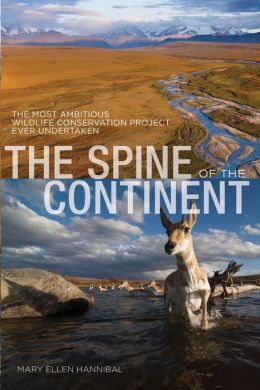 ’d like to read more about the Y2Y corridor, be sure to check out these books, and be sure to support the Y2Y Corridor:
The Spine of the Continent, by Mary Ellen Hannibal. 2012. Glove Pequot Press, Guilford CT. 248pp. This book tells the stories of individuals involved in the Y2Y effort, giving the reader an interesting look at the personalities and debates behind the conservation and ecological theory supporting corridors.
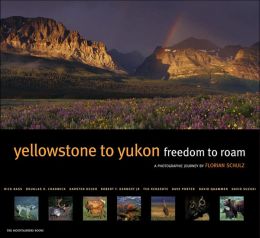
Yellowstone to Yukon, Freedom to Roam, by Florian Schulz. 2005. The Mountaineers Books. 196 pp. I had the pleasure of meeting Florian Schultz at a National Geographic presentation on the making of this spectacular book of photographs. Mr. Schultz’s dedication and enthusiasm for this cause is infectious. He wrote a note to my children in our book that illustrates his enthusiasm: “When I was a boy I played in the forest stalking after wildlife. I hear you also love wild animals like wolves. I just saw a whole pack and photographed them last year. It is so exciting!”
Within a population of individuals of a species, scientists and wildlife managers hope to see LOTS of diversity at a genetic level, in the individuals’ genes. Think about it – if every plant or animal in an ecosystem has the exact same genetic make-up, that ecosystem will be pretty vulnerable if a disease sweeps through. If the individuals in a population have some diversity in their genetic make-up, though, perhaps a few of them will have the genetic where-with-all to survive a disease outbreak.The problem in today’s world of over 7 billion people is that humans are encroaching on most natural populations of plants and animals and locking them into specific geographic areas. Animals and plants need to be able to breed with many other individuals in order to keep the genetic diversity of a population rich. Think about it – where would you expect to see more genetic diversity in humans:
- in a small town of 500 people who only intermarry with one another?
- in a larger area of 1500 people, including immigrants from other towns, all of whom intermarry?
“Wildlife corridors” are one possible solution to this problem. By preserving large or small (depending on the size of the animal) swaths of wild lands, conservation managers hope to help populations interbreed and remain healthier. One example you might have seen in the news is the Yellowstone to Yukon corridor (Y2Y). This project is an ambitious attempt on the part of environmentalists, state and federal officials, and private landowners to maintain corridors to allow interbreeding for species large (grizzlies) and small (ocelot). The project is not complete, but is a fascinating example of the efforts of folks dedicated to protecting our environment.
If you
’d like to read more about the Y2Y corridor, be sure to check out these books, and be sure to support the Y2Y Corridor:The Spine of the Continent, by Mary Ellen Hannibal. 2012. Glove Pequot Press, Guilford CT. 248pp. This book tells the stories of individuals involved in the Y2Y effort, giving the reader an interesting look at the personalities and debates behind the conservation and ecological theory supporting corridors.
Yellowstone to Yukon, Freedom to Roam, by Florian Schulz. 2005. The Mountaineers Books. 196 pp. I had the pleasure of meeting Florian Schultz at a National Geographic presentation on the making of this spectacular book of photographs. Mr. Schultz’s dedication and enthusiasm for this cause is infectious. He wrote a note to my children in our book that illustrates his enthusiasm: “When I was a boy I played in the forest stalking after wildlife. I hear you also love wild animals like wolves. I just saw a whole pack and photographed them last year. It is so exciting!”
Subscribe to:
Posts (Atom)